
Developed by Escape (who would later become Westone), Wonder Boy is a straightforward run-and-jump-left-to-right-to-reach-the-goal platform game featuring a blonde-haired, semi-naked cave-boy who is trying to rescue his girlfriend, Tina, from the clutches of the “The Dark King”.
Tag Archives: platform game
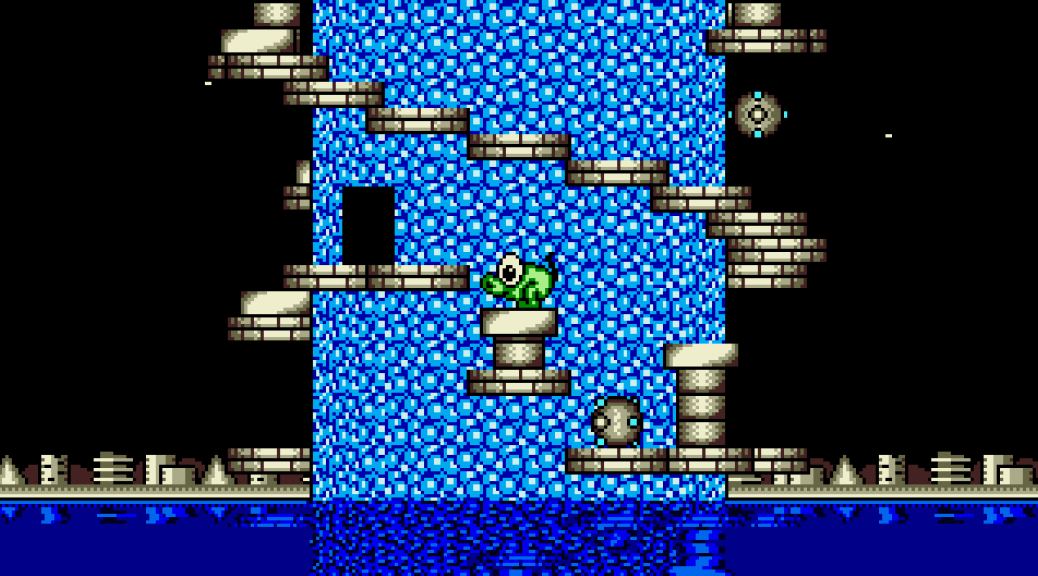
Nebulus, Archimedes
John Phillips‘ brilliant platform puzzler, Nebulus, made a welcome appearance on the Acorn Archimedes courtesy of Krisalis Software in 1987.
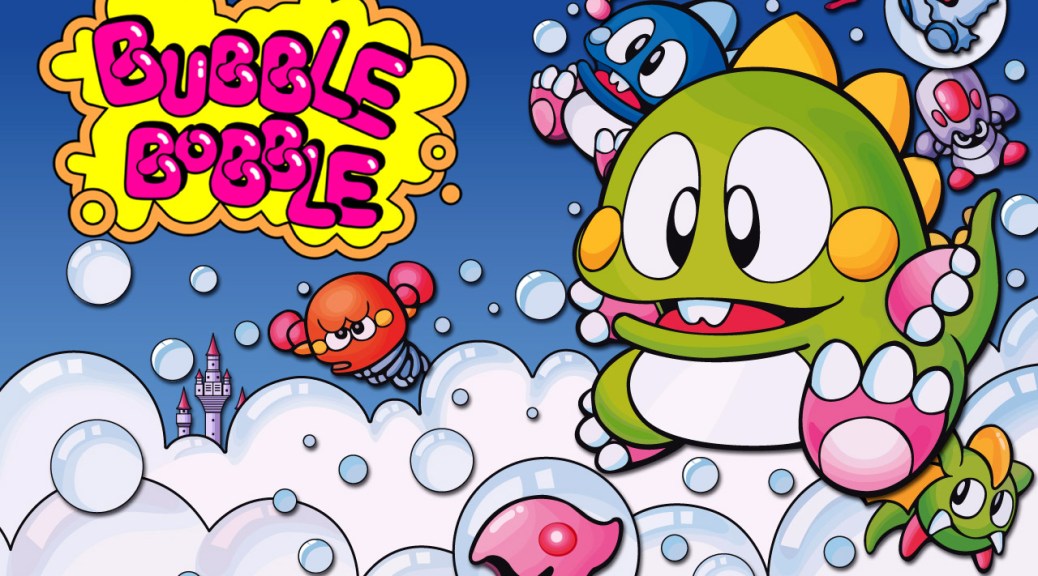
10 Best Bubble Bobble Conversions
LISTS: as decided by The King of Grabs, in order of greatness:
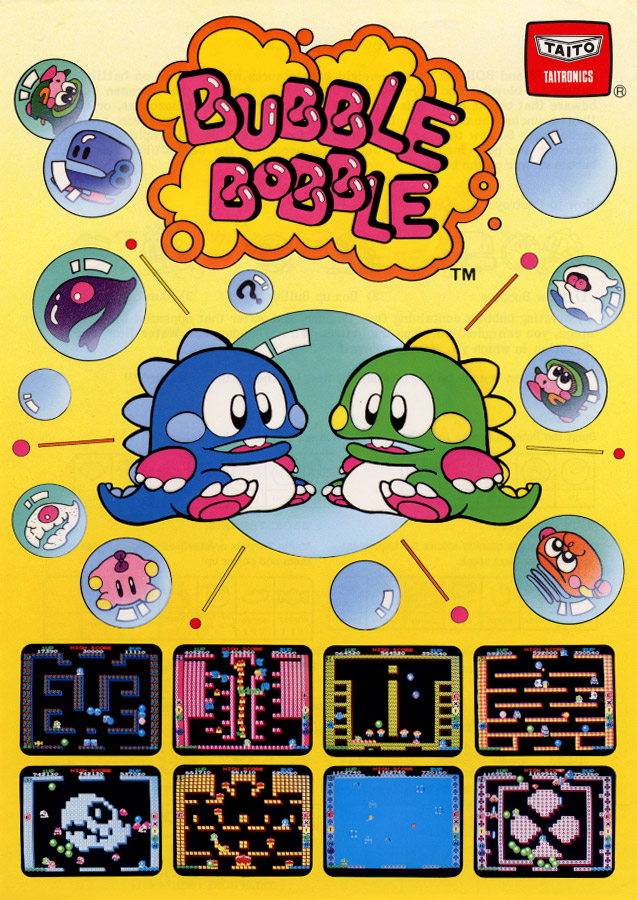
Taito‘s classic 1986 arcade hit, Bubble Bobble, has been converted to pretty much every format on the planet. We played through them all recently and have compiled a list of the best. Click a link to view each conversion individually. Do you agree with our choices? Let us know in the comments.
1. Sega Saturn (1996)
2. Nintendo DS (2005)
3. Game Boy Advance (2003)
4. X68000 (1990)
5. FM Towns (1990)
6. Sega Master System (1988)
7. NES/Famicom Disk System (1987)
8. PC MS-DOS (1989)
9. Atari ST (1989)
10. Amiga (1989)
See also:
MSX (1987)
Commodore 64 (1988)
ZX Spectrum (1987)
Amstrad CPC (1987)
Game Gear (1994)
Game Boy Color (1999)
Game Boy (1991)
BBC Micro (1989)
Apple II (1988)
See also: BB4CPC (2014) on the Amstrad CPC and Super Bubble Bobble MD (1995) on the Megadrive/Genesis.
Did we miss any official conversions of Bubble Bobble? Please let us know in the comments.
In memory of Fukio Mitsuji (1960-2008), the designer of the great Bubble Bobble.
More: Bubble Bobble on Wikipedia


Super Bubble Bobble MD, Megadrive/Genesis
Super Bubble Bobble MD is a bootleg Megadrive/Genesis game that was probably created to fill a gap in the market because Bubble Bobble was never officially released on the platform.

BB4CPC, Amstrad CPC
BB4CPC (meaning: “Bubble Bobble for the CPC“) is a superb modern “homebrew” remake of Bubble Bobble in 48K for the Amstrad CPC by CNGSoft. It was coded by Cesar Nicolas Gonzales and released as freeware in 2014.

Bubble Bobble also featuring Rainbow Islands, Sega Saturn
Bubble Bobble also featuring Rainbow Islands was coded by British developer Probe Entertainment and published by Acclaim in 1996. It was also released for the PlayStation, PC MS-DOS and Windows, but I’m just covering the Sega Saturn version here because they’re mostly identical.
Continue reading Bubble Bobble also featuring Rainbow Islands, Sega Saturn

Bubble Bobble Revolution, Nintendo DS
Also known as Bubble Bobble DS in Japan, Bubble Bobble Revolution features a remake of Bubble Bobble as well as a separate conversion of the classic Bubble Bobble arcade game, and it is really good.

Bubble Bobble: Old & New, Game Boy Advance
Bubble Bobble: Old & New was released for the Game Boy Advance in 2003. It was developed by Taito and published by Empire Interactive. It features a conversion of the arcade original, plus a re-made version with new graphics, sound, and features.

Bubble Bobble, X68000
The Sharp X68000 version of Bubble Bobble was a Japan-only release and is an authentic and beautiful port – arguably just as good as the arcade original itself, if not better.

Bubble Bobble, FM Towns
The FM Towns conversion of Bubble Bobble is another perfect Japanese port of the arcade game. It was developed by Taito themselves and released on CD-ROM by Ving in 1990.

