
The Revenge of Shinobi (known in Japan as “The Super Shinobi“) is the 1989 Megadrive/Genesis sequel to the classic Sega arcade game. It once again features Joe Musashi, and takes place three years after the events of the first game. The criminal organization “Zeed” have reformed and have renamed themselves “Neo Zeed“, and they have decided to exact their revenge on the Oboro Ninja Clan by killing Joe’s master and kidnapping his bride, Naoko. So you must rescue your fiancée, and get revenge for the death of your master.
Tag Archives: Pixel Art
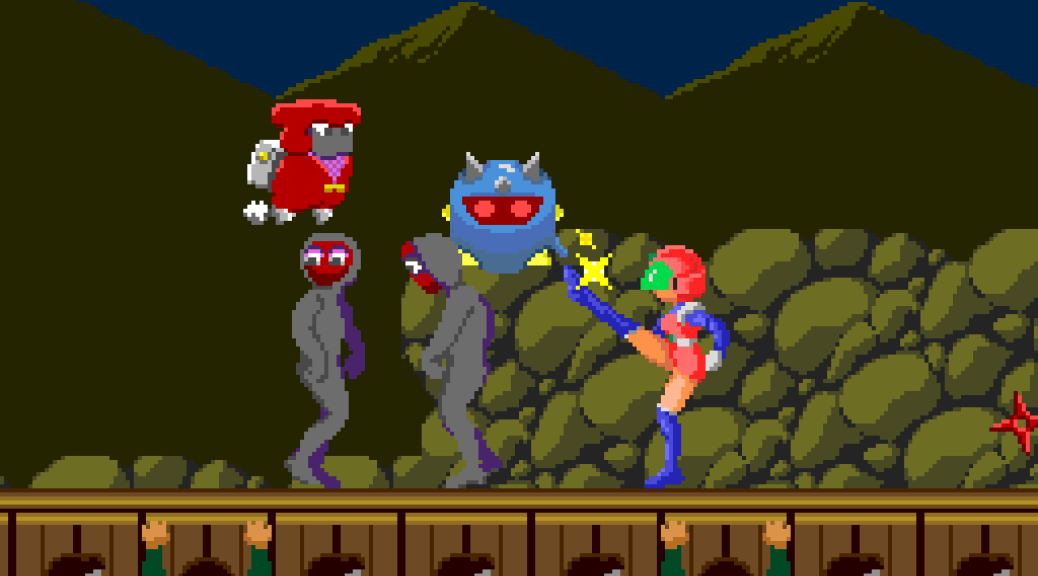
Wonder Momo, PC Engine
Developed by Namco and published – in Japan only – by NEC Avenue in 1989, Wonder Momo is a conversion of a weird Japanese arcade game featuring a female lead character who must fight off attackers during a theatre stage play. And, if that sounds bizarre, then – well – that’s because it is! Unlike the arcade original, the PC Engine version of Wonder Momo has been fan-translated into English and Spanish, so is more accessible to Western audiences.

Wonder Momo, Arcade
I first encountered Namco‘s Wonder Momo on the PC Engine, because it had received a fan translation, and I was curious to see what the game was about. I then discovered that it was a conversion of a 1987 arcade game, featuring a young girl called Momo, who can turn into a ‘superhero’ by building up her “Wonder Meter“.
This bizarre arcade game was only ever released in Japan, but has subsequently built up a cult following around the world, and has also inspired manga/anime, and resulted in a sequel that was released in 2014.

Salamander, MSX
The MSX port of Konami‘s classic arcade shooter, Salamander, was first released in Japan – on cartridge – in 1987. And although it shares the name and certain elements from the arcade game, this is a completely new version of Salamander, with a new storyline, new characters, ships and levels. It is sometimes referred to as “Salamander: Operation X“.
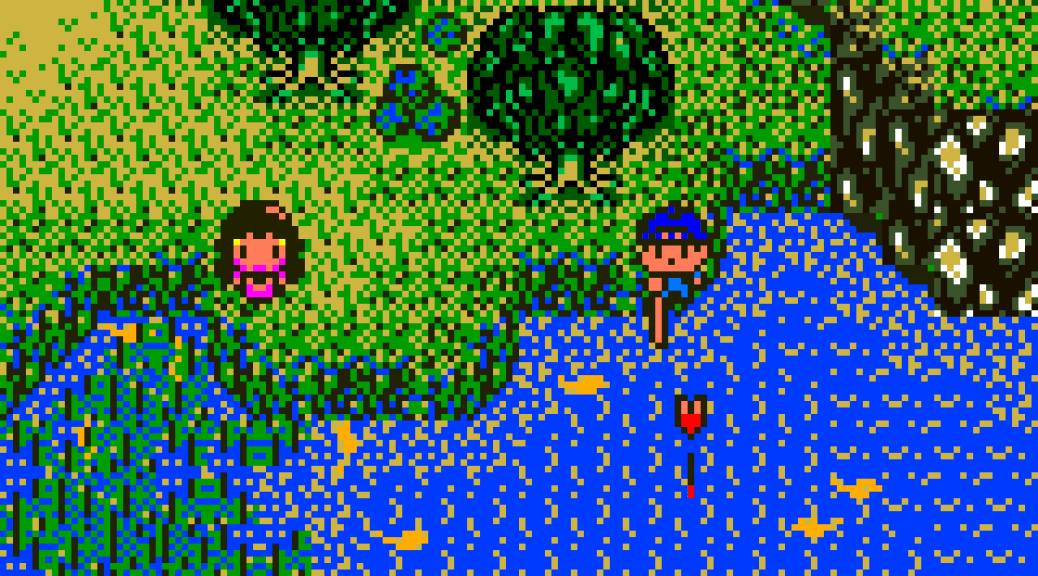
Legend of the River King, Game Boy Color
Developed by TOSE Co., Ltd. and published by Victor Interactive Software in Japan and Natsume in North America and Europe, Legend of the River King is a JRPG that is based around the sport/pastime of fishing. It was initially released for the Game Boy in 1997, and the Game Boy Color version (which is Super Game Boy enhanced) came out in 1999.
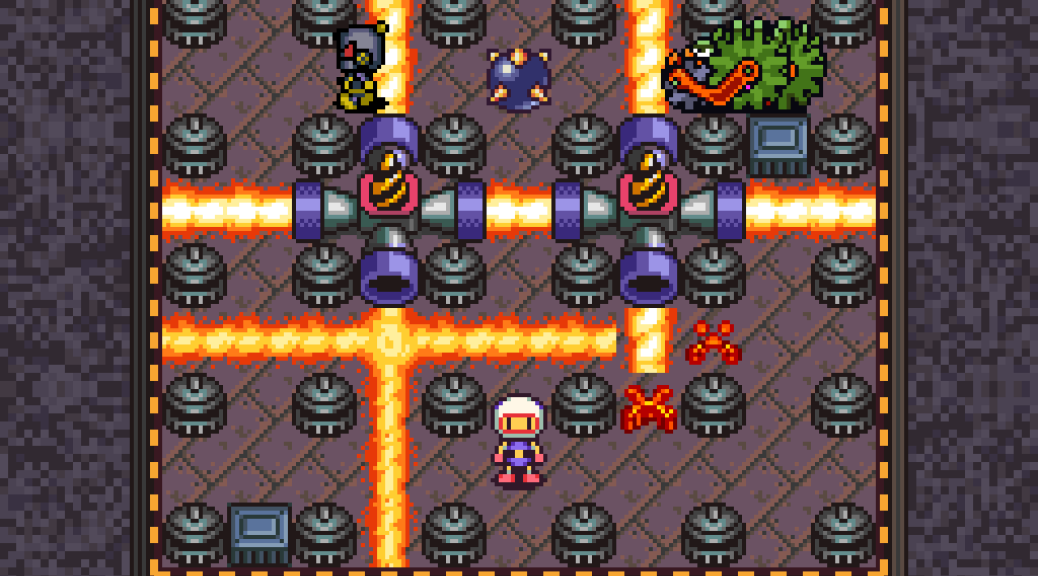
Super Bomberman 5, Super Nintendo
The final entry in the Super Bomberman series, Super Bomberman 5 was released in Japan only in 1997, and was developed and published by Hudson Soft. A partial fan translation into English is available, but for some reason it has not been fully completed (at the time of writing, at least).

Super Bomberman 4, Super Nintendo
Developed by Produce! and published by Hudson Soft – in Japan only – in 1996, Super Bomberman 4 thankfully does have a fan translation available, which makes the game fully playable in English.

Super Bomberman 3, Super Nintendo
Developed and published by Hudson Soft in 1995, Super Bomberman 3 is another sequel in the Bomberman series that pushes new ideas and gameplay techniques, while at the same time dialling-in some of the ideas contained in Super Bomberman 2.
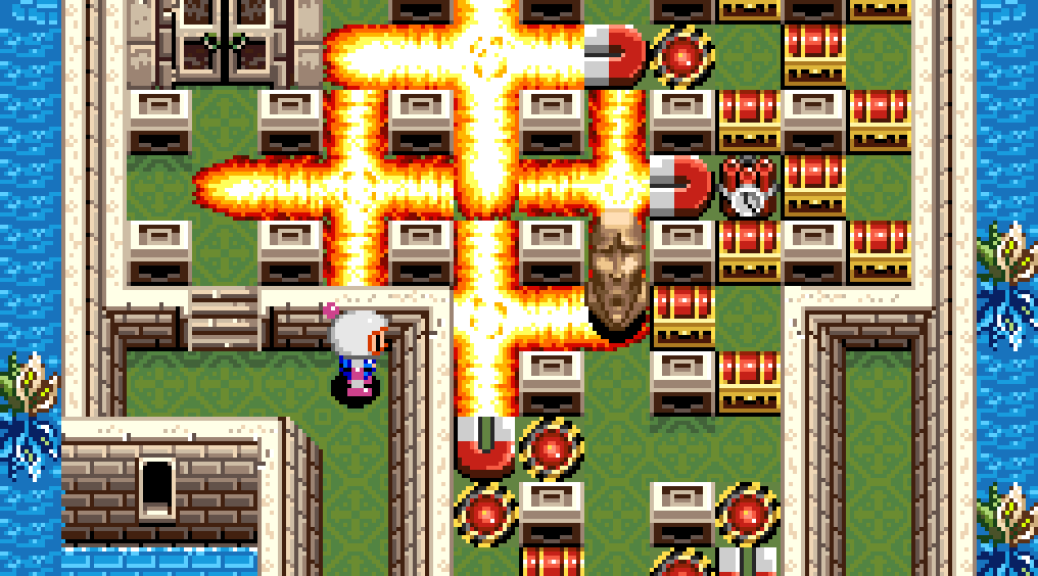
Super Bomberman 2, Super Nintendo
Super Bomberman 2 was developed by Produce! and published by Hudson Soft, exclusively for the Super Nintendo, in 1994. It is the sequel to Super Bomberman, and it introduces many new elements to the series.

Castlevania ReVamped, PC
Castlevania ReVamped is a homebrew remake of the original Castlevania, for Windows and Linux, by Lv.4 Games. It was initially released in March of 2024 and was inspired by the developer’s love of the Castlevania series (“it’s something I have wanted to do for many years,” he says, and “it took about four/five months to create“).
The game was made in Game Maker Studio 2 and is based on the first NES Castlevania, and Akumajō Dracula on the X68000 (and the remake in Castlevania Chronicles), and in it you play as the iconic Simon Belmont, with his trusty “Vampire Killer” whip.
 The King of Grabs