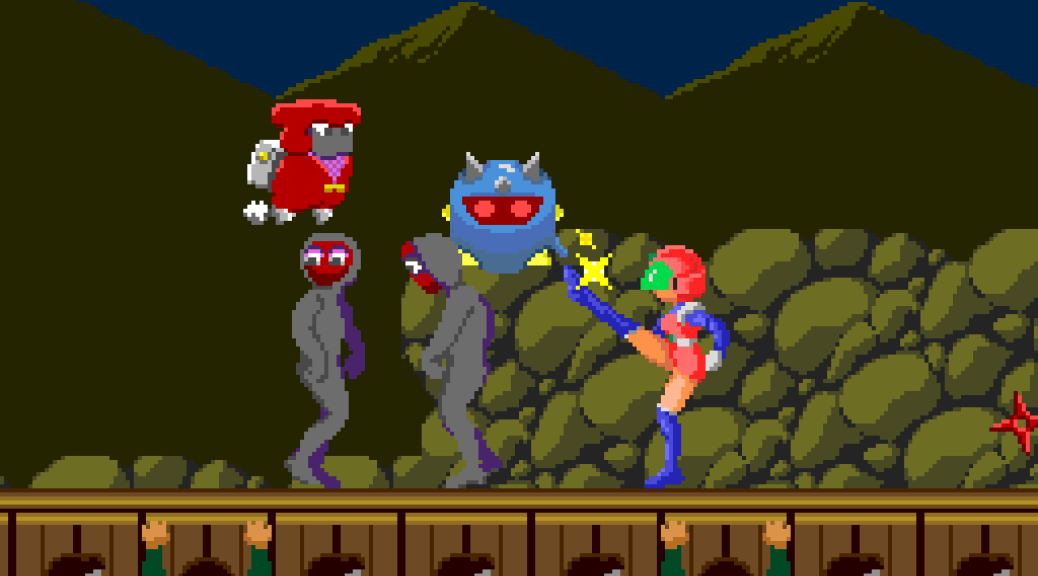
Developed by Namco and published – in Japan only – by NEC Avenue in 1989, Wonder Momo is a conversion of a weird Japanese arcade game featuring a female lead character who must fight off attackers during a theatre stage play. And, if that sounds bizarre, then – well – that’s because it is! Unlike the arcade original, the PC Engine version of Wonder Momo has been fan-translated into English and Spanish, so is more accessible to Western audiences.
Tag Archives: parody

Wonder Momo, Arcade
I first encountered Namco‘s Wonder Momo on the PC Engine, because it had received a fan translation, and I was curious to see what the game was about. I then discovered that it was a conversion of a 1987 arcade game, featuring a young girl called Momo, who can turn into a ‘superhero’ by building up her “Wonder Meter“.
This bizarre arcade game was only ever released in Japan, but has subsequently built up a cult following around the world, and has also inspired manga/anime, and resulted in a sequel that was released in 2014.
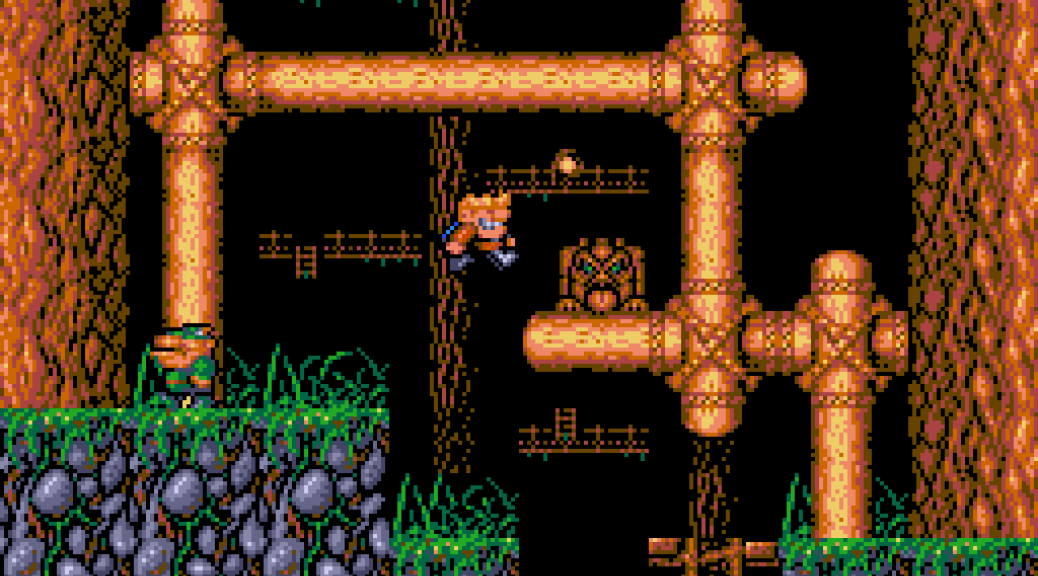
Rick Dangerous 2, Amiga
Rick Dangerous 2 is the sequel to 1989’s Rick Dangerous. It was developed by Core Design (with programming by Simon Phipps, graphics by Terry Lloyd, level design by Robert Churchill and sound/music by David Pridmore), and published by Micro Style (a Microprose sub-label) in 1990.
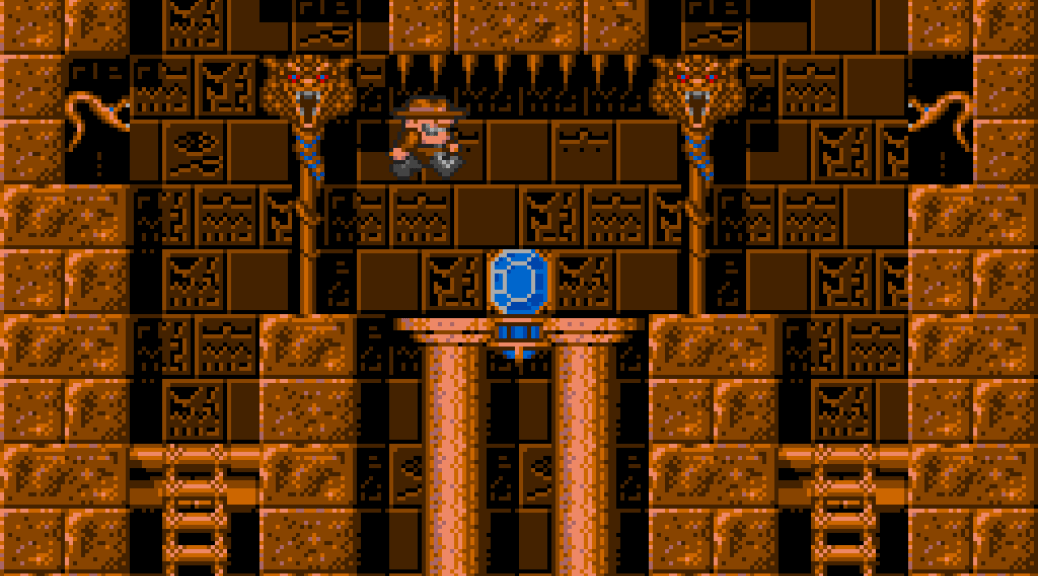
Rick Dangerous, Amiga
Rick Dangerous is a cartoony Indiana Jones parody that was written by Simon Phipps, co-founder of Core Design, with graphics by Terry Lloyd. It was published on various 8-bit and 16-bit home computers by Firebird Software in 1989 and was generally well-received.
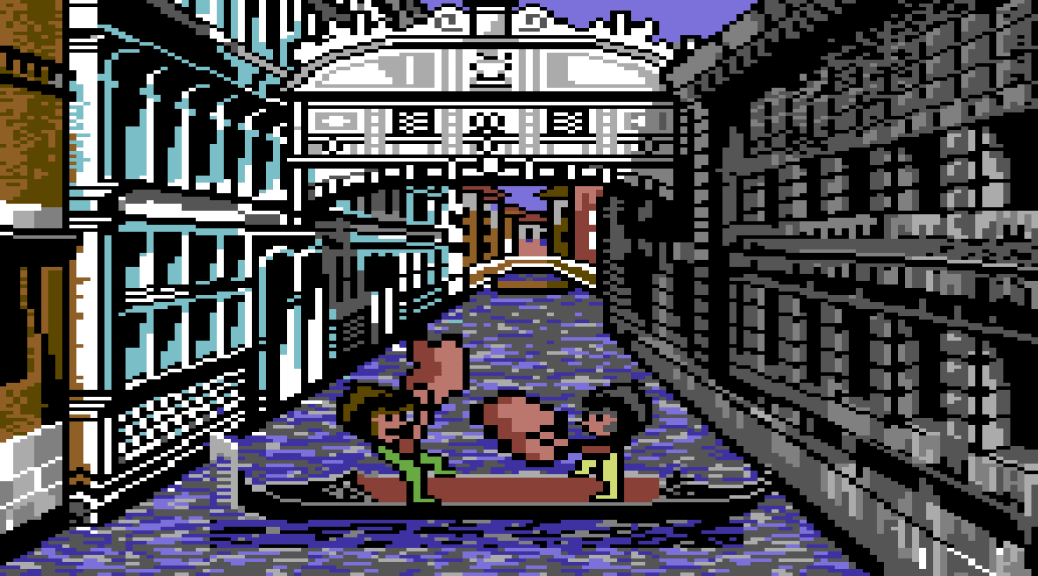
Alternative World Games, Commodore 64
Alternative World Games is a parody of the famous Commodore 64 Epyx ‘Games‘ series, developed by Hungarian company Novotrade and published by Gremlin Graphics in 1987. It is apparently known as “Sports-A-Roni” in North America, although I’ve no effing idea what that’s supposed to mean…
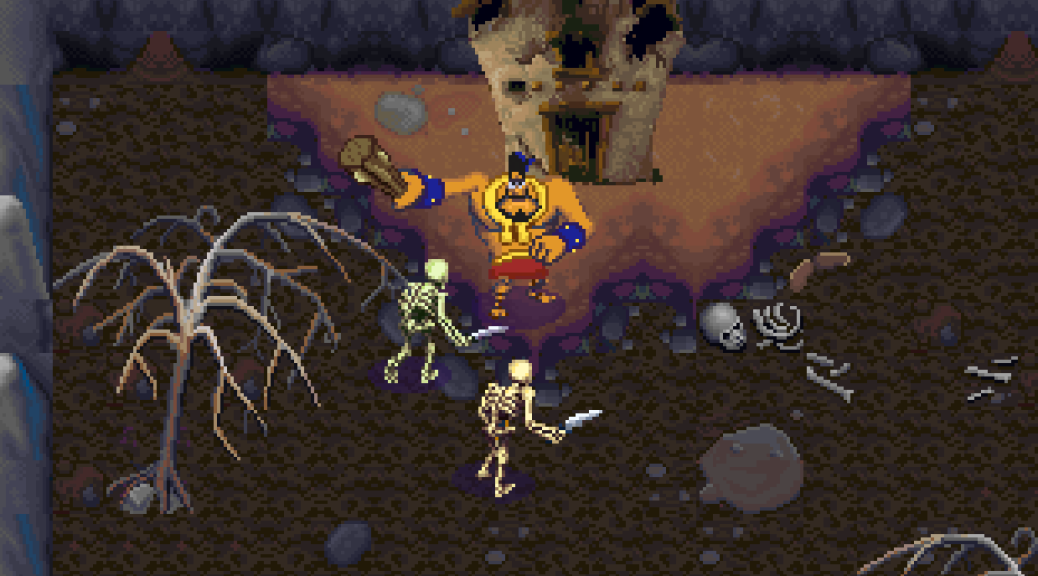
Herc’s Adventures, Sega Saturn
Herc’s Adventures is a cartoon action game developed by Big Ape Productions and published by LucasArts and is based on Greek mythology and the adventures of Hercules. It was first released in 1997 for the Sega Saturn and Sony PlayStation. The game is similar in graphical style to two other LucasArts classics, Day of the Tentacle and Zombies Ate My Neighbors, in that it uses exaggerated cartoon-style animation to present the world and characters.
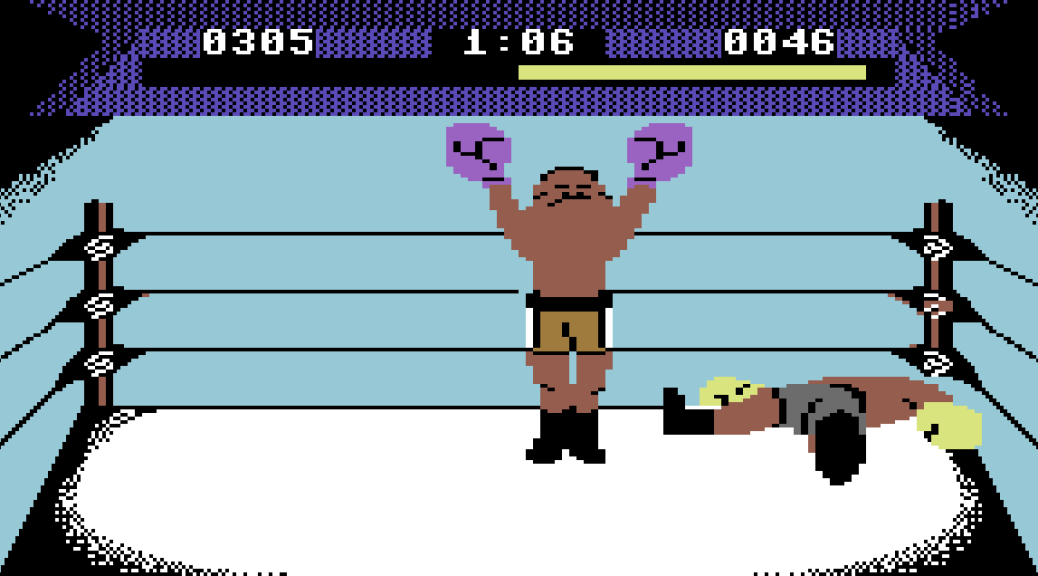
Fight Night, Commodore 64
Fight Night is a cartoony boxing game developed by Canadian company Sydney Development and published by Accolade in North America and US Gold in Europe in 1985.

Sexy Parodius, Arcade
Parodius is a spin-off series from Konami‘s classic Gradius/Nemesis series. It’s a parody of Gradius, thus “Parodius“, and “Sexy Parodius” is the arcade version of it.

Wall Street, Arcade
This weird arcade game was developed and manufactured by Century Electronics in 1982. It features two distinct stages: one where you have to bounce falling stockbrokers into an ambulance using a trampoline, and a second where you have to collect money inside a maze of chasing tanks.

Ghoul Patrol, Super Nintendo
Ghoul Patrol is the 1994 sequel to Zombies Ate My Neighbors and it features gameplay and graphics very similar to its predecessor, which is no bad thing on the face of it, considering that Zombies Ate My Neighbors is a fun game.
 The King of Grabs