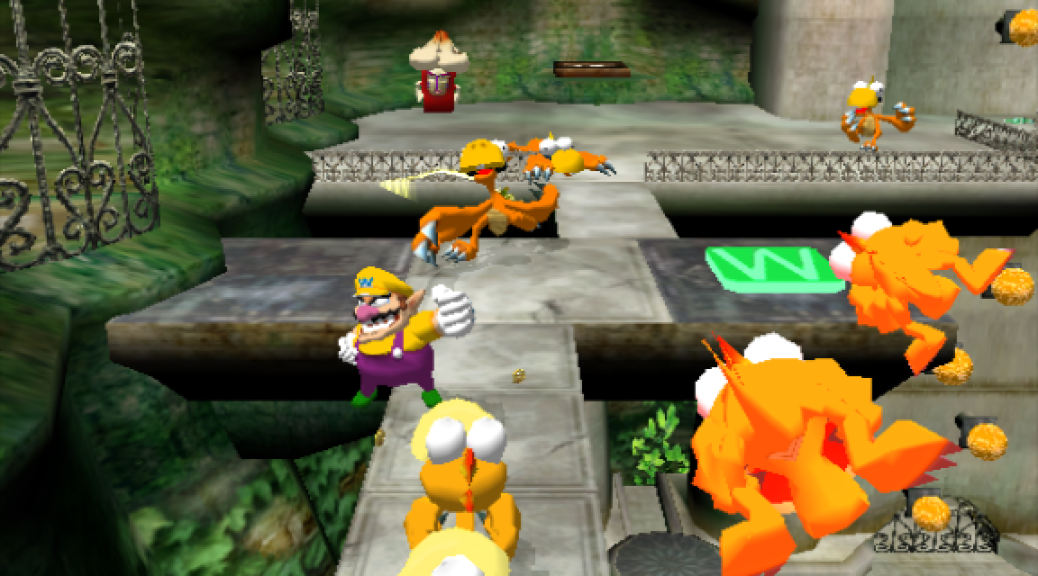
Wario World for the GameCube was developed by Treasure and published by Nintendo in 2003. It was the first 3D Wario game and, unusually, was released in Europe and North America before it eventually came out in Japan (almost a year after its initial release in the West).
Tag Archives: Nintendo

Wario Land 4, Game Boy Advance
The fourth game in the Wario Land series (after Wario Land, Wario Land II, and Wario Land 3) is arguably the best one at this point, having been released for the Nintendo Game Boy Advance in 2001.
All three of the previous games were fun, varied, and beautifully-designed, but the enhanced graphics and power of the Game Boy Advance definitely gives this the edge over its predecessors.

Wario Land 3, Game Boy Color
Wario Land 3 is the sequel to Wario Land II and was developed and published for the Game Boy Color by Nintendo in 2000. It once again features Mario‘s rival, Wario, doing what he does best: shoulder-barging things and cheekily going about his destructive platform business.

Wario Land II, Game Boy Color
The follow-up to Wario Land: Super Mario Land 3 on the Game Boy is this 1998 release for the Game Boy and Game Boy Color.
Wario Land II was initially released for the black and white Game Boy, but was re-released for the Game Boy Color six months after its initial release and it is the Game Boy Color version that I’m focusing on here (because it looks much better in colour than in monochrome).

Bubble Bobble, Game Boy
The Nintendo Game Boy conversion of Bubble Bobble is not an authentic port of the arcade game, even though it was developed by Taito themselves. Continue reading Bubble Bobble, Game Boy

Bubble Bobble, NES
The Nintendo Entertainment System conversion of Bubble Bobble features beautiful graphics, with some colour changes to the original, but in general it is a very authentic port of the classic Taito arcade game.
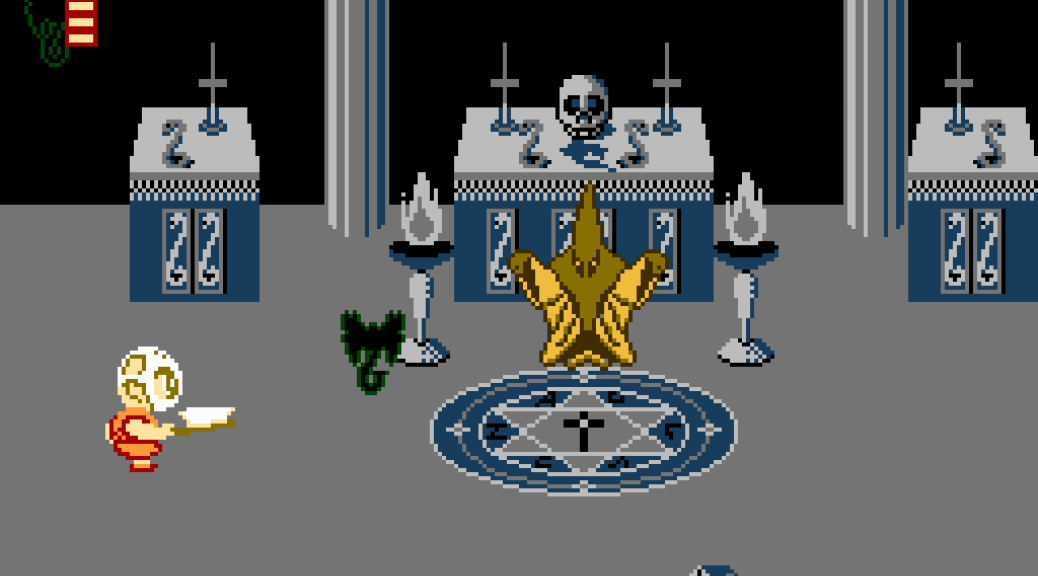
Splatterhouse: Wanpaku Graffiti, Famicom
Splatterhouse: Wanpaku Graffiti is a spin-off from the infamous Splatterhouse series and was a Japan only release, published by Namco for the Nintendo Famicom in 1989.
Rather than take the gruesome approach of the original game, in Wanpaku Graffiti the characters are “super deformed” (and made cute) and the game takes a comical approach to the presentation and gameplay, which was obviously deemed to be more fitting to a Famicom audience.

Gargoyle’s Quest II, NES
The sequel to the intriguing Game Boy game, Gargoyle’s Quest, was first released on the Nintendo Famicom in 1992 by Capcom. It is another spin-off from the successful Ghosts ‘N Goblins series.
Again, you play as Firebrand – the winged demon from Ghosts ‘N Goblins (and Ghouls ‘N Ghosts) – and again it features platforming action, with an interesting ‘fly-and-float’ mechanic.

Gargoyle’s Quest, Game Boy
This interesting 1990 action adventure platform game is a spin-off from the classic arcade game Ghosts ‘N Goblins.
It features the flying demon character (called Firebrand in English language versions and Red Arremer in the original Japanese version) in the lead role, and who was first seen as an enemy in the Ghosts ‘N Goblins arcade game. That, in itself is quite unusual – getting to play a baddie from an earlier game in a later sequel, and this game is more than just a simple platform game.

R-Type II, Game Boy
A 1992 sequel to the excellent first Game Boy conversion of R-Type, developed by the same company as previously (Bits Studios).

