
Known in Japan as “Akumajō Special: Boku Dracula-kun“, this cute and humorous Castlevania spin-off was initially released by Konami, in Japan only, in 1990, for the Nintendo Famicom. Numerous fan translations exist for the game, but it was also officially released in English for the first time – as “Kid Dracula” – in 2019, in the Castlevania Anniversary Collection. That’s the version I’m showing here.
Tag Archives: Japanese

The Adventure of Little Ralph, PlayStation
The Adventure of Little Ralph (aka “Chippoke Ralph no Daibōken“) is an obscure 2D action game, made exclusively for the PlayStation, developed by New Corporation and released in Japan only in 1999. The game has a serious reputation among PS1 fans ‘in the know’ as being one of the best import games available for the system. And I wouldn’t disagree with that.

The Sword of Hope II, Game Boy
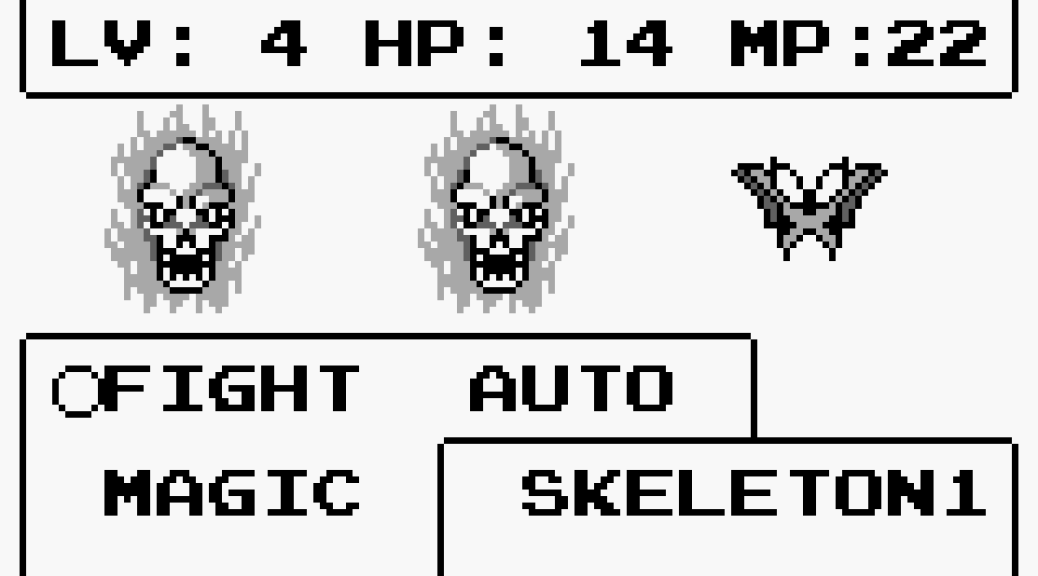
The sequel to the first Sword of Hope, The Sword of Hope II was developed and published by KEMCO in Japan in 1992, but wasn’t localized and released into North America until 1996. Europe (and the rest of the world) didn’t receive a release of the game at all.
The Sword of Hope, Game Boy
This first-person adventure/RPG was developed by KEMCO (a subsidiary of Kotobuki Engineering & Manufacturing Co.), and published by Seika Corporation in Japan, North America and Europe in 1989. In it, you play as Prince Theo, who is on a quest to challenge his insane, power-mad father for rule of the kingdom.

Seal of the Pharaoh, 3DO
Seal of the Pharaoh is a first-person dungeon-crawler with a tomb-raiding ancient Egyptian theme. It was developed by System Sacom and published in 1994, exclusively for the 3DO, by ASK Kodansha in Japan and Panasonic in North America.

Dungeon Master Nexus, Sega Saturn
Released exclusively in Japan for the Sega Saturn in 1998, Dungeon Master Nexus is a 3D dungeon-crawler based on the classic 16-bit RPG, Dungeon Master. And although FTL Games – the American developer of the original Dungeon Master – have been credited with creating this game, they actually had no involvement in the production of it. Dungeon Master Nexus was developed entirely in Japan, by Victor Interactive Software, and a fan translation into English was released in Sept 2023.

Castlevania Chronicles, PlayStation
Castlevania Chronicles is a remake of Akumajō Dracula – the first Castlevania game – and it was developed by Konami Computer Entertainment Tokyo (KCET) and first published by Konami in 2001. In it, you play as the vampire hunter Simon Belmont, who must defeat Dracula and save Transylvania from the vampire’s tyranny.

X, Game Boy
This game – called simply “X” – was a Japan-only release, in 1992, on the original black and white Game Boy, but its conception and development would later have a profound effect on Nintendo‘s confidence in producing 3D-based games.
X was created by British developer Argonaut Software (specifically, by Dylan Cuthbert, who was later infamously ‘poached’ by Nintendo from Argonaut), and was a demonstration of their ability to produce 3D-based games on home video game systems. This impressed Nintendo, who then tasked Argonaut with creating a new 3D game on their Super Nintendo console, which eventually became the classic Star Fox. And the rest is history… Sort of.

Xanadu Next, PC
Xanadu Next was developed by Falcom and published for Windows PCs in Japan in 2005. It is a continuation of the Dragon Slayer series and a spin-off from Xanadu: Dragon Slayer II. The game remained untranslated into English until a worldwide release by XSEED Games in 2016. And I have to say: it’s a wonderful game, and is arguably the pinnacle of the long-running franchise.

Dragon Slayer: The Legend of Heroes, PC Engine
The Legend of Heroes is the sixth game in the Dragon Slayer series, and the first in The Legend of Heroes franchise. It was developed by Falcom and released initially for the PC-88 – in Japan – in 1989. The PC Engine CD version was localised into English by Hudson Soft and released for the TurboGrafx-CD in North America by Turbo Technologies in 1991. That’s the version I’m showing here.
Continue reading Dragon Slayer: The Legend of Heroes, PC Engine
 The King of Grabs