
A 1992 Game Boy conversion of a 1988 Nintendo Famicom game, Mega Man II is a cut-down version of the original.
Tag Archives: cute

Mega Man 4, NES
Mega Man 4 was published by Capcom for the Nintendo Famicom in 1991.
Other than a new intro sequence (still not making much sense having been badly translated into English), a new set of bad guys, and some newly-designed levels, there’s not a great deal different in this game to what has preceded it.

Mega Man: Dr. Wily’s Revenge, Game Boy
In essence: a cut-down version of the first Mega Man game, but with graphics made to fit the monochromatic Game Boy. First published in 1991 by Capcom.

Mega Man 3, NES
There are over 130 Mega Man titles, and many are essentially the same formula. That is: choose a level based on one of a number of boss enemies (usually themed, with a unique name); run and jump your way through a tortuous series of platforms and ladders to reach said boss; then whup its ass in a boss fight.
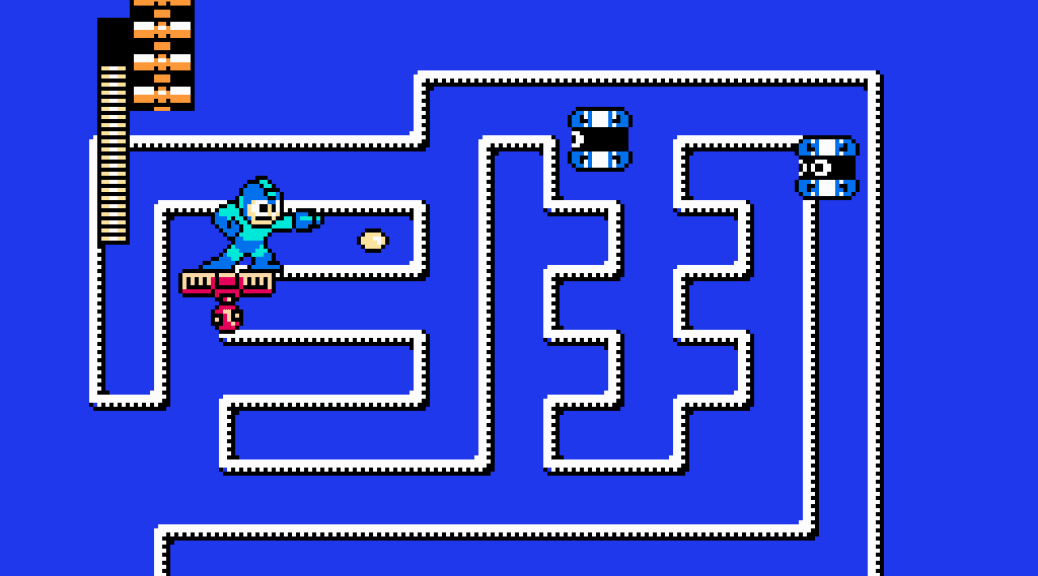
Mega Man 2, NES
The 1988 sequel to Mega Man, Mega Man 2 is more of the same rock-hard platforming and shooting action on the Nintendo Entertainment System (aka the Famicom).
Your six major protagonists this time are: Bubble Man, Air Man, Quick Man, Heat Man, Wood Man, Metal Man, Flash Man, and Crash Man. And – as usual – each has their own themed level which you can choose from in the opening menu.
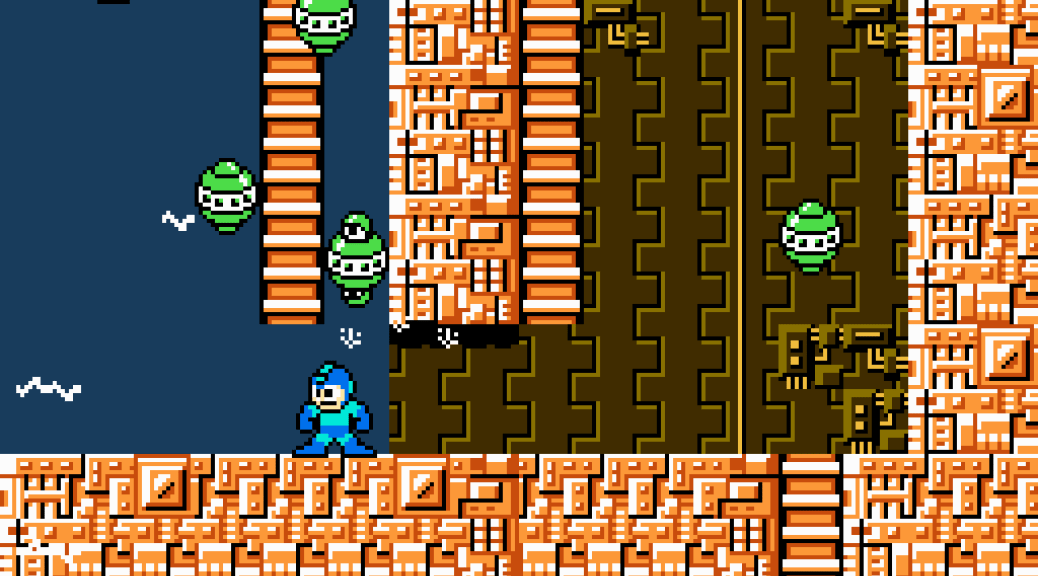
Mega Man, NES
Known as “Rock Man” in its native Japan, Mega Man is a Nintendo Famicom game developed and published by Capcom in 1987. It is the beginning of the long-running Mega Man series.
What the first Mega Man did was establish a style of its own – for both gameplay and graphics.
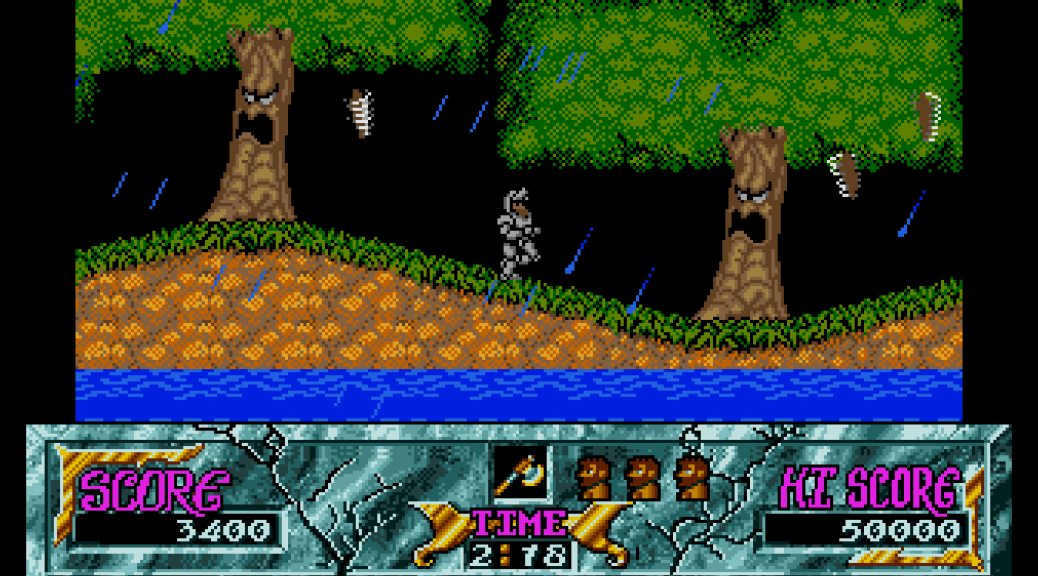
Ghouls ‘N Ghosts, Atari ST
The Atari ST conversion of Ghouls ‘N Ghosts is pretty ugly.
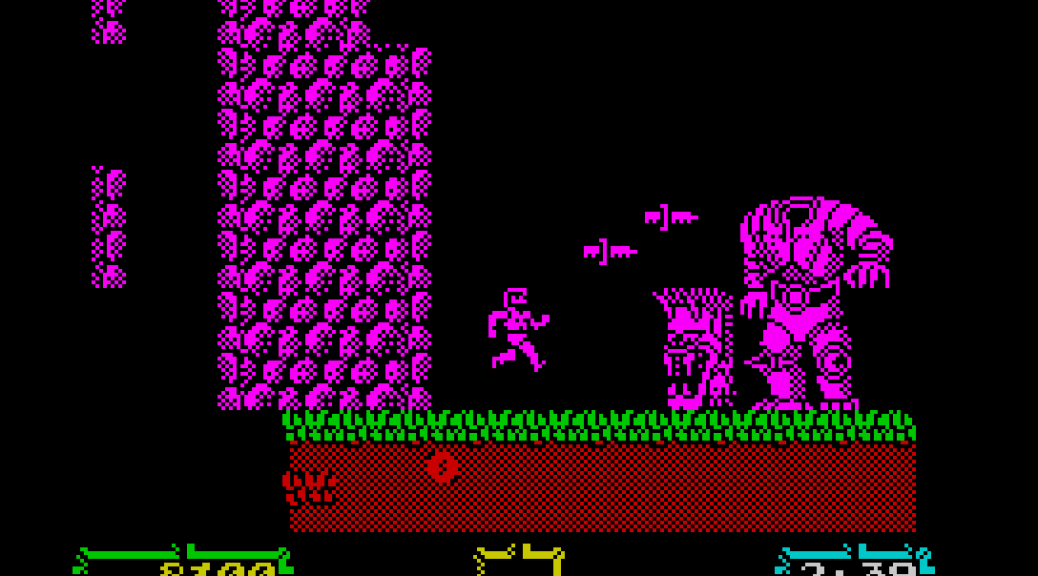
Ghouls ‘N Ghosts, ZX Spectrum
Software Creations made this Ghouls ‘N Ghosts conversion for US Gold in 1989. It has to be said that it resembles the original only superficially.

Ghouls ‘N Ghosts, PC Engine
Only ever released in Japan, this PC Engine conversion of Capcom‘s classic Ghouls ‘N Ghosts was developed by NEC Avenue and is one of the very best conversions out there.

Q*bert 3, Super Nintendo
Q*Bert 3 was developed by Realtime Associates and released in 1992, and it was a bit of a missed opportunity in some respects.

