
The full title of this 1995 sequel is Magic Carpet 2: The Netherworlds, and it is an excellent continuation of the series.
Tag Archives: action

Magic Carpet, PC
Magic Carpet from Bullfrog was first released in 1994 through Electronic Arts. It is a DOS-based, first-person action game with you – the player character – flying a ‘magic carpet’ around a series of islands, fighting evil wizards and monsters and collecting ‘mana’ to increase your magical powers.

E.T. the Extra-Terrestrial, Atari 2600
This notorious 1982 release for the Atari 2600 was – at the time – the most expensive movie license ever acquired by a video game company ($35 million dollars it apparently cost), and it also undoubtedly hastened the demise of Atari Inc. (as it was back then), and was also a major contributing factor to the video game market crash of 1983.

Chuck Norris Superkicks, ColecoVision
This 1983 action game sees you playing as Chuck Norris – the infamous action hero of the 1970s – and it really is quite bad.

Raid Over Moscow, Commodore 64
Raid Over Moscow was a controversial release for Access Software in 1984. The game depicts a fictional nuclear war scenario between the USA and Russia and involves US forces fending off nuclear attacks, then flying into the Russian capital to attack what is supposed to be The Kremlin.

Red Dead Revolver, XBox
Red Dead Revolver was first published by Rockstar Games in 2004. It is the first title in the Red Dead series.
It is a Wild West style third-person shooter, with RPG and adventure overtones. In it you play the lead – a bounty hunter called ‘Red’ who must track down various outlaws and collect the reward on them. Of course there’s more to the story than simply bounty-hunting, and this becomes clear as you progress.
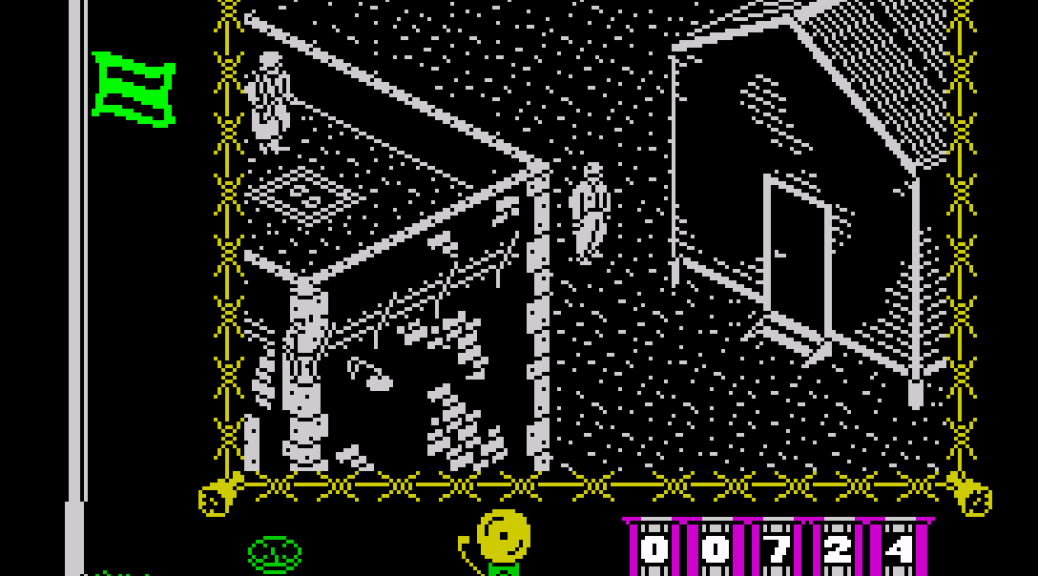
The Great Escape, ZX Spectrum
Denton Designs made this smart little POW game for Ocean Software in 1986. It basically re-enacts the risky life of being a Prisoner of War during the Second World War, with a planned escape being top of the list of things to do, and is loosely-based on the 1963 film starring Steve McQueen.

Steel Alcimus, PC
Another excellent Hijong Park retro tribute game – this one possibly his best so far – Steel Alcimus is an overhead helicopter shooter with either twin-stick joypad, or keyboard and mouse controls. I played it with mouse and keys and found the control system to be really quite ingenious.

Frantic Dimension, PC
Frantic Dimension is another great, free game, made by talented Korean Hijong Park and released on Steam in 2018.
The opening animatic in Frantic Dimension is quite funny – made even funnier by the slightly off-kilter use of English (it’s not a criticism – I like it). 🙂

Rolling Bird, PC
Rolling Bird is a modern tribute to the classic arcade game Rolling Thunder.
Graphically it looks a bit like an NES game, or an old arcade game. The colours are bold and the animation simple, but still excellent.

