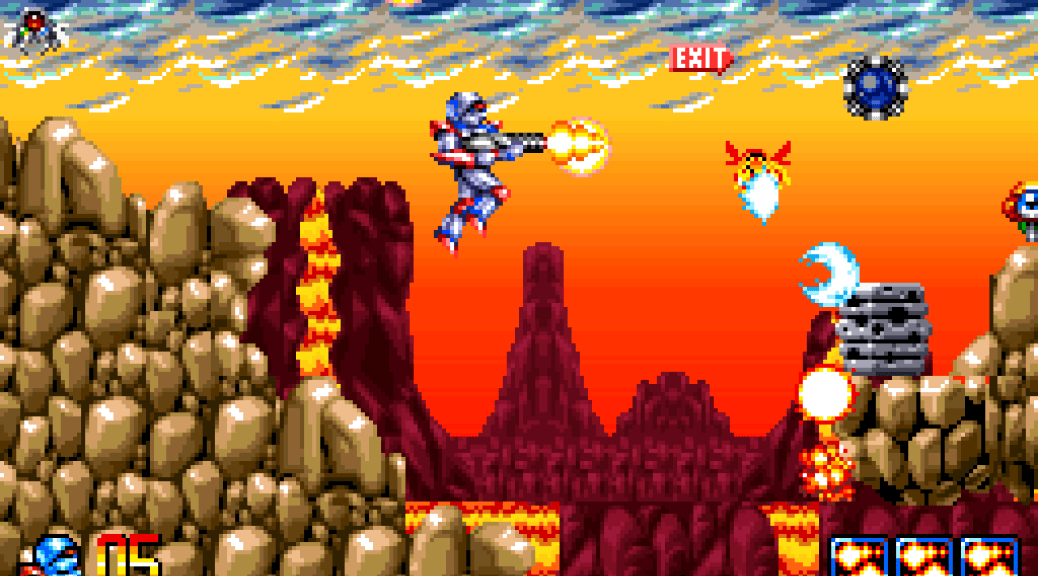
Super Turrican is an enhanced conversion of the original Turrican, created by German developer Factor 5 and published by Seika/Hudson Soft in 1993.
Tag Archives: 2D graphics
Flat, two-dimensional graphics, usually constructed of pixels. Not three-dimensional.

Mario Tennis, Game Boy Color
Developed by Camelot Software Planning and published by Nintendo in 2000 (in Japan – 2001 everywhere else), Mario Tennis on the Game Boy Color is an alternate handheld version of the Mario-based tennis game on the Nintendo 64 which was published under the same name that same year.
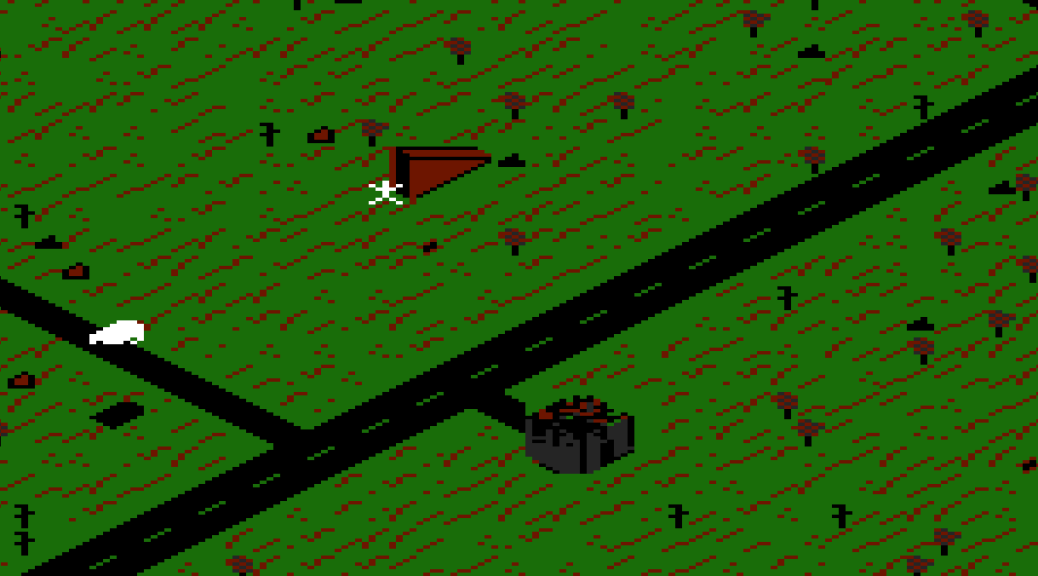
Panther, Atari 8-bit
This Mastertronic Atari 8-bit budget release from 1987 feels like a budget game – and I don’t mean that as a compliment. It feels like an unfinished, un-polished game.
Panther is an isometric shoot ’em up in the style of Zaxxon, but with very little going on in the game itself.

Shinobi II: The Silent Fury, Game Gear
Shinobi II: The Silent Fury is the sequel to the first Shinobi on the Game Gear and it was first published by Sega in 1992.
It’s a scrolling platform action game where you control Joe Musashi on a mission to retrieve five elemental crystals that have been stolen by the enemy and hidden across different locations in the game.

World Class Leaderboard, Game Gear
The Game Gear has a surprisingly good conversion of World Class Leaderboard in its library. It was programmed by British company Tiertex and published by Sega in 1991.
Anyone who knows golf games will know Leaderboard – created by Bruce and Roger Carver of Access Software – because it was one of the first really good golf games ever made for home computers. It has a very simple but effective control system that makes its easy to play and understand. All versions of Leaderboard use this two-bar, two-press control system, including this conversion on the Game Gear.

Marble Madness, Game Gear
The Game Gear has a surprisingly good conversion of the classic Atari arcade game, Marble Madness, in its library. It was coded by Steve Lamb and published by Tengen in 1992.

Arena, Game Gear
The game’s full North American title is Arena: Maze of Death, but it was released as just Arena in Europe so that’s what I’m going to call it. It’s an isometric shoot ’em up with you playing a “pro-democratic freedom fighter” called Guy Freelander who must fight his way through a variety of industrial locations in order to reach a television station to broadcast proof of an evil corporation’s wrongdoings.
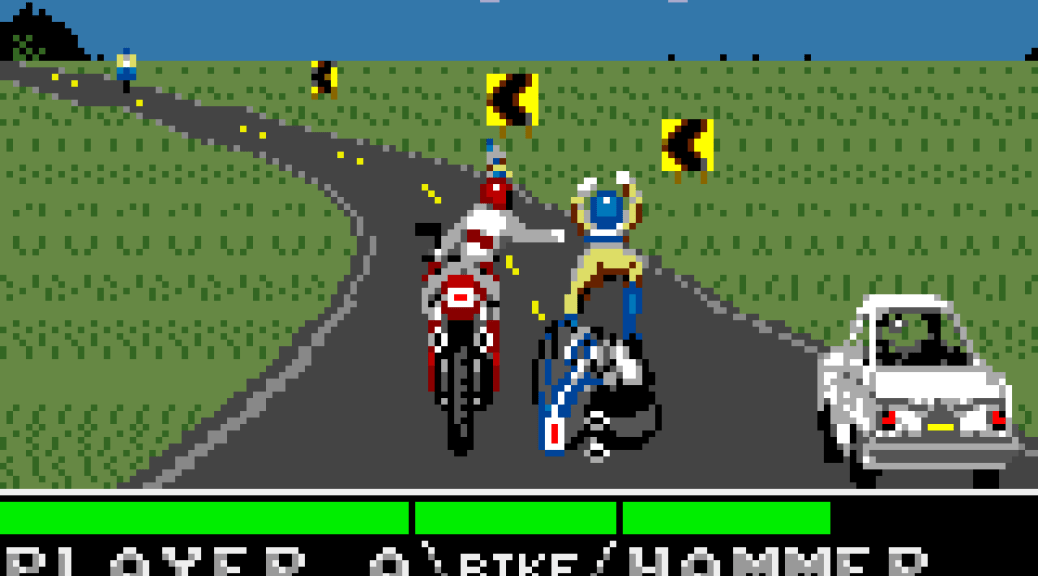
Road Rash, Game Gear
A handheld conversion of the classic Megadrive motorbike racing game that works very well on the Game Gear. Game Gear Road Rash was programmed by Gary Priest for Probe Software and published by US Gold in 1993.

Columns, Game Gear
The Game Boy had Tetris and the Game Gear had Columns, although – frankly – Columns isn’t nearly as good as Tetris… Columns was published for the Game Gear by Sega in 1991 and is based on the 1990 Sega arcade game of the same name.

Zybex, Atari 8-bit
Zybex is a 1988 shoot ’em up from British developer/publisher Zeppelin Games. It’s a horizontally-scrolling progressive weapons blaster with a main character that looks a bit like the jetpack guy from Dropzone.

