
The Lynx port of Atari Games‘ 1987 arcade game, Xybots, was developed by NuFX, Inc. and first released by Atari Corporation in 1991. It is a futuristic third-person shooter where you explore a maze full of deadly robots, to ultimately confront the ‘Master Xybot‘ and defeat it.
Tag Archives: shooting
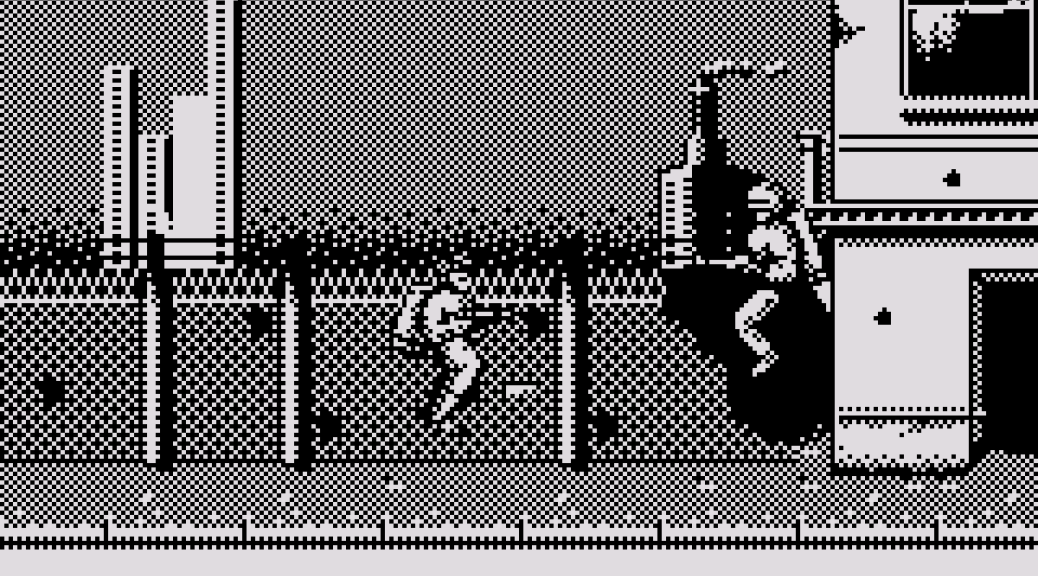
RoboCop 3, ZX Spectrum
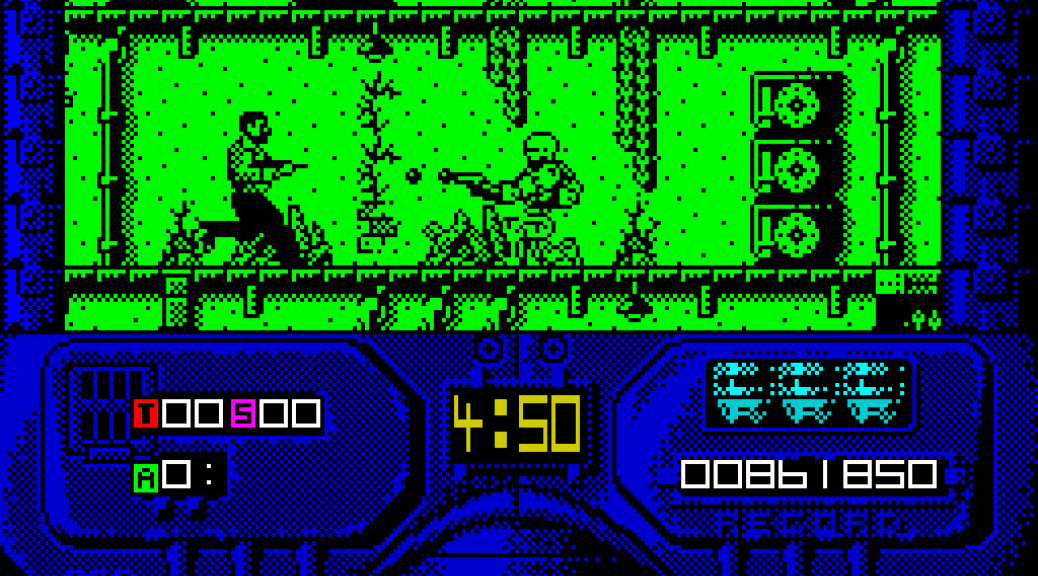
RoboCop 2, ZX Spectrum
Based on Irvin Kirshner‘s underrated 1990 sequel to RoboCop, in RoboCop 2 you once again take the role of the cyborg cop of the future in order to uphold the law and protect the innocent. RoboCop 2 was developed and published by Ocean Software and released soon after the film came out.

Krakatoa, ZX Spectrum
Written by Paul W. Reynolds and published for the ZX Spectrum by Abbex Electronics in 1984, Krakatoa – also known as “Escape From Krakatoa” – is a scrolling action game with multiple objectives in which you fly a helicopter in order to rescue people from the infamous erupting volcano.

Ordyne, Arcade
Released in Japan only, Ordyne is a cute and colourful (and very Japanese) one or simultaneous two-player ‘bullet hell’ shooter that was developed and distributed by Namco in 1988.

Impossamole, PC Engine
The 1991 PC Engine/TurboGrafx-16 version of Gremlin Graphics‘ classic Monty Mole game is a rare treat: it’s a British-developed PC Engine game, and an alright one at that. And, believe it or not, but the PC Engine version of the game is the one that’s currently available on Steam and GOG.com.

Combat School, ZX Spectrum
The ZX Spectrum conversion of Konami‘s arcade game, Combat School, was developed and published by Ocean Software in 1987.

Timecop, Super Nintendo
Developed by French company Cryo Interactive and published by JVC for the Super Nintendo in 1995, Timecop is based on the 1994 film, starring Jean-Claude Van Damme and directed by Peter Hyams. The game is arguably one of the worst titles ever released for the SNES…

U.N. Squadron, Arcade
Released in Japan as “Area 88” and based on the Manga series of the same name, U.N. Squadron is a horizontally-scrolling bullet hell shooter arcade game developed and distributed by Capcom in 1989. It features three playable characters, each flying a different aircraft, and one or simultaneous two-player gameplay.
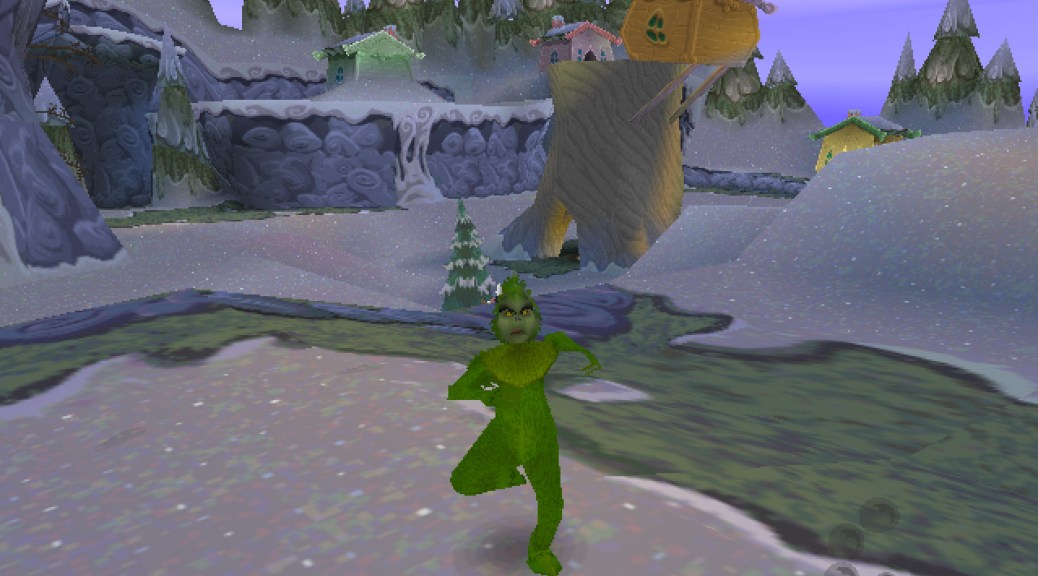
The Grinch, Dreamcast
The Grinch on the Sega Dreamcast was developed by Artificial Mind & Movement and published by Konami in 2000 – to coincide with the film “How The Grinch Stole Christmas“, starring Jim Carrey, which was released the same year. The film is based on the Dr. Seuss book, first published in 1957, which criticises the commercialisation of Christmas.
 The King of Grabs