
Dark Chambers is a one or two-player maze/action game that was directly influenced by Dandy, in that it was originally written by John Howard Palevich – the creator Dandy – to further expand (or in this case: simplify) the concept of a multiplayer fantasy action game.
Tag Archives: shooter
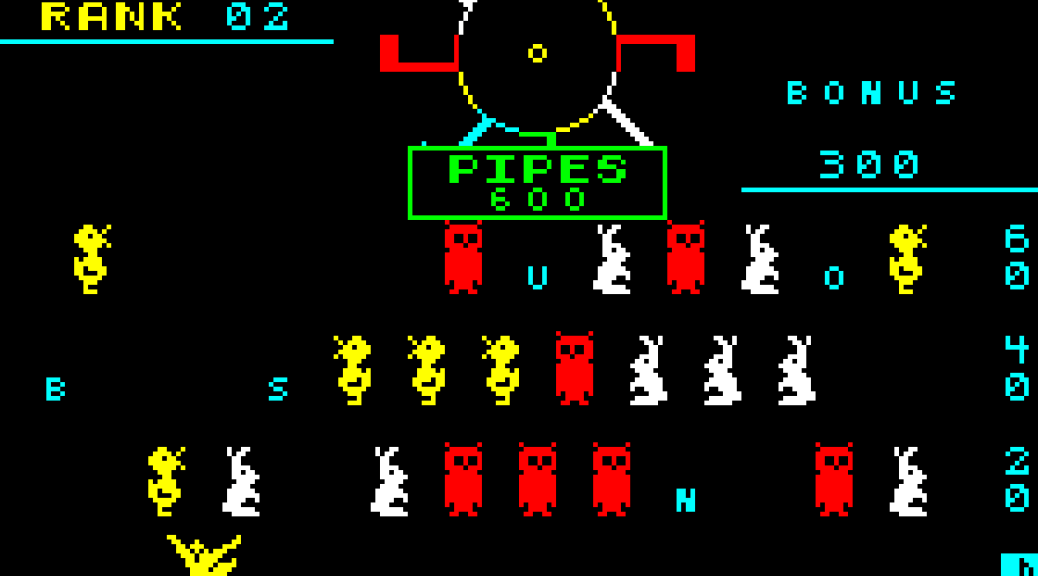
Carnival, Arcade
The classic 1980 arcade game, Carnival, was developed by Gremlin Industries (not to be confused with Gremlin Graphics) – an American company – and manufactured by Sega in 1980. It’s a funfair-themed game where the aim is to shoot moving targets while conserving your limited supply of ammunition for as long as possible.

Amid Evil, PC
Amid Evil is a first-person, single-player fantasy shooter/action game developed by Indefatigable and published by New Blood Interactive in 2019. The game started life as an unfinished Doom mod in 1997 and later grew into Amid Evil when co-creators and childhood friends Leon Zawada and Simon Rance formed their own company, with Amid Evil being their first project.

Cybernoid II: The Revenge, ZX Spectrum
The sequel to Raffaele Cecco‘s 1987 Spectrum hit Cybernoid is more of the same devilishly difficult flick-screen shooting fun.

Hexen II, PC

Hexen: Beyond Heretic, PC
Hexen is the 1995 MS-DOS-based sequel to Heretic and is another fantasy-themed first-person shooter utilising the Doom engine. Or at least: a modified version of the Doom engine. It was again developed by Raven Software and published by id Software, and John Romero once again acted as producer of the game.
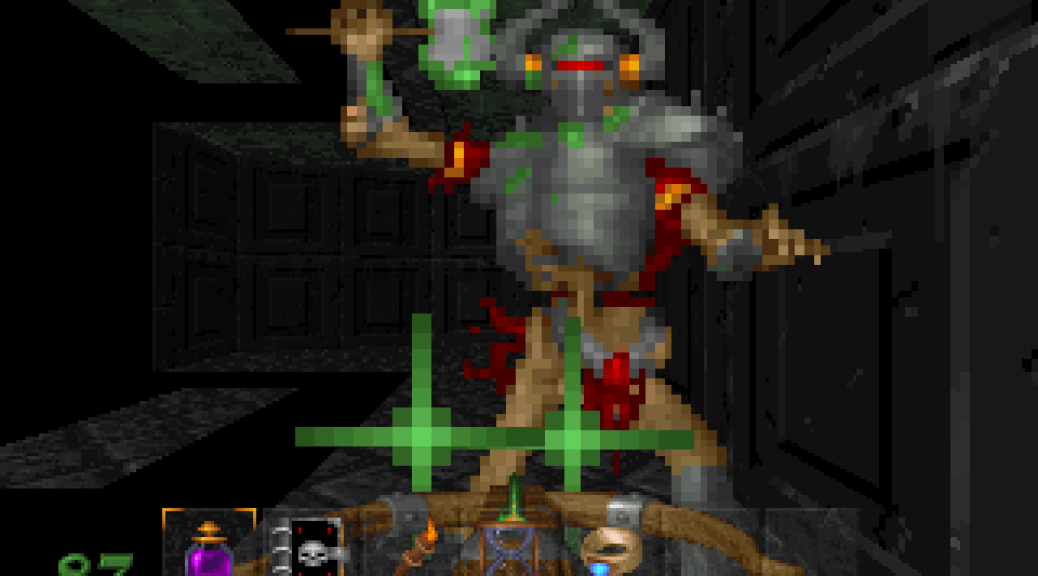
Heretic, PC
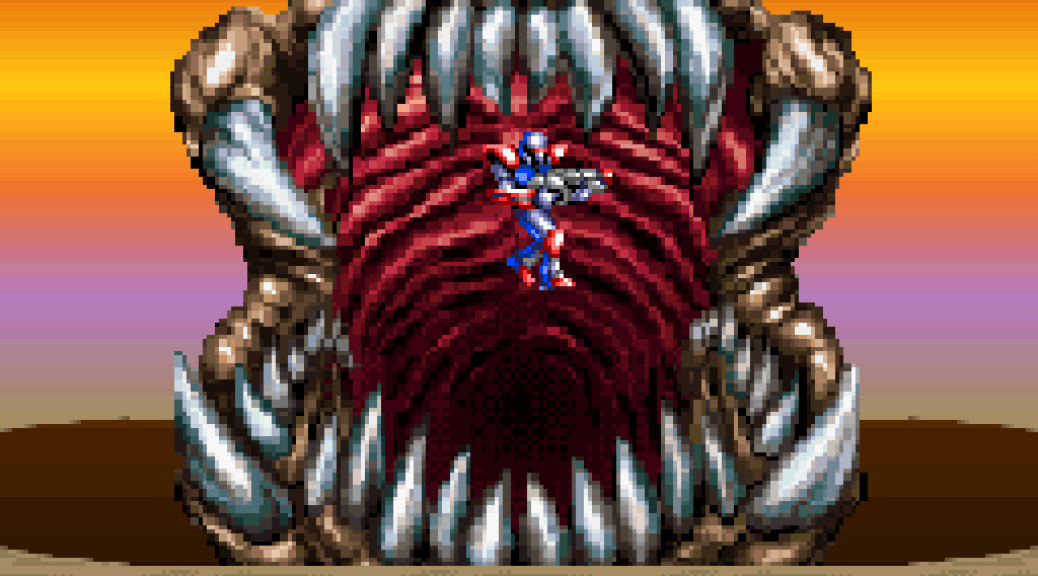
Super Turrican 2, Super Nintendo
This sequel to Super Turrican was again created by German developer Factor 5 and was published by Ocean Software for the Super Nintendo in 1995.

Mega Turrican, Megadrive/Genesis
Mega Turrican is a Megadrive/Genesis-exclusive remake of the famous run-and-gun shooter which was popularised on the Commodore 64 by Rainbow Arts and later ported to other systems. This version was developed by Factor 5 (as were all of the later ports) and published by Data East in North America and Sony Imagesoft in Europe in 1994.
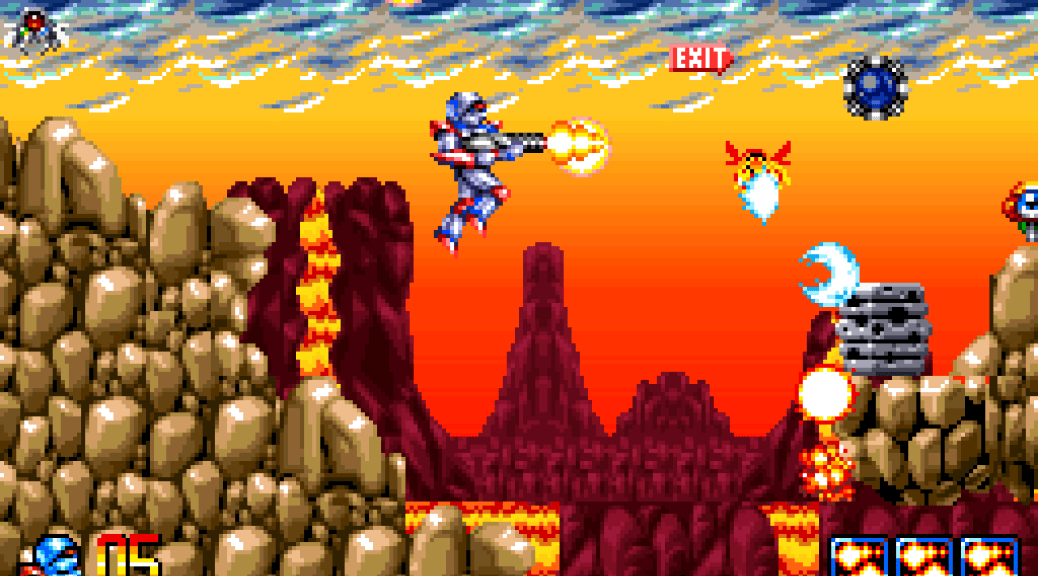
Super Turrican, Super Nintendo
Super Turrican is an enhanced conversion of the original Turrican, created by German developer Factor 5 and published by Seika/Hudson Soft in 1993.

