
The Atari Lynx version was the original version of Chip’s Challenge. It was developed by Chuck Sommerville at Epyx and first released in 1989.
Tag Archives: maze
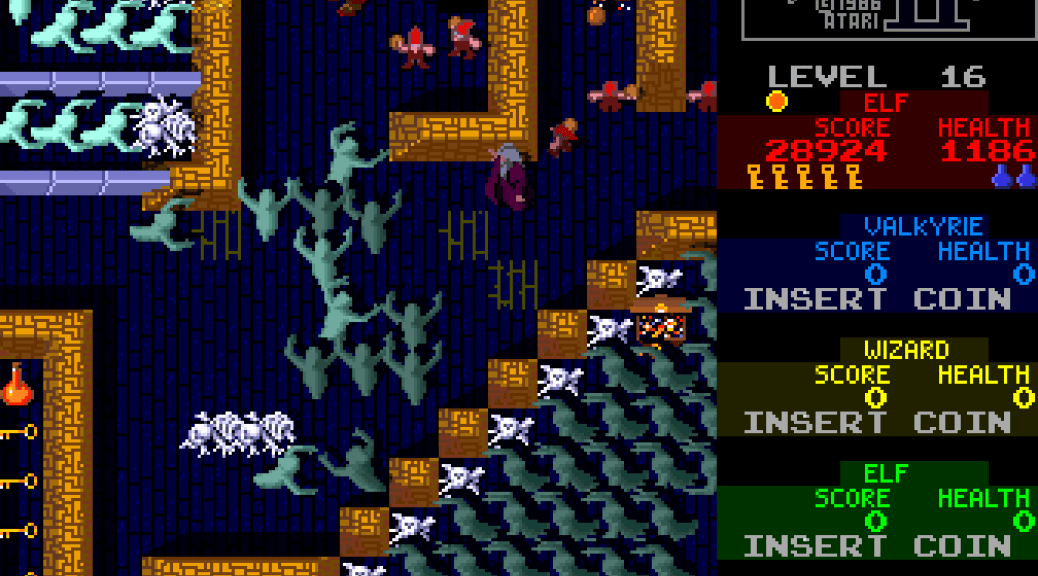
Gauntlet II, Arcade
Gauntlet II is the 1986 sequel to the classic four-player arcade game, Gauntlet. It was made by pretty much the same Atari Games team that made the first game, so retains a lot of its qualities. Which is great, because the first Gauntlet was brilliant and fans wanted more of the same – only with enhancements. Which is exactly what they got.

Spindizzy Worlds, Super Nintendo
Paul Shirley‘s superb isometric puzzle/action game, Spindizzy Worlds, translates well to the Super Nintendo, even though this conversion did not have his blessing.

Spindizzy, Apple II
I’m not sure if it’s the game or the emulator – or something else – but controlling the spinning top-like device, GERALD, in the Apple II version of Spindizzy is like trying to navigate Cape Horn in a rowing boat in the depths of winter. It’s suicidal…

Spindizzy, Commodore 64
In my mind: one of the best 8-bit games ever made. Spindizzy is part Marble Madness tribute; part completely original game, with you controlling a spinning top-like device, called GERALD, exploring a large, isometric game world that is suspended in space.
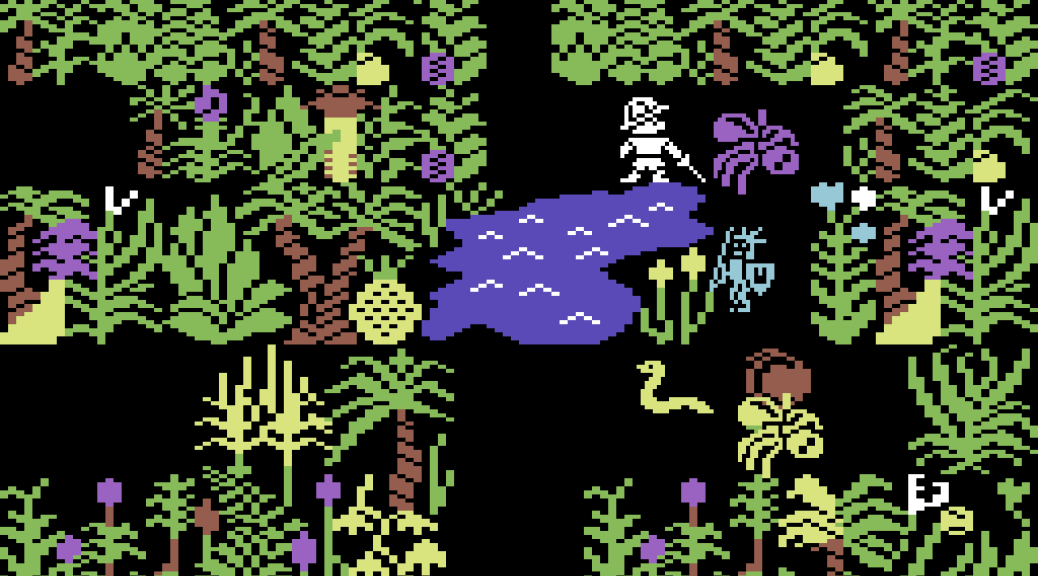
Sabre Wulf, Commodore 64
The Commodore 64 version of Ultimate‘s classic Sabre Wulf was made by Greg Duddle of Mr. Micro for Firebird Software, who published the game in 1985.
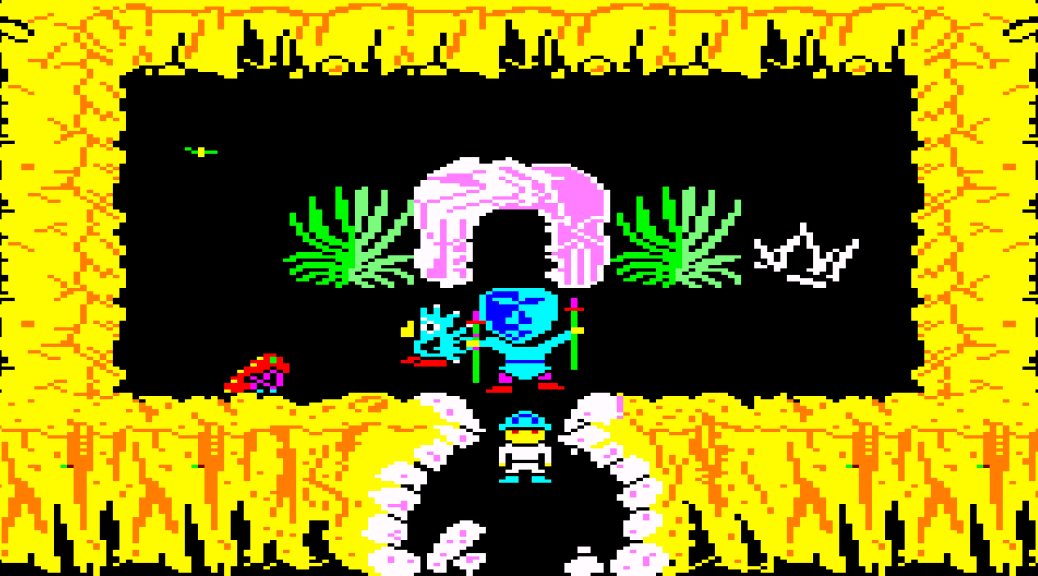
Sabre Wulf, Amstrad CPC
The Amstrad conversion of Sabre Wulf features the same chunky graphics as the BBC version, except with some extra colouring. It does make make a difference though. The Amstrad version doesn’t look quite as harsh as the BBC version.

Sabre Wulf, BBC Micro
The BBC Micro version of Ultimate Play The Game‘s classic Sabre Wulf is so chunky and garish that it hurts the eyes! That said: it plays well enough.
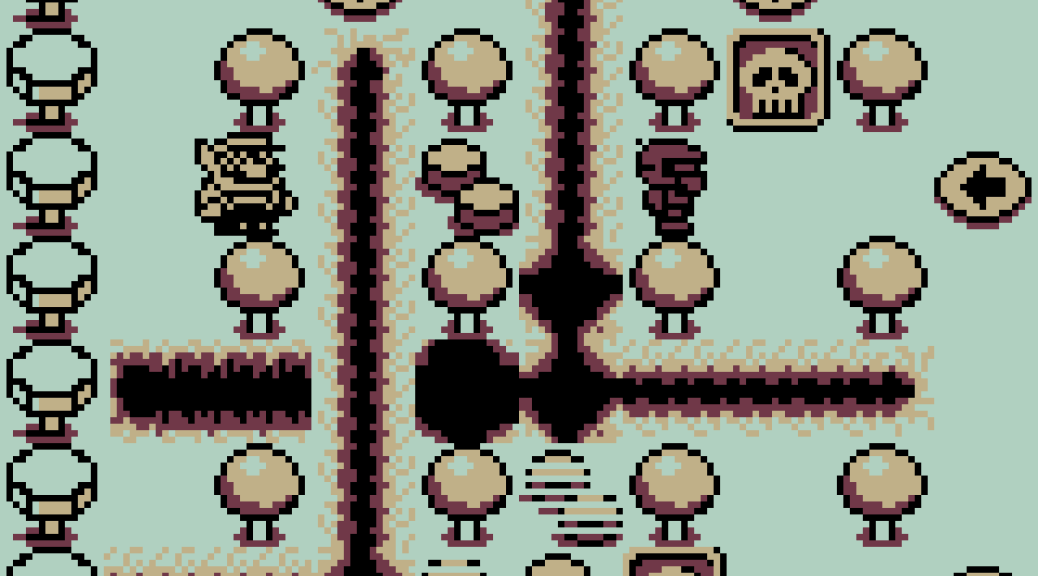
Wario Blast, Game Boy
What do you get when you cross Hudson Soft‘s classic Bomberman with Nintendo‘s cheeky Wario? Answer: you get Wario Blast on the Game Boy. A super fun handheld action game with puzzle overtones that was first released in 1994.

Pentagram, ZX Spectrum
By the time Pentagram came out in 1986, famous development and publishing house – Ultimate Play The Game – had been sold off to US Gold. How much of Pentagram was therefore down to Ultimate‘s designers, and how much was down to US Gold‘s programmers, is still a matter for debate. Most likely, Pentagram was a construct of US Gold, with Ultimate providing only the initial ideas, graphics and game engine (the famous Filmation Engine).
 The King of Grabs