
Mr. Do’s Wild Ride is the second sequel to the classic Mr. Do! and was released by Universal (not the film studio – the Japanese company) in 1984.
Tag Archives: elevators

Impossible Mission, BBC Micro
US Gold and Epyx converted the classic Impossible Mission to the BBC Micro in 1986 and it was a reasonable success.
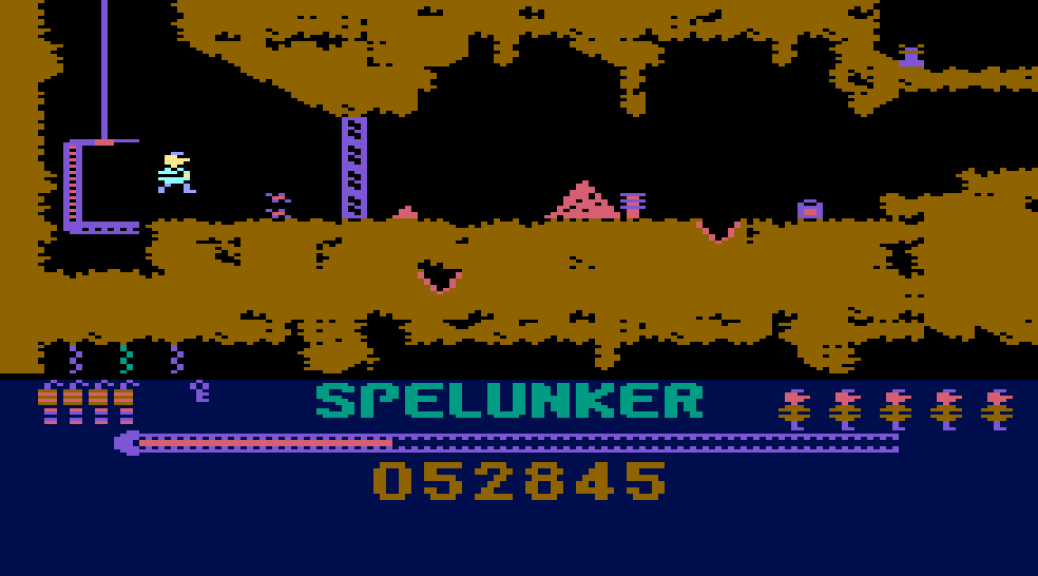
Spelunker, Atari 8-bit
This 1983 scrolling platform game was quite influential when it was first released. A lot of people tried to copy it, but very few got anywhere near as good. This Atari 8-bit version is the original.

Spindizzy, Atari 8-bit
Paul Shirley‘s classic isometric puzzle/adventure game, Spindizzy, originated on the Amstrad CPC, but is also quite excellent on the Atari 800.
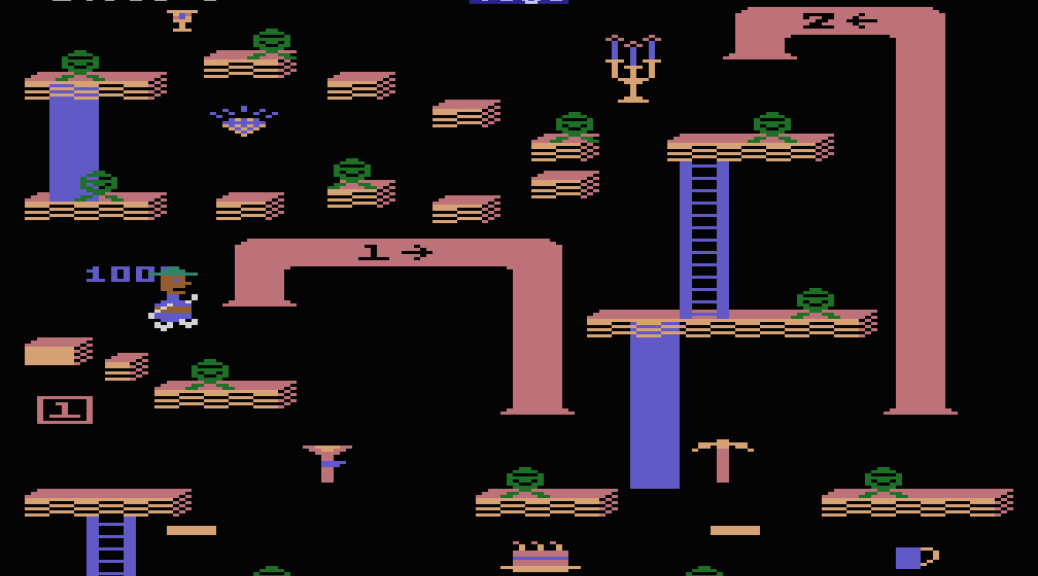
Bounty Bob Strikes Back, Atari 8-bit
The sequel to Miner 2049er, Bounty Bob Strikes Back, again features the jumping cowboy trying to walk on every piece of platform surface, although this game is much more subtle and challenging than the first one.

Booty, ZX Spectrum
Booty was a very early budget release from Firebird Software (the video game division of British Telecom) and was important in a number of ways.

Zelda II: The Adventure of Link, NES/Famicom
Although this second Zelda game sold well (more than 4 million copies worldwide at the time), it is not particularly well-liked.
Continue reading Zelda II: The Adventure of Link, NES/Famicom

Dynamite Dan, ZX Spectrum
Rob Bowkett‘s 8-bit platform game became an instant hit on the ZX Spectrum when it first came out in 1985.
Dynamite Dan had groundbreaking graphics (for the time) and was seen as a “Jet Set Willy-beater” by some. One thing is for sure: it had (still has) a lot of character. Especially in the main sprite of Dan.

Metroid Fusion, Game Boy Advance
Also known as “Metroid 4“, Metroid Fusion on the Game Boy Advance is the fourth episode in the famous run-and-gun series from Nintendo and was first released in 2002.

Super Metroid, Super Nintendo
The third game in the Metroid series is a top class Super Nintendo classic.
Super Metroid (1994) is more detailed than both previous Metroid games put together, although the basic structure is the same – explore various levels to find your latent abilities, all of which have been lost (“Why does this keep happening in Metroid games?” you may ask. “It’s in the script,” is my answer).

