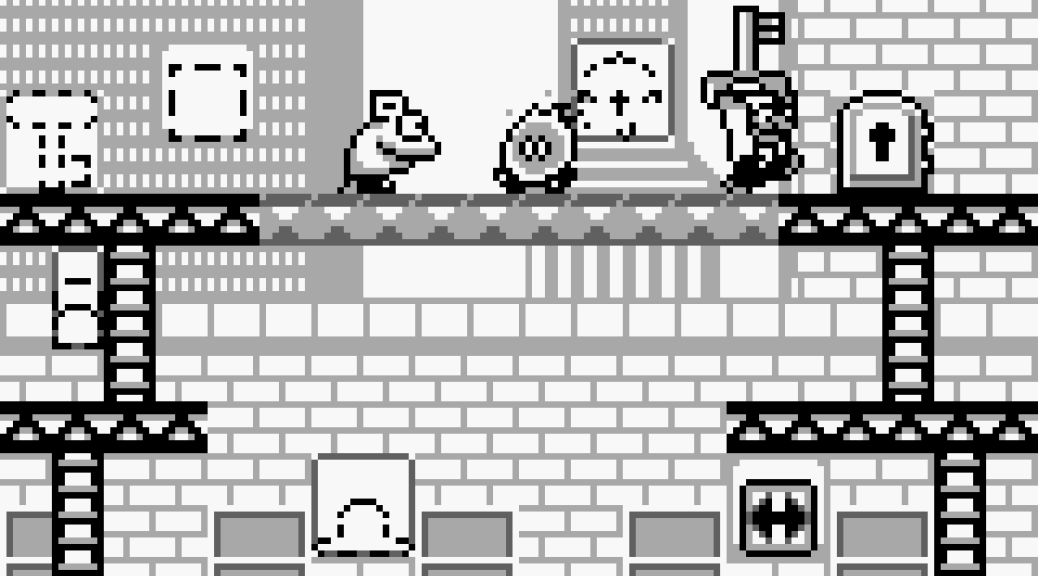
The 1994 Game Boy remake of Nintendo‘s iconic arcade game is something very special. It is an enhanced re-imagining of Donkey Kong that begins with the original game and then transforms into something amazing – a brand new game with nine themed stages and 95 individual levels.
Tag Archives: throwing
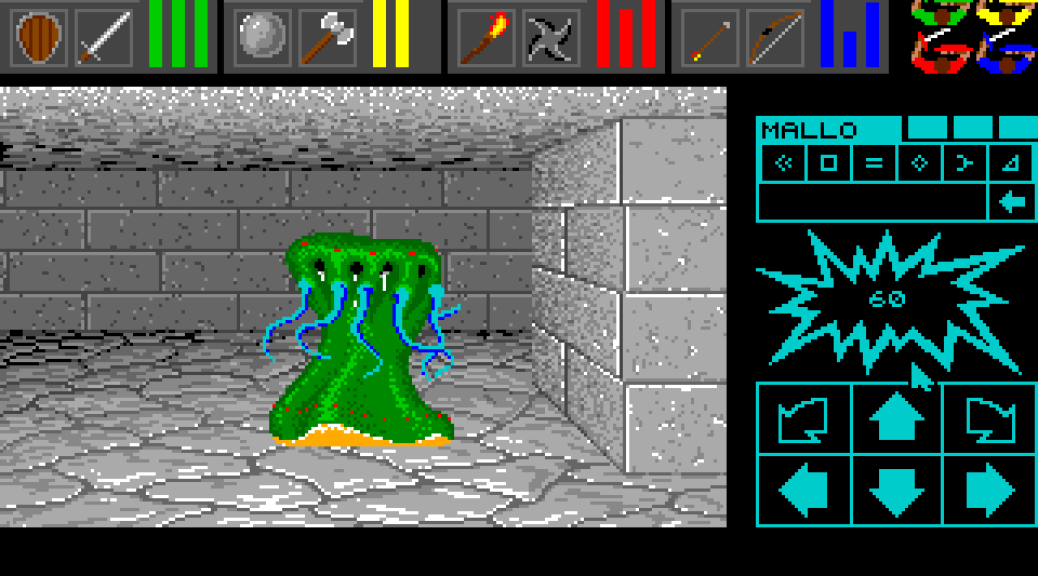
Dungeon Master, Apple IIgs
The 1989 Apple IIgs conversion of FTL‘s Dungeon Master was created by the original developers and is therefore a perfect port of this classic Role-Playing Game. The game requires a minimum of 1MB of RAM to run, like the Amiga version, and a processor running at 2.8MHz or above makes it playable at the right speed.

Chaos Strikes Back, FM Towns
Chaos Strikes Back is a continuation of the classic Role-Playing Game, Dungeon Master. It’s a sequel – but not the sequel – to the first game, and was originally released as a stand-alone expansion disk on the Atari ST. On the FM Towns it was published on CD-ROM by Victor Musical Industries in 1990, and there’s a bit of faffing around to do before you can actually start the game*. Thankfully you can at least do this in English as there’s an option to play in that language.
*= Before you can play Chaos Strikes Back you must either create a new party (by entering the prison and choosing from the available portraits), and then save it to a new 720Kb floppy disk; or load a set of characters from a pre-existing FM Towns Dungeon Master save. You then need to enter the CSB portrait editor utility program and then click on ‘Make New Adventure’ to activate and save a new Chaos Strikes Back file to the disk. Only then will you be able to load and start the game…
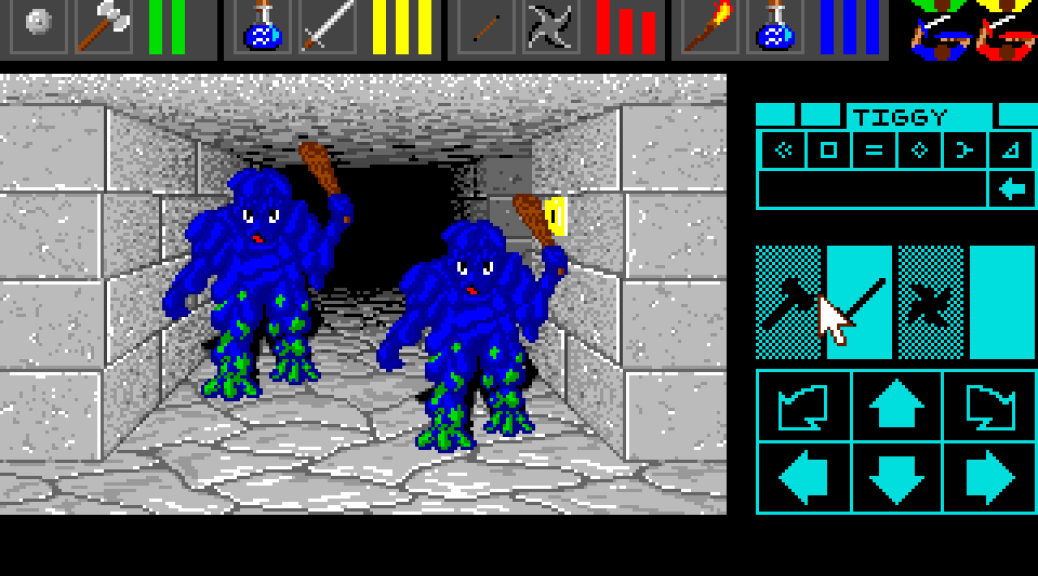
Dungeon Master, FM Towns
The FM Towns version of the classic Dungeon Master was ported by FTL Games (the game’s original developer) and published by Fujitsu in 1989 (two years after the original Atari ST version, and three years before the DOS version came out). This was a Japan-only release, on CD-ROM, but the game is playable in both English and Japanese, which is great.

High School Graffiti Mikie, Arcade
High School Graffiti Mikie is a revised version of Konami‘s classroom chase game, Mikie, with gameplay that’s been toned down to make it less violent.
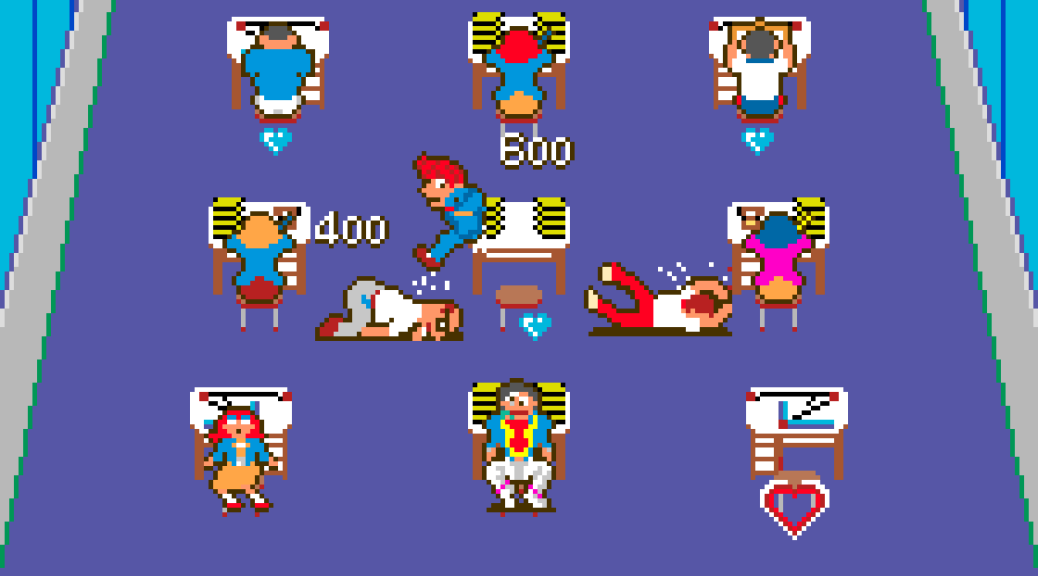
Shinnyū Shain Tōru-kun, Arcade
Here’s a set of screenshots from the altered Japanese version of Konami‘s classic 1984 arcade game, Mikie. Known as “Shinnyū Shain Tōru-kun” (“Freshman Employee Toru“) in Japan.
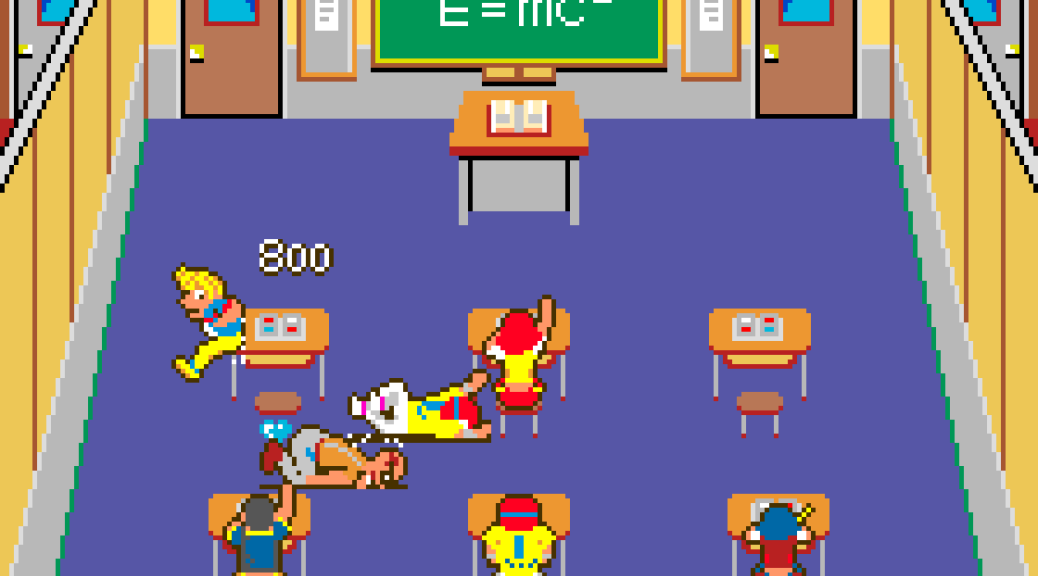
Mikie, Arcade
Konami‘s classic 1984 arcade game, Mikie, is a strange one. You play a schoolkid who must collect hearts across a series of five different stages and to ultimately deliver them to his girlfriend, Mandy, who is waiting for him outside school.

Golden Axe: The Duel, Arcade
Golden Axe: The Duel is the third arcade game in the Golden Axe series (after Golden Axe and The Revenge of Death Adder) and is a two-player versus fighting game based on characters from the popular side-scrolling hack and slash games. It was first released into arcades in February 1995.

Golden Axe: The Revenge of Death Adder, Arcade
Golden Axe: The Revenge of Death Adder is the 1992 sequel to the classic 1989 arcade game, Golden Axe. It features four new playable characters, more detailed graphics and four-player simultaneous gameplay (although that was dependent on the cabinet – variations were available to arcade operators).
Continue reading Golden Axe: The Revenge of Death Adder, Arcade

Paperboy, Nintendo 64
The Nintendo 64 version of Paperboy is one of the few full-3D remakes of the game. Everything in it has been changed and turned into 3D – the streets, the characters, and the gameplay. The game was developed by High Voltage Software and first published by Midway in 1999.
 The King of Grabs