
This original ZX Spectrum version of Raffaele Cecco‘s Cybernoid was released by Hewson Consultants in 1987.
Tag Archives: 8-bit

Winter Olympiad 88, ZX Spectrum
Winter Olympiad 88 for the ZX Spectrum was programmed by Derek Brewster, with graphics by Philip Scott. It is a multi-event winter sports game, no doubt created to cash in on the 1988 Winter Olympics in Calgary, Canada.

Speed King 2, ZX Spectrum
A budget motorbike racing game, created by Derek Brewster in 1987 for Mastertronic.
Speed King 2 is the sequel to… well, nothing, because there’s isn’t a Speed King 1, as far as I can tell. Was there a prequel to this? If there was, I can’t find it… Maybe Brewster was trying to make a sequel to Full Throttle? Because Speed King 2 does look a bit like it. I dunno.

Mission Jupiter, ZX Spectrum
Codemasters released this Derek Brewster game in 1987 under the title of Mission Jupiter (also known as Jupiter Mission in some territories).
It’s a simple side-scrolling shooter with a guy wearing a jet pack.
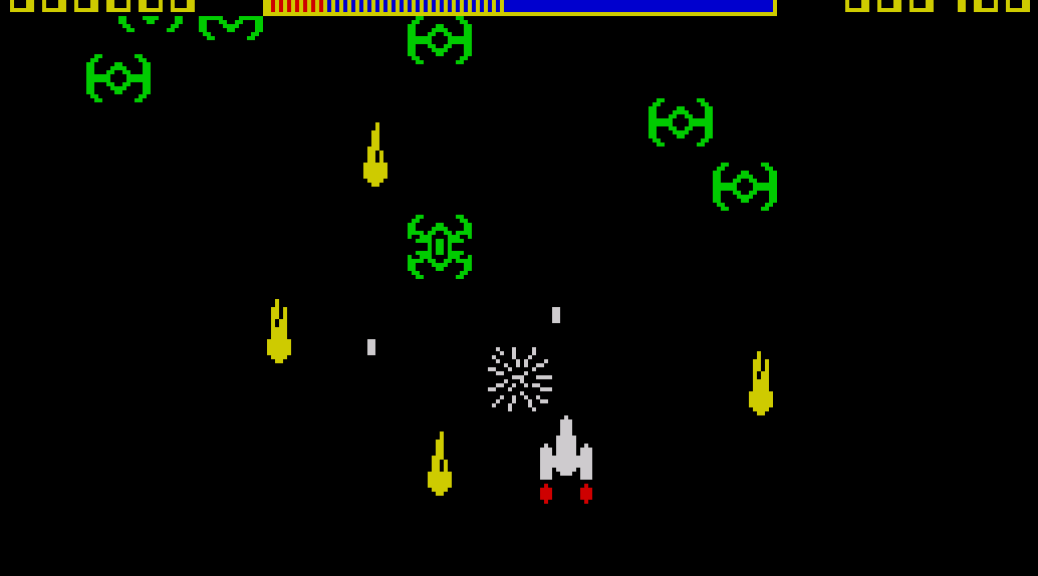
Starclash, ZX Spectrum
An early attempt at a vertical shoot ’em up by Derek Brewster, Starclash was published by Micromega for the ZX Spectrum in 1983.
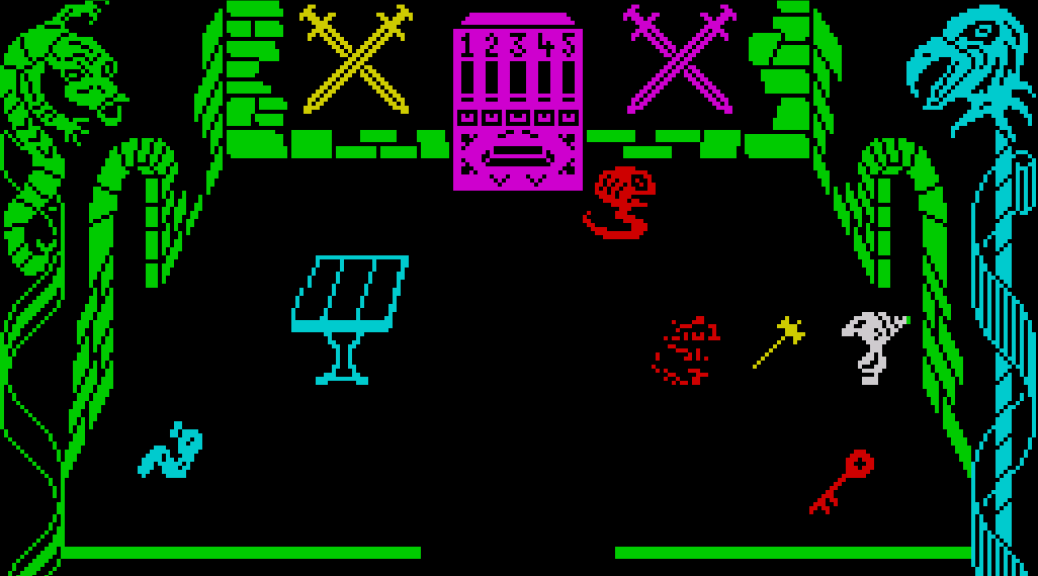
Con-Quest, ZX Spectrum
Con-Quest is a 1986 ZX Spectrum release from Mastertronic, created by the inimitable Derek Brewster.
In it you play a character called Oscar who has just inherited a large castle. The castle isn’t vacant though – it’s full of the evil minions of the demon Grell, who you must evict.
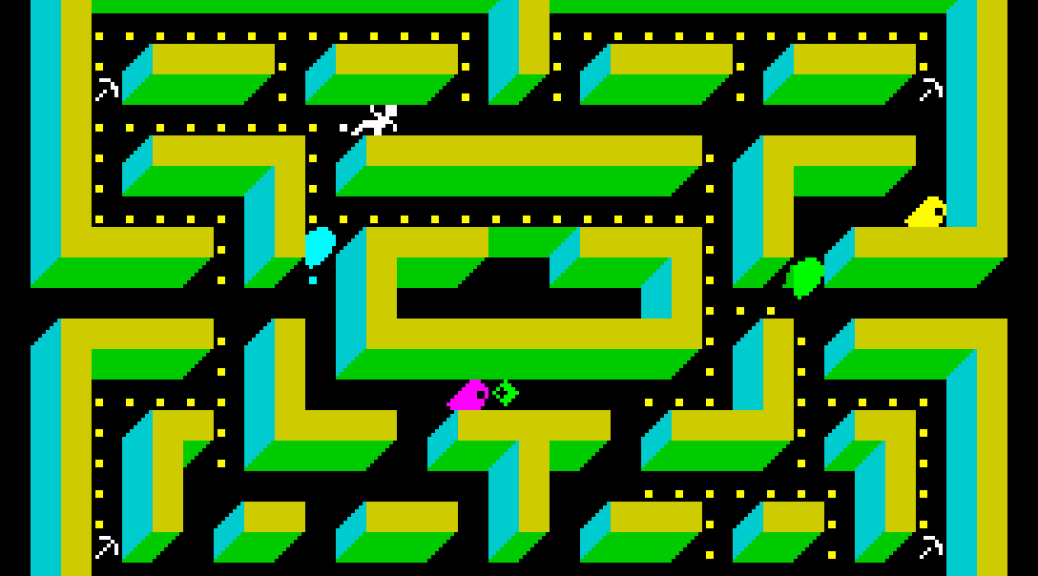
Haunted Hedges, ZX Spectrum
Haunted Hedges is Derek Brewster‘s early ZX Spectrum ‘adaptation’ of Pac-Man, released by Micromega in 1983.

The Curse of Sherwood, ZX Spectrum
The Curse of Sherwood is a 1987 action/adventure game from the prolific programmer/designer Derek Brewster.
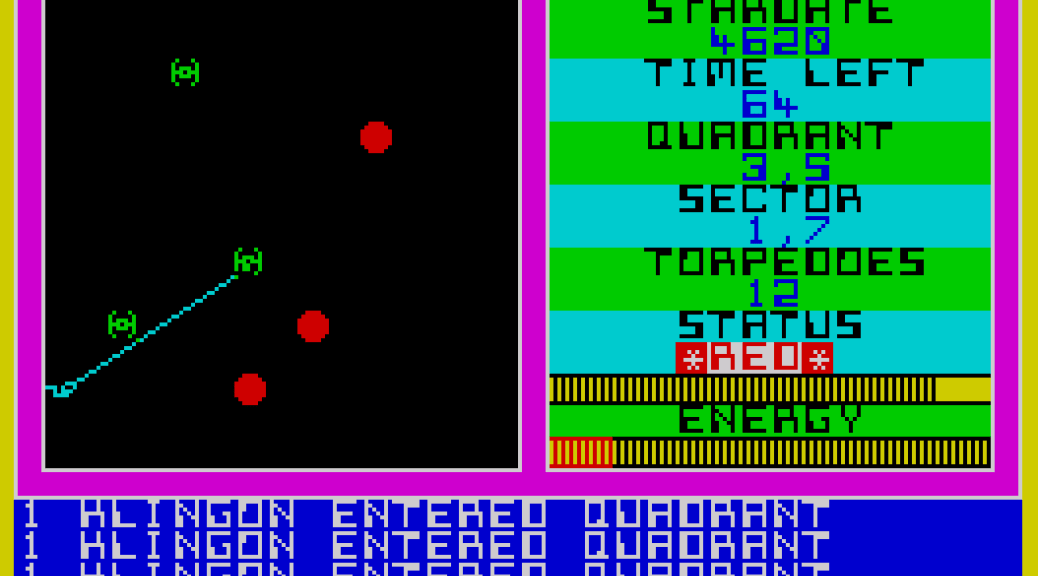
Star Trek, ZX Spectrum
Star Trek, released by Mikro-Gen in 1983, is designer and programmer Derek Brewster‘s first commercial game.

Kentilla, ZX Spectrum
Kentilla is a text adventure – with graphics – released on the ZX Spectrum by Micromega in 1984. It was written by the prolific (back then) Derek Brewster.

