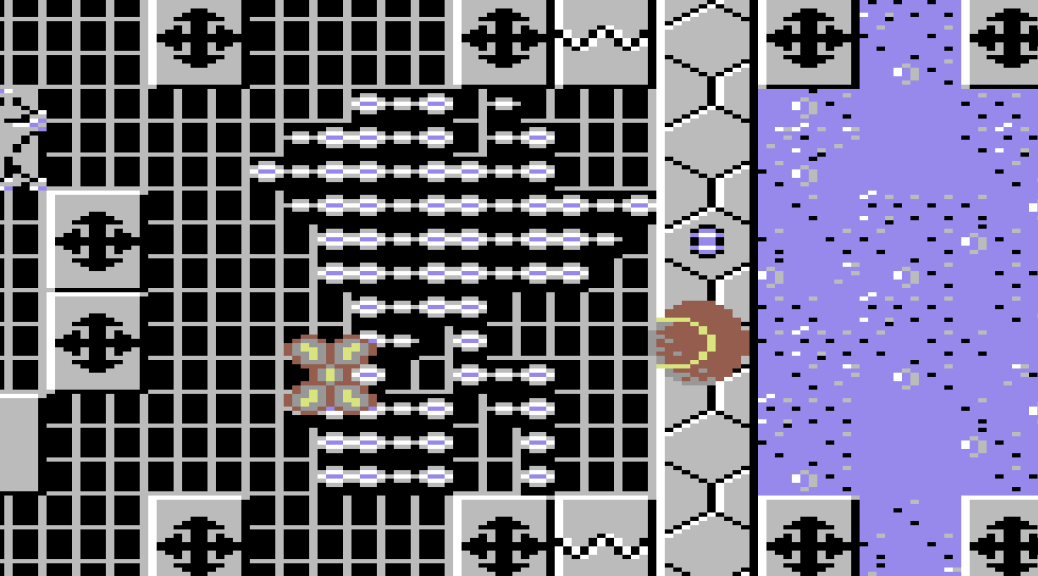
Re-Bounder is the 1987 sequel to the brilliant ball-bouncing game, Bounder. It was once again developed and published by Gremlin Graphics and this time features both horizontally and vertically-scrolling gameplay, whereas the previous game scrolled only vertically.
Tag Archives: 1987
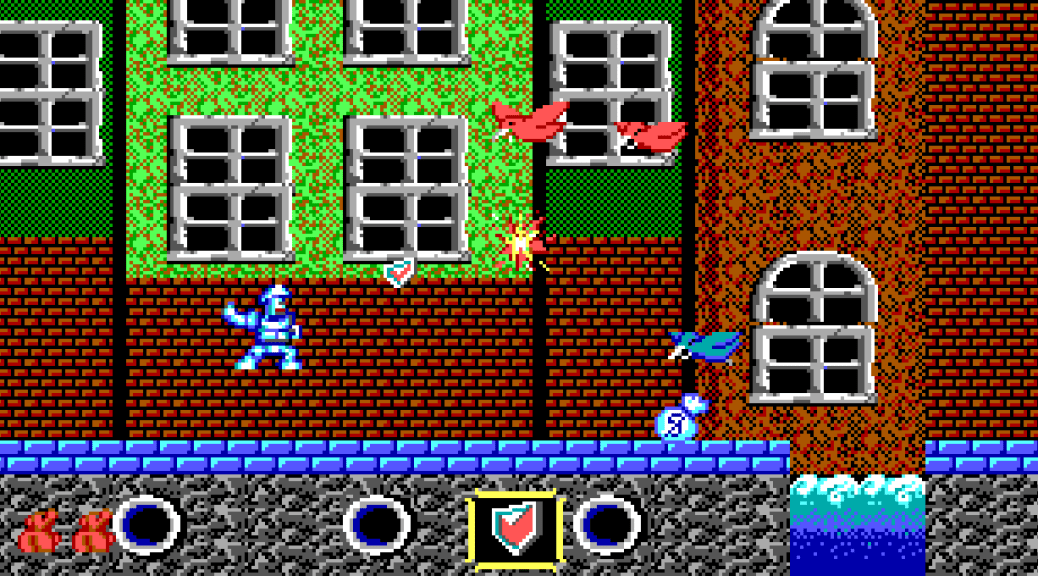
Ghosts ‘N Goblins, PC
The 1987 PC MS-DOS version of Ghosts ‘N Goblins, I’m sorry to say, is a bit of a travesty. It looks terrible, and also plays like a lame duck. In fact, unless you can get the game set up properly in DOSBox (which took me some time to do), then it’s pretty much unplayable*.

Flying Shark, Arcade
Developed by Toaplan and first released into arcades in 1987, Flying Shark (aka Sky Shark in North America) is a challenging vertically-scrolling bullet hell shooter with a military theme. You fly a biplane over jungle and sea and must blast your way through five increasingly more difficult levels.

Wiz, Commodore 64
The Commodore 64 version of Melbourne House‘s fantasy maze shooter, Wiz, unfortunately suffers from an ailment that might make the game unpalatable to many Commodore 64 fans, and that is: it has slow, jerky scrolling…

Wiz, ZX Spectrum
Created by Silhouette Software and published for the ZX Spectrum by Melbourne House in 1987, Wiz is an obscure scrolling action game where you control a wizard who must climb levels to gain magical powers so that he can break the link that joins the dark world to the light world. Whatever that means…
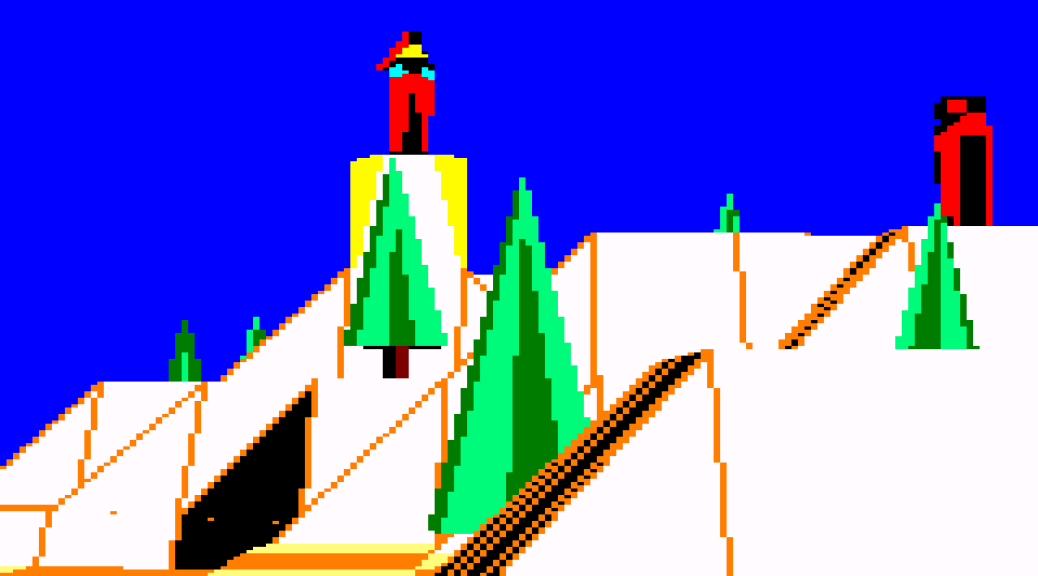
The Sentinel, Amstrad CPC
Geoff Crammond‘s classic The Sentinel was first released for the Amstrad CPC by Firebird in 1987, and it is one of the best 8-bit versions of this weird and wonderful game.

Fantasy Zone II: The Tears of Opa-Opa, Sega Master System
Fantasy Zone II: The Tears of Opa-Opa is the sequel to the classic 1986 Sega arcade game, Fantasy Zone. Rather unusually, it came out first on the Master System, before later being released as an arcade game. Usually the opposite occurs, but in this case the Master System version was released in 1987 and the arcade version came out in 1988.
Continue reading Fantasy Zone II: The Tears of Opa-Opa, Sega Master System

Marble Madness, Atari ST
The Atari ST version of Marble Madness was converted by Will Harvey (who also programmed the C64 and Apple II versions – among others), and Jim Nitchals, and was published by Electronic Arts in 1987. It is very similar to the 8-bit ports Harvey produced, rather than the more authentic Amiga version (that he didn’t).

Marble Madness, PC
The PC version of Marble Madness runs under MS-DOS and was developed by Will Harvey (and a small team of other people at Sandcastle), and was published by Electronic Arts in 1987.
Since they were all coded by the same person, the Commodore 64, Atari ST, Apple II, Apple IIgs and PC versions are all very similar. This one also contains the hidden secret level accessible from the first course, although don’t get too excited about it because it’s not very good.
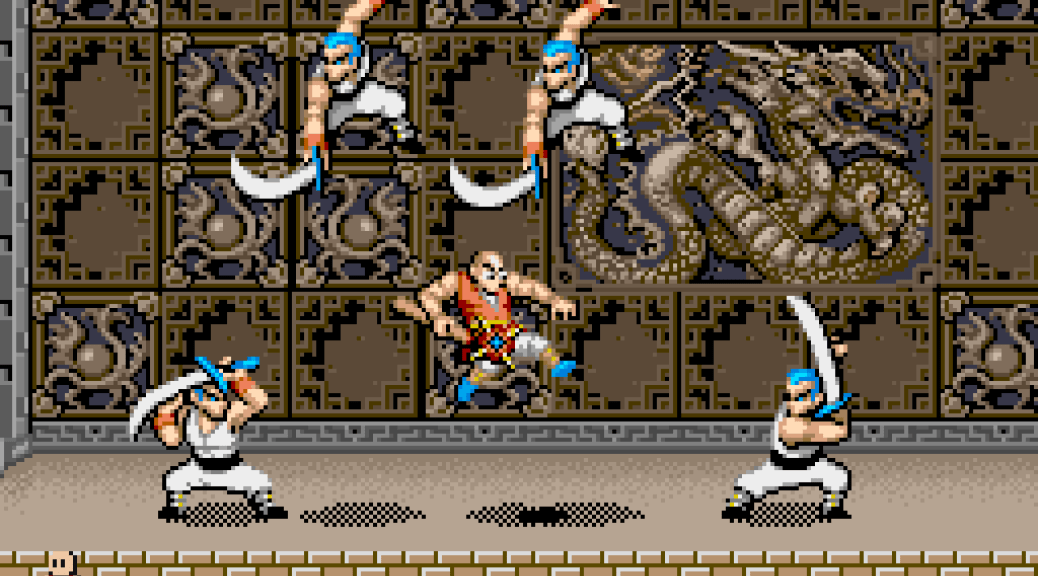
Tiger Road, Arcade
Tiger Road is a single-player hack-and-slash platform/action game, released into arcades by Capcom in 1987. It pre-dates Sega‘s Golden Axe by two years, but is very similar in terms of gameplay.

