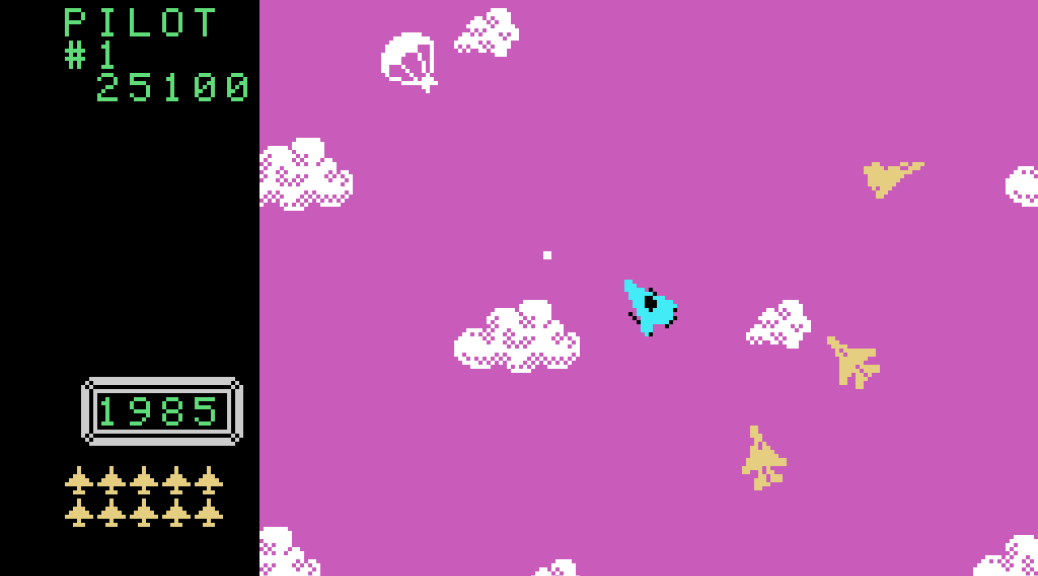
The ColecoVision port of Konami‘s 1982 arcade game, Time Pilot, is a decent attempt to bring this simple, eight-way scrolling shooter to the home. It was first released in 1983.
Tag Archives: scrolling
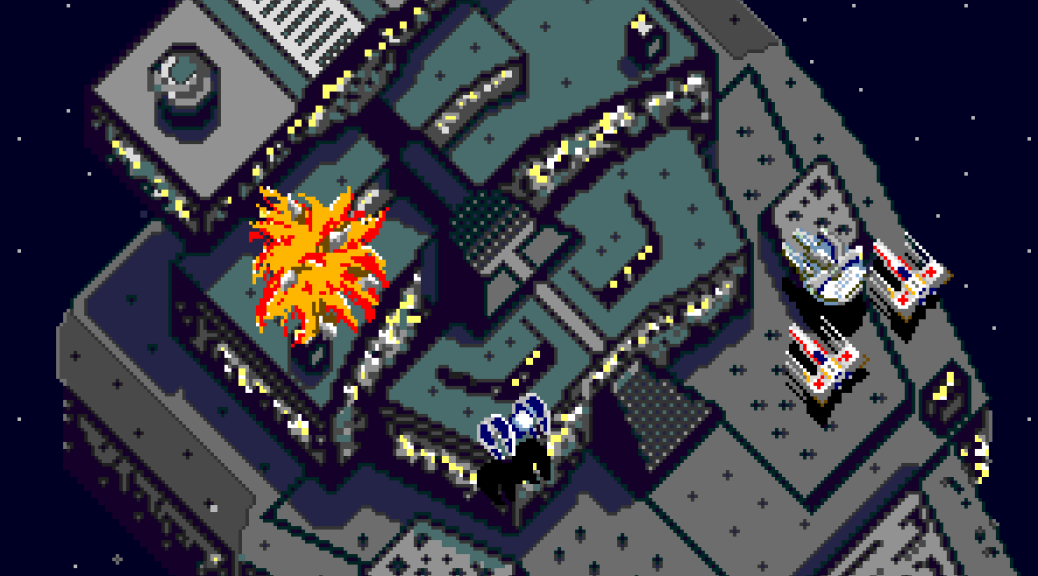
Star Wars: Return of the Jedi, Arcade
Based on the 1983 film of the same name, Atari‘s Return of the Jedi was first released into arcades in 1984, and the game uses 2D, rasterized graphics, instead of vector-based graphics, like the Star Wars arcade game does.
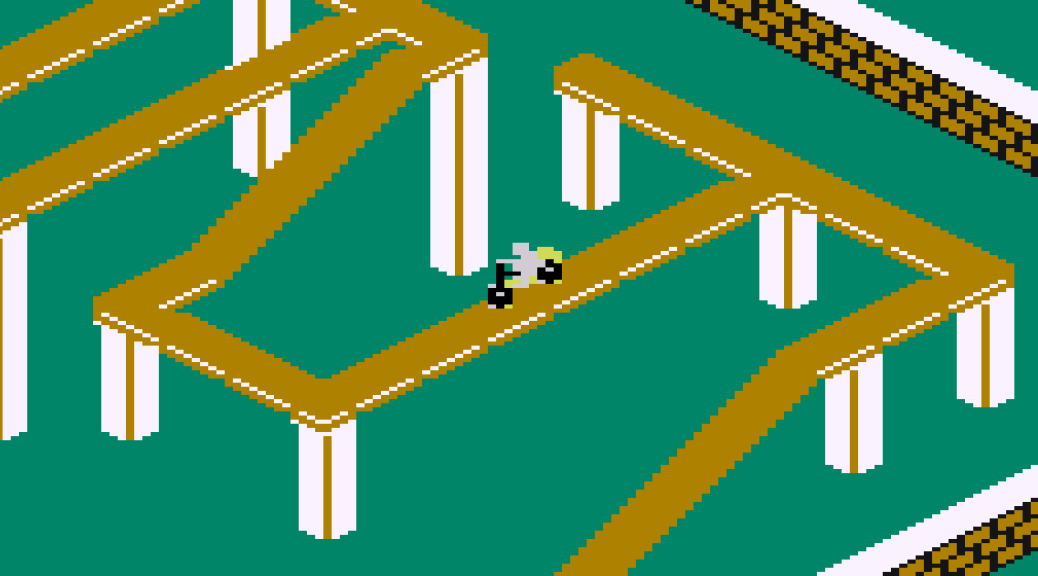
Action Biker, Atari 8-Bit
Mastertronic‘s Action Biker was a well-known budget hit on the Commodore 64, and it was also released for Atari 8-bit home computers, in 1985. Both the C64 and Atari versions were bundled together as a dual release.

Knights of the Round, Arcade
Knights of the Round is a three-player hack-and-slash arcade game, developed and distributed by Capcom in 1991. The fact that the developers – for whatever reason – neglected to include the word “Table” at the end of the title of their game hints at some hilariously bad translation, and plenty of terrible spelling mistakes, which is exactly what you get in this game…

Lemmings, Atari Lynx
The Atari Lynx version of Lemmings was developed by DMA Design and published by Psygnosis in 1993, and it is an enjoyable port of this great puzzle/rescue game.

Gauntlet, Game Boy Advance
The Game Boy Advance version of Atari‘s classic Gauntlet was released as a double-pack, with Rampart, in 2005. It was developed by EC-Interactive and published by Destination Software, and is pretty close to the arcade original, but doesn’t offer a multiplayer option, in spite of the GBA‘s link-up capabilities.

Action Force, ZX Spectrum
Developed by Gang of Five and published by Virgin Games in 1987, Action Force is a scrolling shooter set in the world of the Action Force toys by Hasbro/Milton Bradley (aka G.I. Joe toys in North America). Action Force was also released for the Commodore 64 and Amstrad CPC, although the Spectrum version is notably different to those versions.

Twinkle Tale, Megadrive/Genesis
Developed by ZAP Corporation and published by Wonder Amusement Studio (a subsidiary of Japanese record label Toyo Recording), Twinkle Tale is a scrolling ‘bullet hell’ shooter released exclusively for the Sega Megadrive, in Japan only, in 1992. Fan translations into English, Spanish and Korean exist, making the game accessible to a good proportion of the world outside Japan.

Gauntlet Dark Legacy, Arcade
Gauntlet Dark Legacy is the sixth title in the Gauntlet series, and is an expansion of the previous game, Gauntlet Legends. It was developed by Midway Games West and was first released into arcades in 1999.

RoboCop, PC
The 1989 MS-DOS version of RoboCop is part conversion of the Data East arcade game, and partly does it own thing, with level structures that connect rooms above and below, with staircases that instantly flip the screen, rather than scroll it. The majority of levels do scroll horizontally, though, although the scrolling is very jerky.

