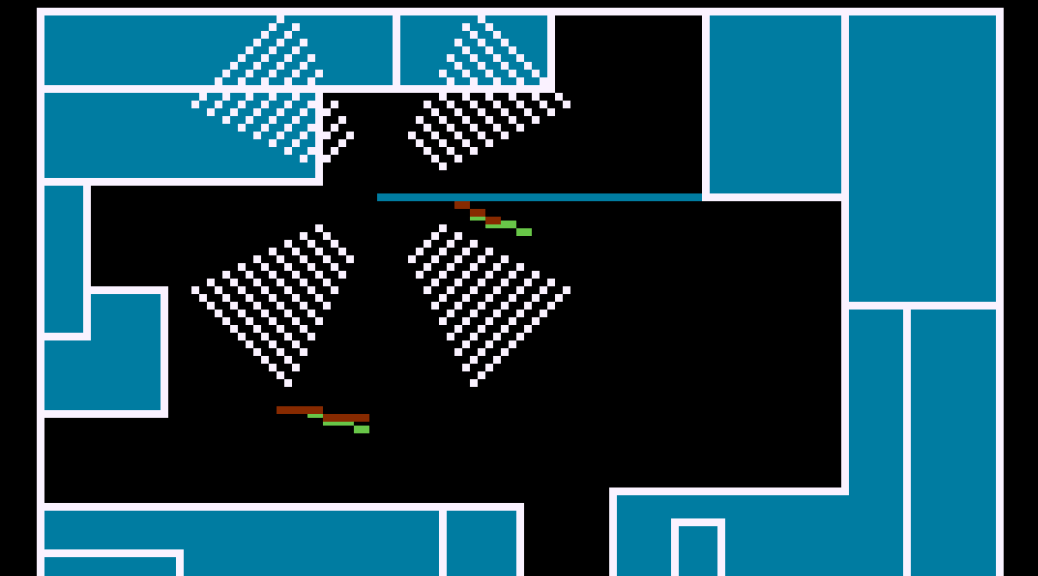
Taito‘s 1981 arcade game, Qix, was ported to the Atari 5200 and published by Atari, Inc. in 1983. It was written by Eric Manghise and is a pretty good version of the box-drawing action/puzzle game.
Tag Archives: console
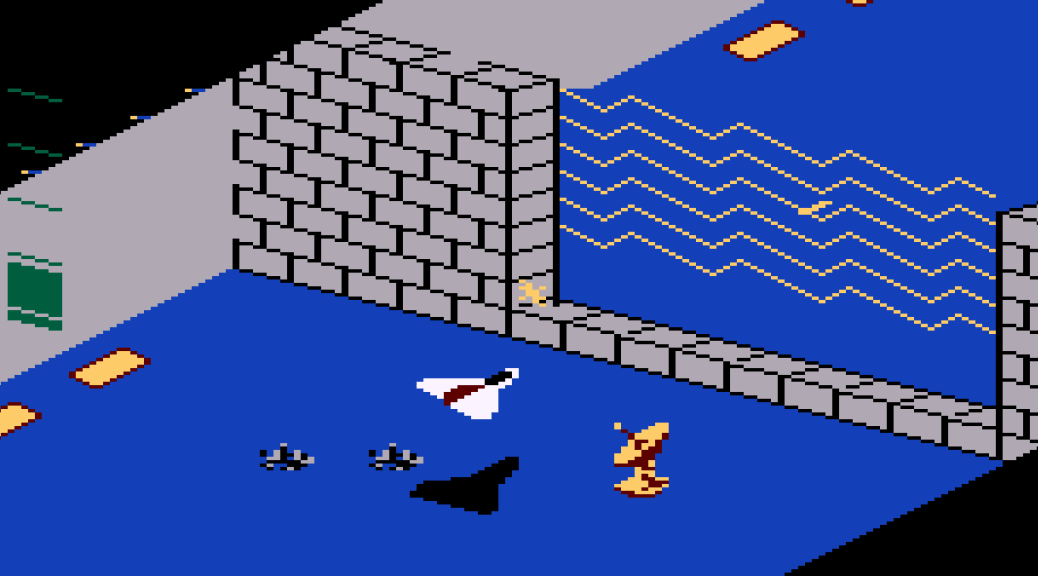
Zaxxon, Atari 5200
The Atari 5200 version of Sega‘s classic arcade game, Zaxxon, was programmed by Ronald J. Fortier and first released in 1984.

Zaxxon, SG-1000
Zaxxon was arguably Sega‘s flagship game during the early 1980s so it was ported to most home computers and consoles. The Japan-only SG-1000 version first came out in 1985 and is a reasonable conversion of the classic isometric shooter.

Paperboy II, Megadrive/Genesis
The Megadrive/Genesis version of Paperboy 2 (or Paperboy II, as the title screen shows) is a real surprise, because it seems to be an attempt by developer Tengen to actually create a real sequel to the Paperboy arcade game. This game doesn’t strictly follow the rather lacklustre template of the Mindscape version of Paperboy 2, but instead does its own thing, which IMHO makes it special.

Paperboy 2, Super Nintendo
Paperboy 2 on the Super Nintendo was developed and published by Mindscape in 1991. And – for some reason – it doesn’t compare to the Megadrive/Genesis version, which I think is superior.

Paperboy 2, NES/Famicom
The NES version of Paperboy 2 was ported by Eastridge Technology and published by Mindscape in North America only in 1991. It’s a playable game with some good ideas, but is frustratingly difficult to play at times.

Bomb Jack, SG-1000
The SG-1000 version of Tehkan‘s classic Bomb Jack was developed and published by Sega in 1985.

Ballblazer, Atari 5200
Lucasfilm Games‘ classic futuristic sports game, Ballblazer, was released for the Atari 5200 by Atari Corporation in 1986, and it’s a really good port.

H.E.R.O., SG-1000
Activision‘s classic underground rescue game, H.E.R.O., was released on Sega‘s SG-1000 console – in Japan only – in 1985, and it is somewhat different to all the other versions of the game out there.

H.E.R.O., Atari 5200
The Atari 5200 version of H.E.R.O. was ported by The Softworks and published by Activision in 1984. It is definitely a step up from the original Atari 2600 version and is more or less identical to the Atari 8-bit version, but with slightly richer colours.

