
And here is the PC MS-DOS version of Bullfrog‘s classic Populous (1989), for comparison’s sake.
Tag Archives: British

Populous, Amiga
Bullfrog‘s classic ‘God game’, Populous, was first released on the Amiga in 1989. It broke new ground with its ingenious mix of real-time strategy and sandbox-style landscape-building.
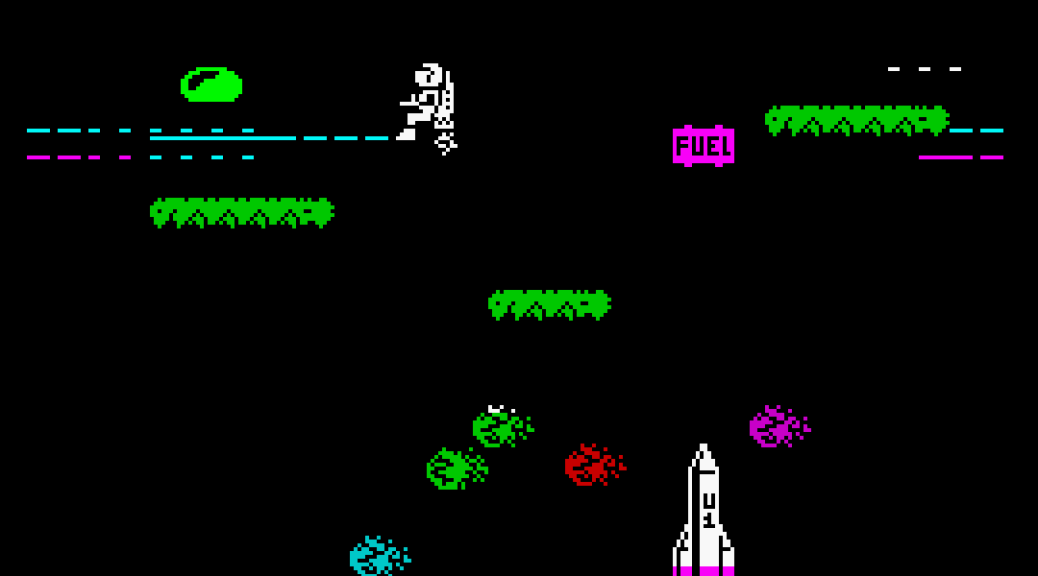
Jet Pac, ZX Spectrum
Ultimate Play The Game‘s amazing Jet Pac is an early ZX Spectrum classic, first released onto an unsuspecting world in 1983.
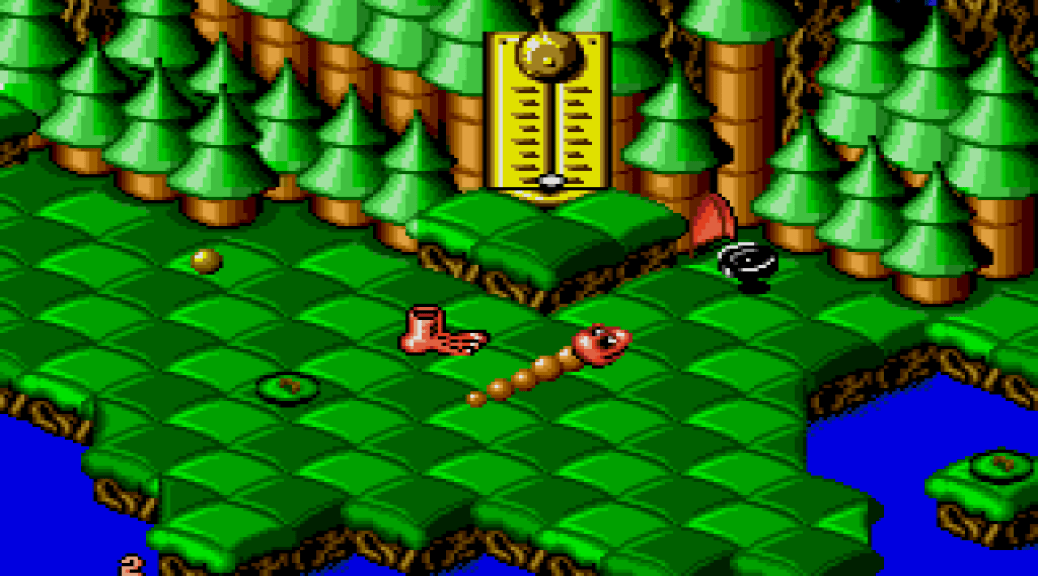
Snake Rattle ‘n’ Roll, Megadrive/Genesis
Rare‘s classic isometric action game, Snake Rattle ‘n’ Roll, was first released for the Nintendo Entertainment System in 1990. This Sega Megadrive/Genesis port came later, in 1993.
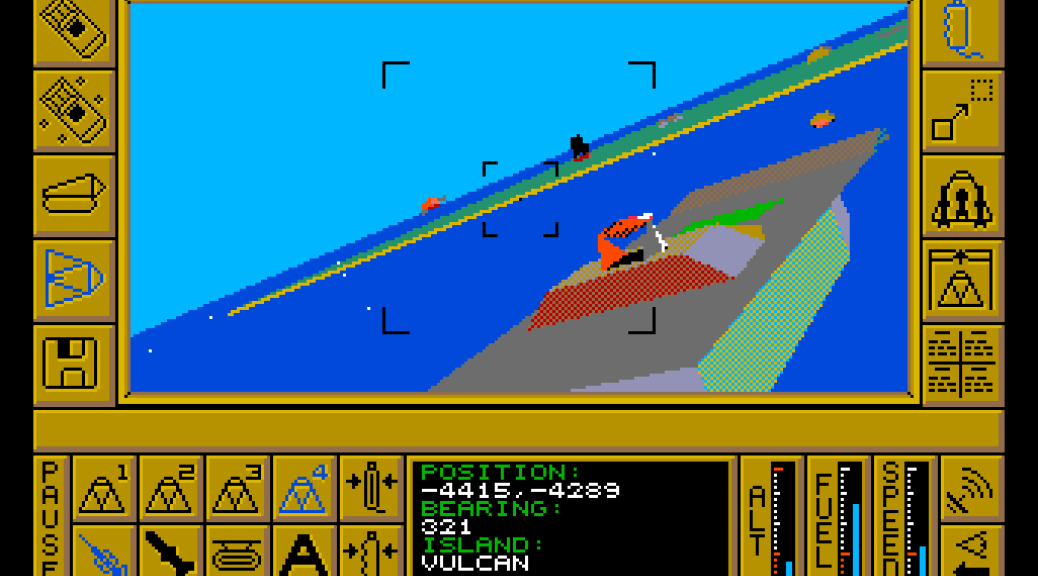
Carrier Command, Atari ST
Realtime Games‘ 1988 hit, Carrier Command, is a compelling mixture of 3D simulation and real-time strategy.
In it you take control of a futuristic, robotic aircraft carrier and must work your way through an island archipelago, taking control of each island and competing against a rival carrier.

Project Zomboid, PC
Project Zomboid is a fantastic, post-apocalyptic, zombie survival horror game that was first released on Steam in 2011 and continues to evolve to this day.

Midwinter, Atari ST
Mike Singleton‘s 1989 release, Midwinter, is a classic action strategy game with a mixture of early 3D polygonal graphics and 16-colour 2D graphics.

Splat!, ZX Spectrum
It might look basic, but this early ZX Spectrum game is still a great game to play now.

Scuba Dive, ZX Spectrum
Scuba Dive (Durell Software, 1983) features such a simple game idea, but one that works exceptionally well on the ZX Spectrum.


