
Rolling Bird is a modern tribute to the classic arcade game Rolling Thunder.
Graphically it looks a bit like an NES game, or an old arcade game. The colours are bold and the animation simple, but still excellent.
Flat, two-dimensional graphics, usually constructed of pixels. Not three-dimensional.
Rolling Bird is a modern tribute to the classic arcade game Rolling Thunder.
Graphically it looks a bit like an NES game, or an old arcade game. The colours are bold and the animation simple, but still excellent.
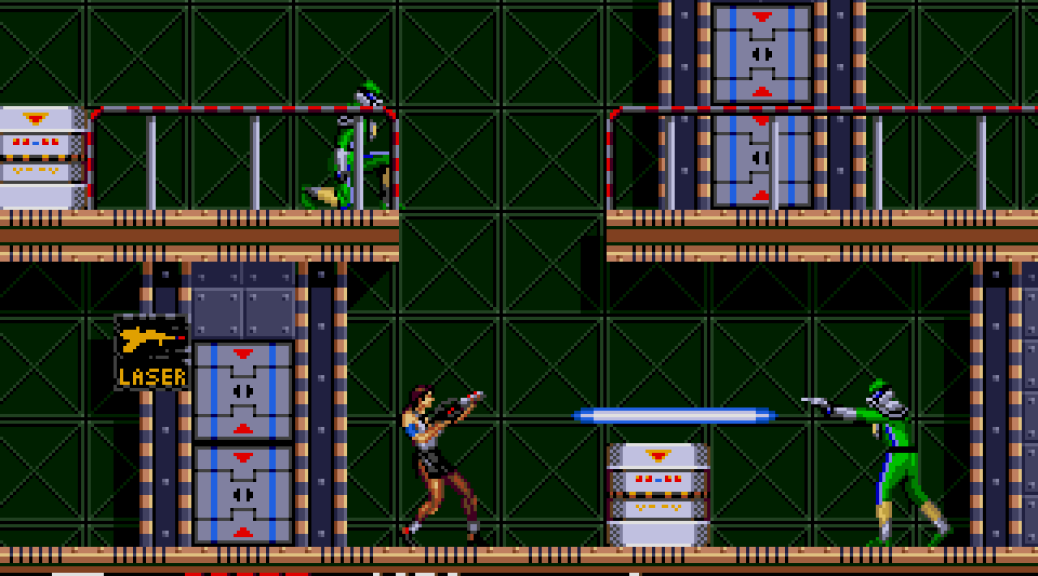
Rolling Thunder 3 is a Sega Megadrive/Genesis exclusive. It was developed by Now Production and published by Namco in 1993. It did not appear in arcades, like its predecessors did.
Rolling Thunder 2 continues on from the classic Rolling Thunder: it’s secret agent “Albatross” against the sinister agents of “Geldra”, except this time you can play the game as the rescued Leila (from the first game) from the outset. Or, you can play two-player cooperatively with a friend, which you definitely couldn’t do in the original.
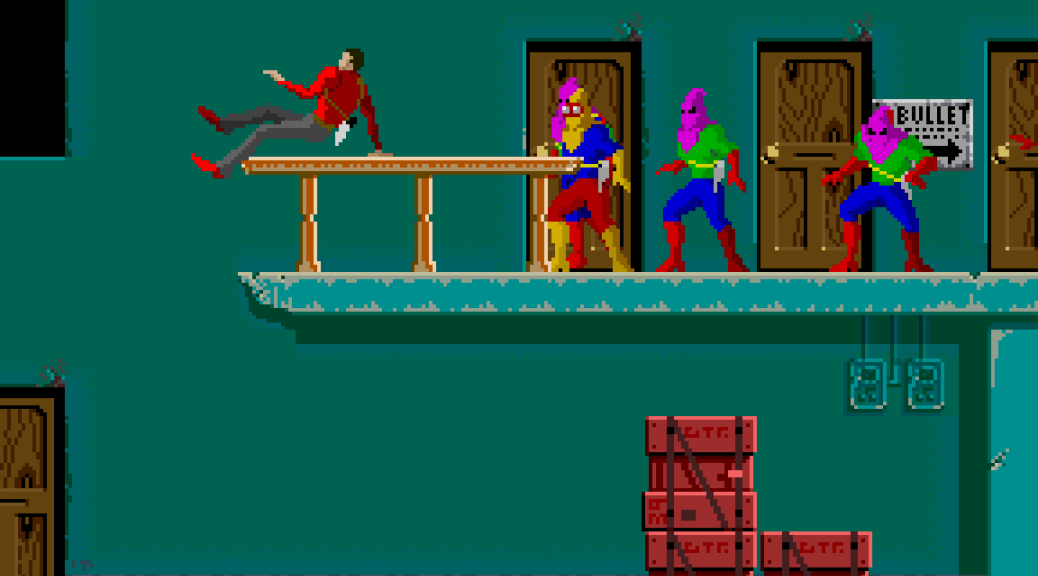
Rolling Thunder is a side-scrolling arcade action game, developed and manufactured by Namco in 1986.
You take control of Codename “Albatross” – a highly-agile secret agent and a member of the “Rolling Thunder” espionage unit. Your mission is to rescue your partner, Leila Blitz, from a secret society called “Geldra”, and who are holding her against her will somewhere in New York City.
This 2003 remake of Namco‘s SNES classic Tales of Phantasia was the first time the game had been officially translated into English.
While much of the game remains the same, there are a few differences.
Tales of Phantasia is an RPG developed by Wolf Team, and first published for the Super Nintendo by Namco in 1995. As JRPGs go, it is quite memorable.
Dragon Quest VI: Realms of Revelation was developed by Heartbeat for Enix and released for the Super Nintendo in 1995 in Japan. It is the sixth instalment in the Dragon Quest series, if you aren’t familiar with Roman numerals.
First released in 1992 by Enix, Dragon Quest V (five – or, to give the game its full title: Dragon Quest V: Hand of the Heavenly Bride) is another fun-to-play JRPG that is simple but engaging, and also contains enough detail and surprises to feel worthwhile.
It was the first Dragon Quest game released for the Super Nintendo and sold over three million copies in Japan.
Like its successor, Dragon Quest VI, it wasn’t officially released in the West until decades later, but English fan translation patches for the game do exist and that is what I’m showing here.
This is the first game in the Lufia series – developed by Neverland and published by Taito in 1993 for the Super Nintendo.
Lufia and the Fortress of Doom is a cute and colourful Japanese Role-Playing game with Zelda-style presentation and turn-based combat.
Continue reading Lufia and the Fortress of Doom, Super Nintendo
Hang-On is a superfast motorbike racing game developed by Yu Suzuki (and his team) for Sega and released into arcades in 1985 – a year before the seminal Out Run.



 The King of Grabs