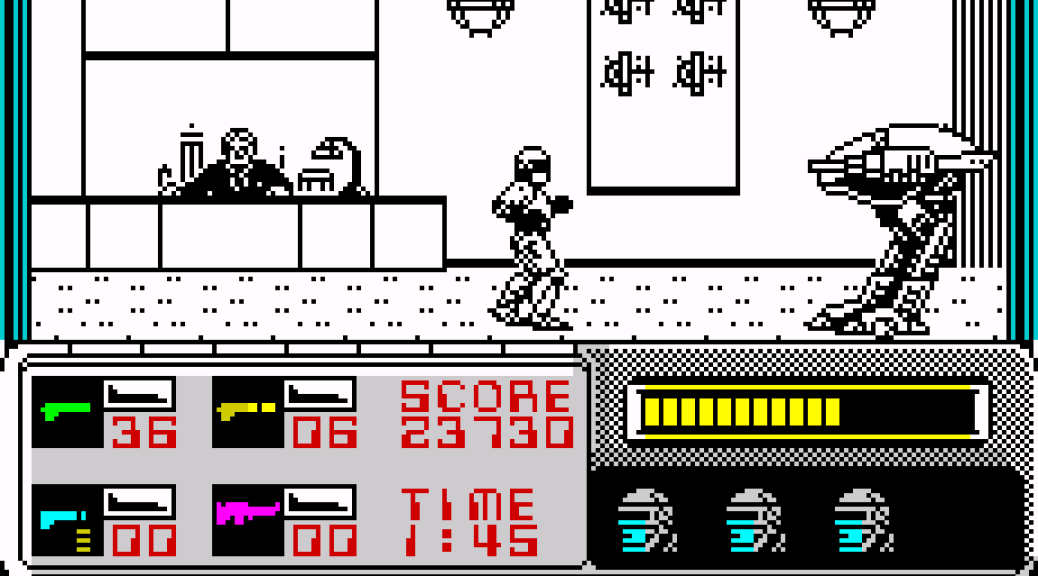
The ZX Spectrum version of RoboCop – based on the 1987 film of the same name – was developed and published by Ocean Software in 1988, and was such a hit that it went on to become the top-selling Spectrum game of 1989, according to Gallup (the company that used to collate and publish the UK’s music and video game charts). The Spectrum version actually remained in the sales charts for over a year and half – it entered the charts in December of 1988 and was still in the top five in February of 1991, which is insane… THAT is what you call a “big hit“!
Tag Archives: shooter

Vradark’s Revenge, ZX Spectrum Next
The sequel to Vradark’s Sphere on the ZX Spectrum, Vradark’s Revenge is another fantasy-based Roguelike from the same development team, SaNchez, only this time it has been created specifically for the ZX Spectrum Next, which is an enhanced, modern ZX Spectrum remake/variant that first came out in 2017.
Vradark’s Revenge was initially released in 2022 and an emulated version, that runs in Windows, was later released on Steam in 2023 through publisher “Drunk Fly Oy” (which is a bizarre company name if ever there was one).
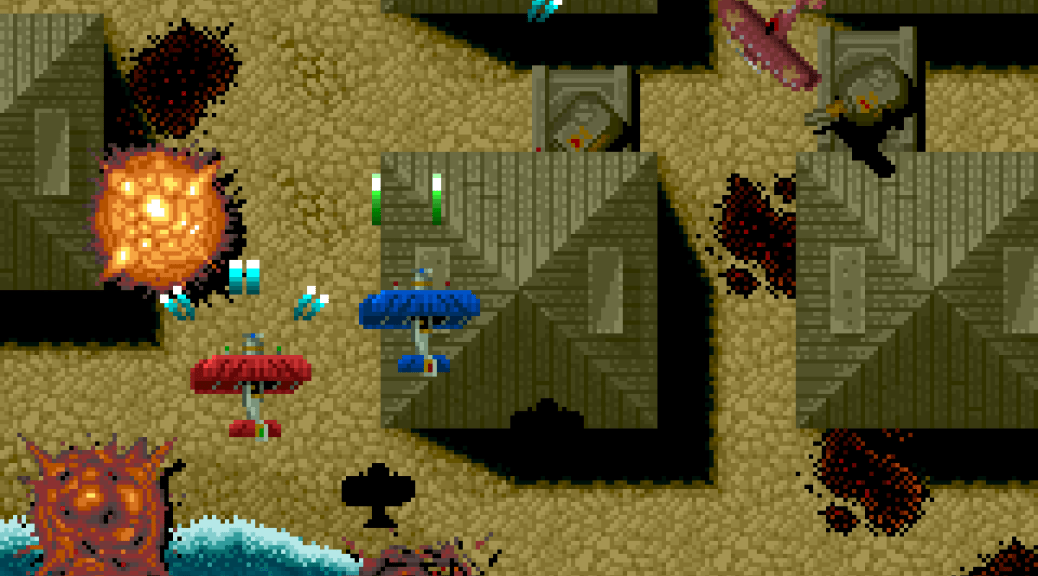
Fire Shark, Arcade
Fire Shark is a vertically-scrolling shoot ’em up developed by Toaplan and first distributed into arcades in 1989. It is the sequel to Flying Shark, which came out in 1987, and once again features biplanes that must blast their way through ten different stages of military mayhem.

Flying Shark, Arcade
Developed by Toaplan and first released into arcades in 1987, Flying Shark (aka Sky Shark in North America) is a challenging vertically-scrolling bullet hell shooter with a military theme. You fly a biplane over jungle and sea and must blast your way through five increasingly more difficult levels.

Three Wonders, Arcade
Three Wonders is an unusual arcade game from Capcom that was first released in 1991. What’s unusual about it is that the game is based around three separate games – each of which you can choose to play in any order, cooperatively with a friend, and that are supposedly linked by the game’s storyline and characters.
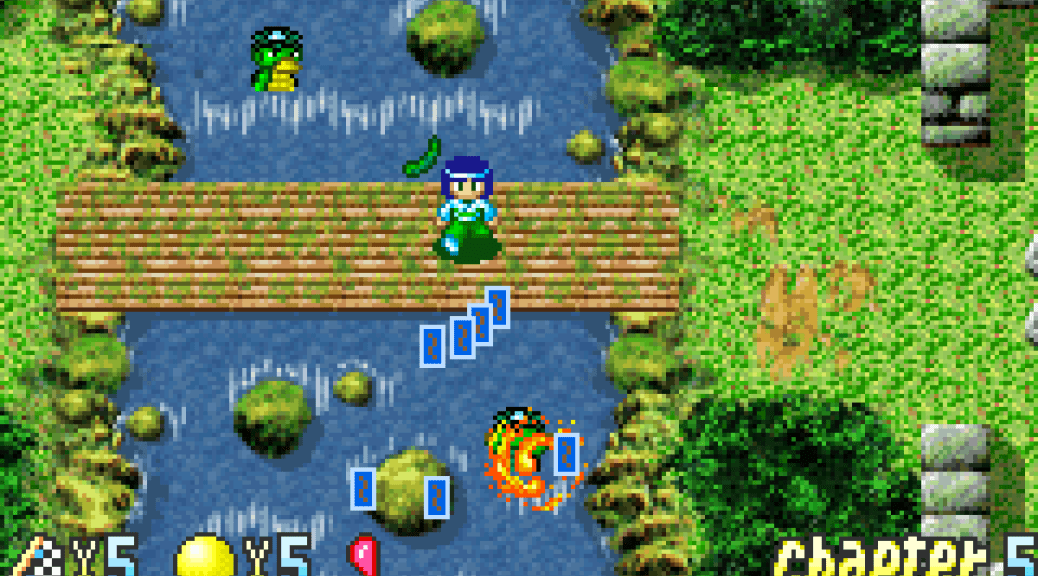
Pocky & Rocky with Becky, Game Boy Advance
Pocky & Rocky with Becky for the Game Boy Advance is the fourth game in the Pocky & Rocky series (following on from Kiki Kaikai, Pocky & Rocky, and Pocky & Rocky 2). The game was developed and published by Altron in Japan in 2001 and was subsequently localized and published by Natsume in North America in 2002.

Pocky & Rocky 2, Super Nintendo
The sequel to Pocky & Rocky (known as Kiki Kaikai in Japan) was developed by Natsume and published by Ocean Software in Europe (by Natsume themselves in Japan and North America). Pocky & Rocky 2 was first released in 1994 and is a similar scrolling shooter to its predecessor, but with multiple companions, instead of just one.

Cannon Fodder, Amiga CD32
The Amiga CD32 port of Cannon Fodder was developed by Arch Rivals and published by Virgin Interactive in 1994. Of course the game does have mouse support (as if it wouldn’t…), and it plays extremely well. In fact: some may argue that this is the best version of Cannon Fodder ever released.

Cannon Fodder, Megadrive/Genesis
The Megadrive/Genesis version of Sensible Software‘s classic Cannon Fodder is not the one I think of when I think “Cannon Fodder“, but it’s actually a really good port. The game was converted by PanelComp, who also made the excellent SNES version, and it too supports mouse play. Which is important, because without using a mouse it’s impossible to attain the right kind of intensity needed to play Cannon Fodder properly. IMHO.

Cannon Fodder, Super Nintendo
The Super Nintendo version of Cannon Fodder was coded by Andy Onions, John Rocke and Steve Caslin, with graphics conversion by Doug Townsley and sound and music adaptation by Allister Brimble. The SNES port was published by Virgin Interactive Entertainment in 1994 and you’ll be pleased to know that it does indeed support the use of the SNES mouse, which makes all the difference.
 The King of Grabs