Puzznic is a one or two-player, puzzle-based, tile-matching arcade game, released by Taito in 1989.
And, while it might not look like much, it is actually a very clever and compelling game.
Puzznic is a one or two-player, puzzle-based, tile-matching arcade game, released by Taito in 1989.
And, while it might not look like much, it is actually a very clever and compelling game.
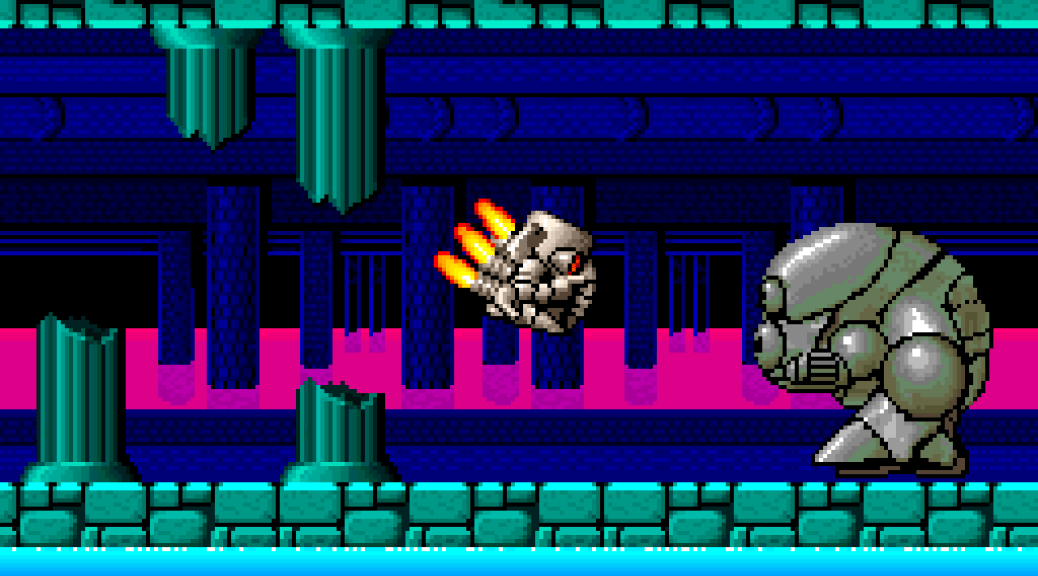
Atomic Robo-Kid is a horizontally-scrolling, progressive weapons shooter, designed by Tsutomu Fujisawa and manufactured by UPL in 1988.
It’s not a very well-known arcade game, but does have its fans. It also managed to get converted to a number of home systems too (including for the Sega Megadrive, but it never appeared on the SNES).
Xenon 1 by IJK Software is a very early shoot ’em up for the Oric 1 home computer. It shows off what the Oric is capable of, which is: not very much… 😉
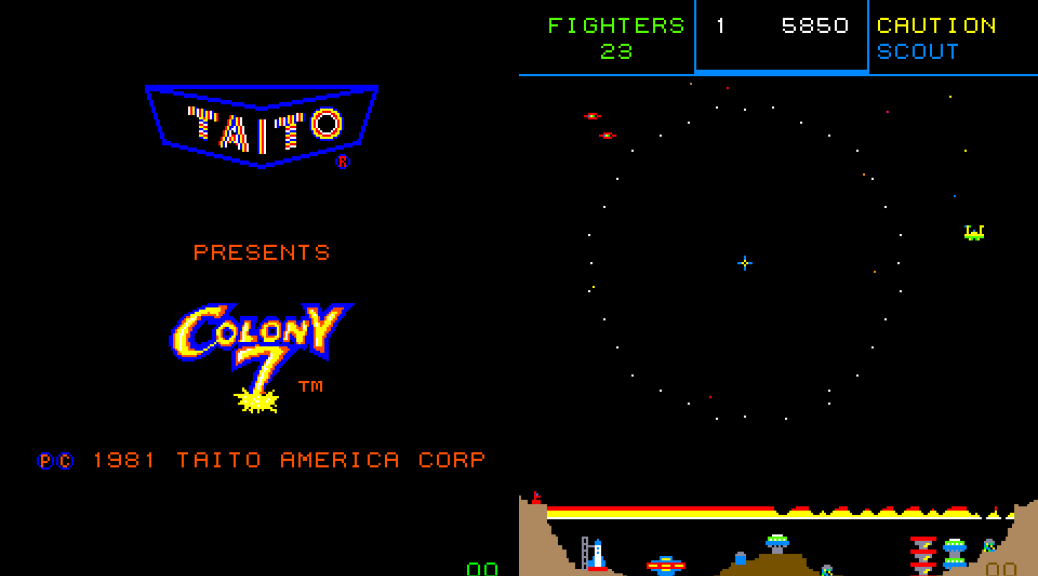
Taito‘s American division developed this vertical screen base defence game in 1981. Colony 7 owes quite a bit to Missile Command, if the truth be known, and was also probably the very first video game to feature “rip-off” micro-transactions too…
Released only in North America on the Atari 7800 in 1990, Midnight Mutants is a free-roaming, scrolling action adventure with isometric graphics. It was developed by Radioactive Software and the box art features a likeness of Al Lewis, dressed as Grandpa Munster, who plays the role of “Grampa” in this game.
Written by Siegfried Kurtz and published exclusively for the ZX Spectrum in 1986 by Addictive Games, Kirel is a simple but playable isometric platform/puzzle game with attractive graphics and presentation.
This obscure 1984 release from Ocean Software is basically a clone of Sega‘s classic arcade game, Pengo, but with an extra level tacked-on at the beginning. Similar in many ways to Ocean‘s Mr. Wimpy, which was BurgerTime with an extra level tacked on at the start. As if it would confuse the copyright police… “These are not the clones you are looking for… It is a completely different game… Look… [waves hand like Obi Wan]”
Developed by The RamJam Corporation and published by Ariolasoft in 1985, Panzadrome is an overhead maze shooter involving tanks, and it is not a bad game, as far as Speccy tank/maze games go.
Chinese Hero is an overhead fighting game that was developed by Nihon Game (later to become Culture Brain) and manufactured by Taiyo System in 1984.
It is the first game in the so-called “Super Chinese” series and features simultaneous two-player action set on a single screen play area.
Little Ninja Brothers is the second game in the “Super Chinese” series* and the predecessor of Super Ninja Boy on the SNES. It was developed and published by Culture Brain in Japan in 1989. North America got it in 1990 and Europe in 1991.
It is an excellent one or two-player level-grinding RPG, with random battles, but instead of turn-based combat you get real time beat ’em up action instead, and works very well.