
Nox is an excellent isometric action/RPG created by Westwood Studios and first released in 2000.
Tag Archives: isometric
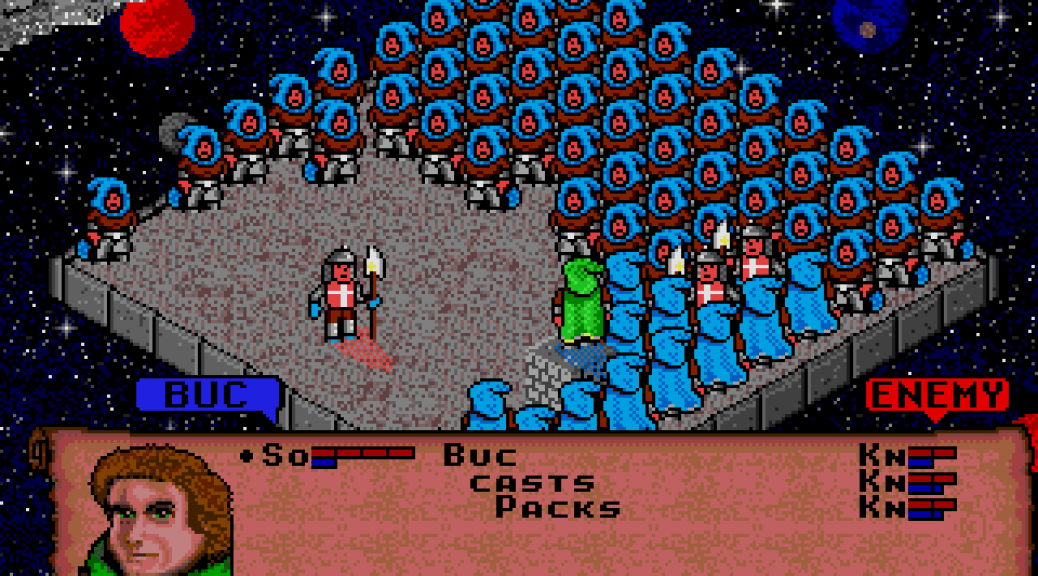
Rings of Power, Megadrive/Genesis
Rings of Power is an isometric Role-Playing Game developed by Naughty Dog and published by Electronic Arts for the Sega Megadrive in 1991.
Unlike many RPGs of the time, Rings of Power is very open-ended.

Action Biker, Commodore 64
Action Biker was created to market Skips Crisps in the UK, and therefore features KP Skips Crisp’s mascot “Clumsy Colin” as the playable character.

Rock n’ Roll Racing, Super Nintendo
Rock n’ Roll Racing is a brilliant isometric, combat-based racing game by Silicon & Synapse – now Blizzard Entertainment – and was first released for the Super Nintendo way back in 1993.

Batman, ZX Spectrum
There were a number of decent Batman games on the ZX Spectrum, but this one from Jon Ritman and Bernie Drummond was particularly memorable. For having a pudgy Batman and an isometric viewpoint…
Batman was released by Ocean Software in 1986 and was Ritman and Drummond‘s first isometric game together.

Mother 3, Game Boy Advance
The third and final game in the Mother series, Mother 3, was released in Japan only in 2006 for the Nintendo Game Boy Advance.
Nintendo published the game, with development by Brownie Brown and HAL Laboratory – directed by Nobuyuki Inhoue and written by series creator Shigesato Itoi.

EarthBound, Super Nintendo
This 1994 cult classic Super Nintendo level-grinder was originally titled “Mother 2” in its native Japan – later changed in English-speaking territories to EarthBound.
This was due to the fact that no one outside of Japan had seen the first Mother (released in 1989 on the NES) and the bigwigs at Nintendo of America worried that it might confuse people.

EarthBound Zero, NES
This classic NES game was initially released in Japan in 1989 under the title of Mother.

Nosferatu the Vampyre, ZX Spectrum
By 1986 the ZX Spectrum was awash with isometric action/adventures games. After the success of Ultimate Play The Game‘s Knight Lore, everyone was trying to make and release them.
Looking back now I would have to say that many of the so-called “clones” were actually very good, although few were outstanding.
Piranha‘s Nosferatu the Vampyre was one of the few outstanding ones, it having been created by Spectrum veteran game design team Design Design, and it also being an interesting take on the classic tale of vampirism written by Bram Stoker (actually this game being based on the 1979 film starring Klaus Kinski).

Congo Bongo, Arcade
Congo Bongo (also known as “Tip Top” in some places) is an isometric platform game developed and released by Sega in 1983.

