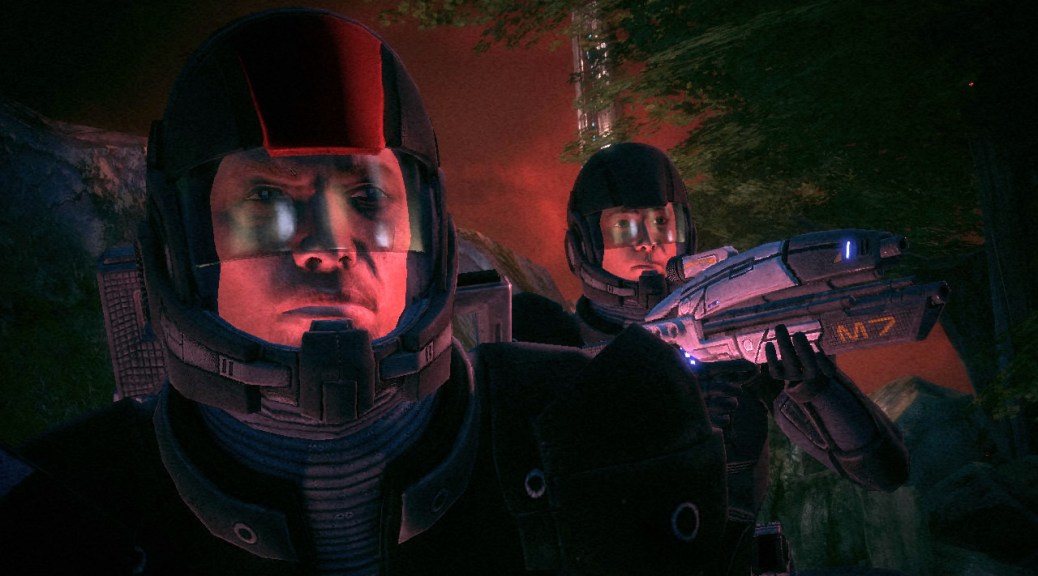
Developed by Canadian company BioWare and released in 2007, Mass Effect is the first part in a trilogy of futuristic RPGs featuring an elite human solder called Commander Shepard.
Tag Archives: Big Hit

Alien: Isolation, PC
Developed by Creative Assembly and published by Sega in 2014, Alien: Isolation is a first-person survival horror game that is considered a classic by many who’ve played it.

Aladdin, Megadrive/Genesis
AKA “Disney’s Aladdin” is a classic Megadrive/Genesis platform game based on the hit 1992 Disney film of the same name (the one featuring Robin Williams as the voice of The Genie). It was first released in November 1993.

Stunt Car Racer, ZX Spectrum
The ZX Spectrum version of Geoff Crammond‘s classic Stunt Car Racer was converted by Pete Cooke, the same guy who programmed the brilliant Amstrad version. It was published by Micro Style in 1989 and came in 48K and 128K versions. The 128K version obviously had more features and that’s the version I’m showing here.

Stunt Car Racer, PC
The MS-DOS version of Geoff Crammond‘s classic racing game, Stunt Car Racer, was converted by Tim Ansell and published by Micro Style in 1989. It is another excellent version of this influential driving game.

Stunt Car Racer, Atari ST
Stunt Car Racer, Commodore 64
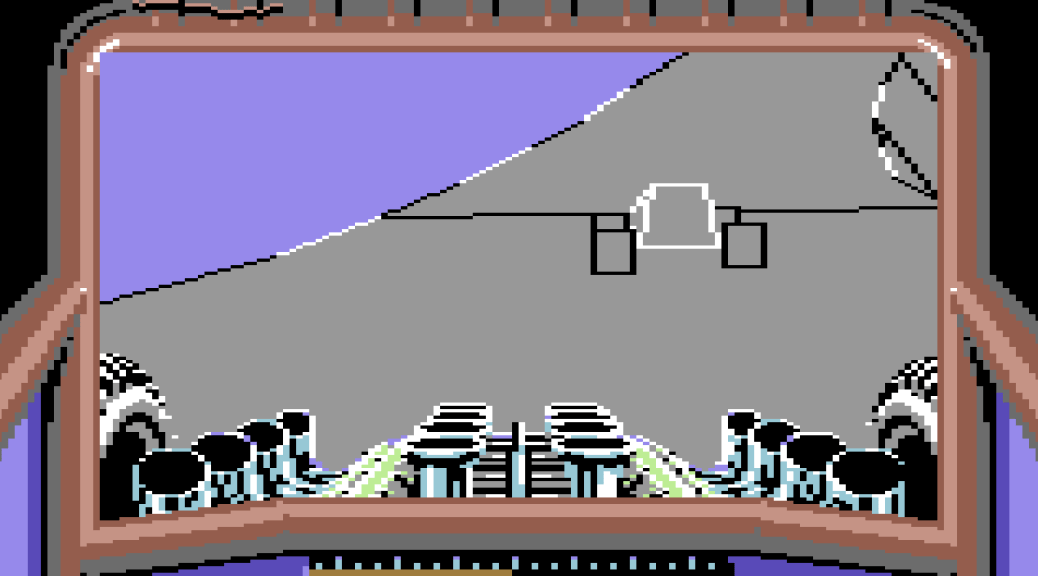
The Commodore 64 version of Geoff Crammond‘s classic Stunt Car Racer may not be as fast and smooth as the Amiga version, but it sure as hell gives as good a game as its 16-bit cousin. In fact: Stunt Car Racer is arguably one of the best games ever to be released for the C64. It was first published by Micro Style in 1989.

RoboCop, Arcade
Released into arcades by Data East in 1988, RoboCop is unusual because the game was licensed from Ocean Software, who had acquired the video game rights at script stage, when the case was usually arcade companies licensing to home companies. The arcade and home versions were developed simultaneously and are a mixture of run-and-gun and beat ’em up-style gameplay.

Pokémon Mystery Dungeon: Red Rescue Team, Game Boy Advance
Pokémon Mystery Dungeon: Red Rescue Team is a ‘Roguelike‘ RPG, paired with Blue Rescue Team, and released for the Game Boy Advance and Nintendo DS in 2005 by The Pokémon Company. It was developed by Chunsoft (famous for creating the early Dragon Quest games) and is based on Chunsoft‘s “Mystery Dungeon” franchise, but with Pokémon in it. It was the last Pokémon game released for the Game Boy Advance.
Continue reading Pokémon Mystery Dungeon: Red Rescue Team, Game Boy Advance

Falcon 3.0, PC
Developed by Sphere Inc. and published by Spectrum HoloByte (MicroProse in Europe), Falcon 3.0 is a DOS-only combat flight sim from 1991. It is the third entry in the F-16 Fighting Falcon series of games.

