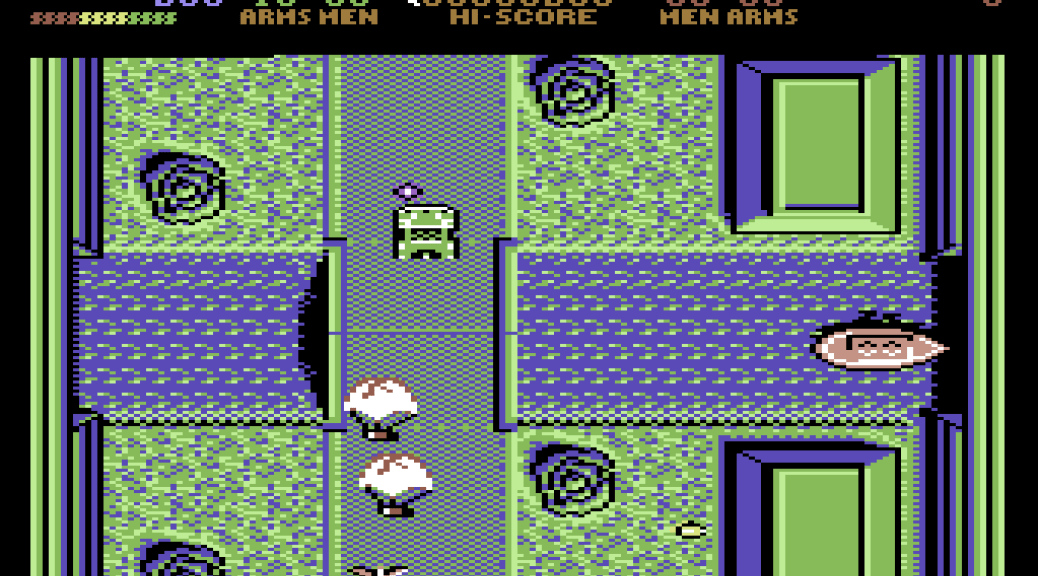
Tony Crowther‘s 1988 tribute to Commando and Ikari Warriors, Fernandez Must Die is a scrolling shooter with military overtones.
Tag Archives: 1988
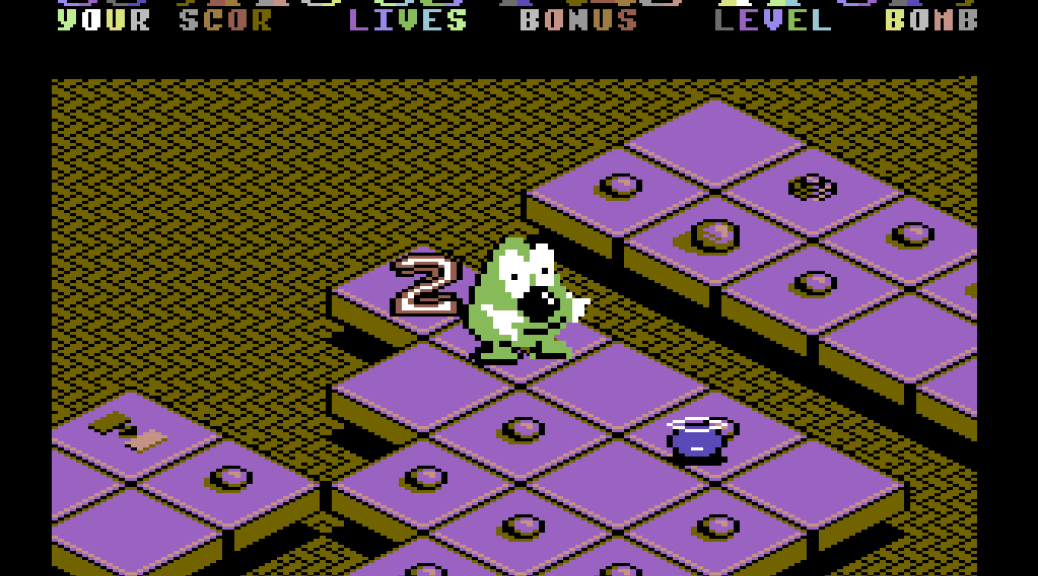
Bombuzal, Commodore 64
Bombuzal is a critically-acclaimed puzzle game designed/coded by Tony Crowther and David Bishop and published by Image Works in 1988.
In it you play a small, green blob whose job it is to dispose of all the bombs on a level. To explode a bomb you must be standing on top of it and hold down fire, and – once triggered – you can then walk away from it in whatever directions are available.
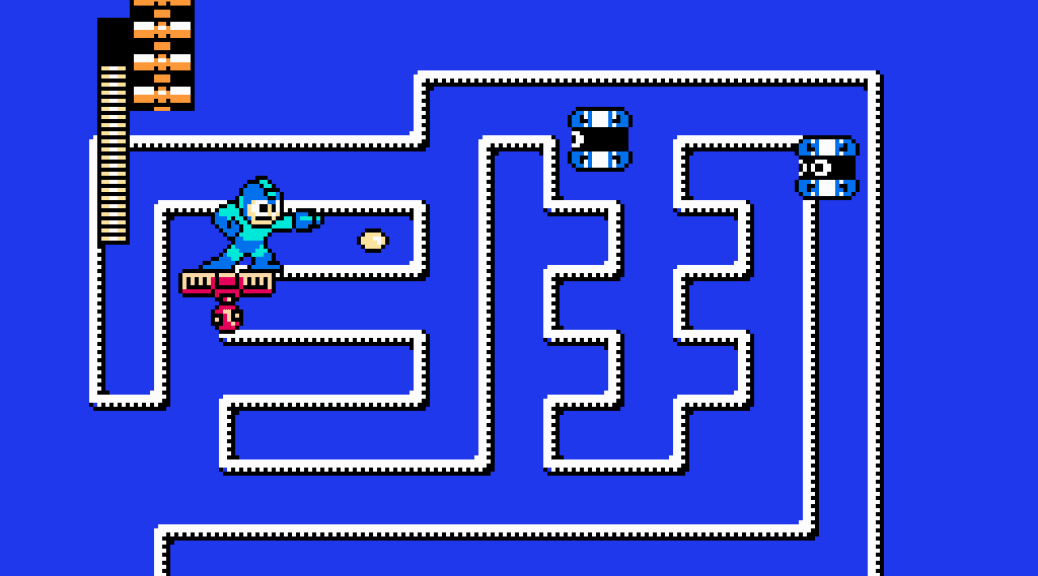
Mega Man 2, NES
The 1988 sequel to Mega Man, Mega Man 2 is more of the same rock-hard platforming and shooting action on the Nintendo Entertainment System (aka the Famicom).
Your six major protagonists this time are: Bubble Man, Air Man, Quick Man, Heat Man, Wood Man, Metal Man, Flash Man, and Crash Man. And – as usual – each has their own themed level which you can choose from in the opening menu.
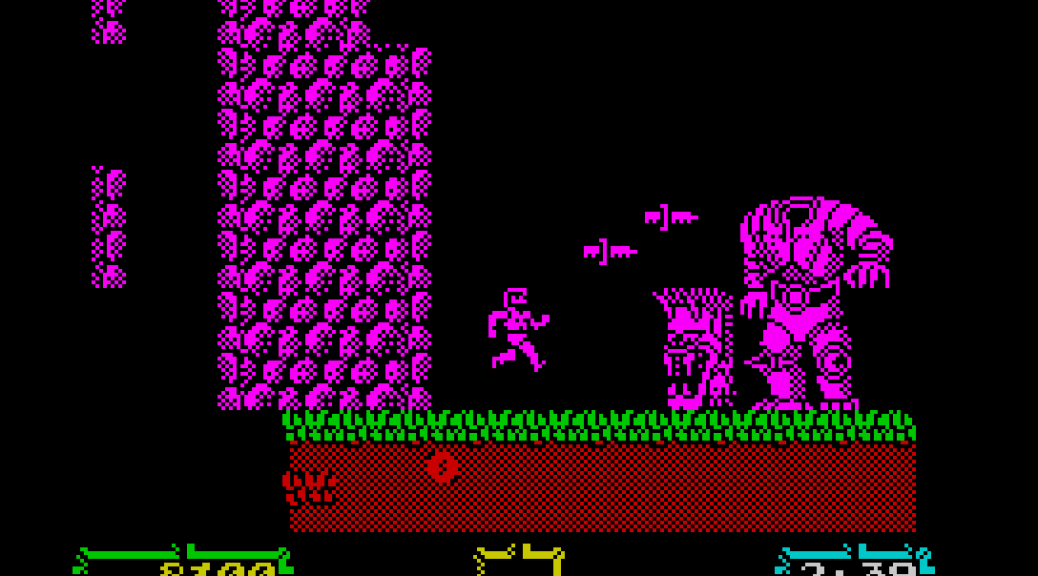
Ghouls ‘N Ghosts, ZX Spectrum
Software Creations made this Ghouls ‘N Ghosts conversion for US Gold in 1989. It has to be said that it resembles the original only superficially.
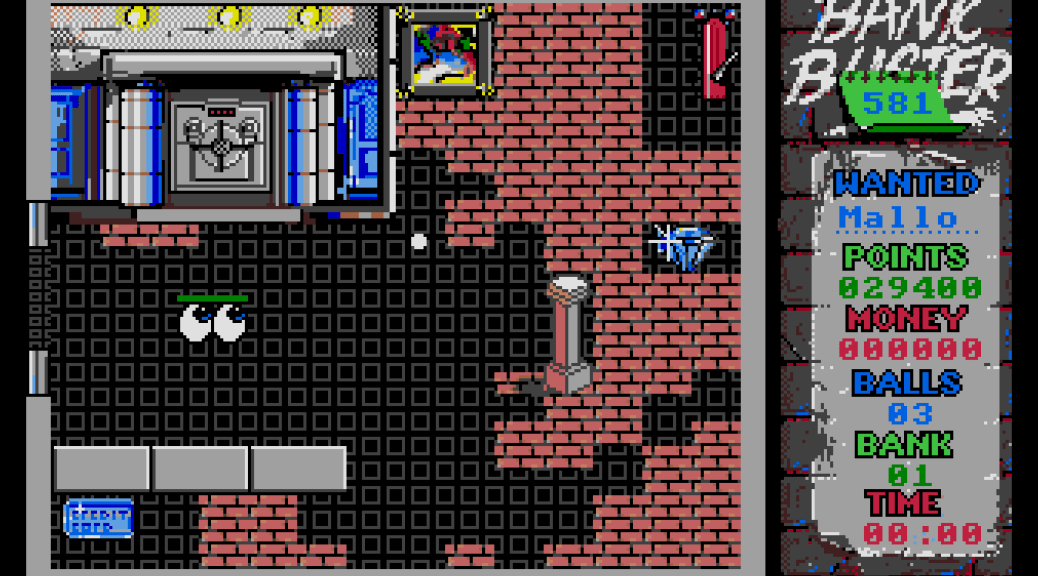
Bank Buster, Atari ST
Programmed by M. Pezzotta and published by Methodic Solutions in 1988, Bank Buster is an obscure, single-player Arkanoid clone in which you break into a bank by tunnelling underground.

Karnov, ZX Spectrum
The ZX Spectrum conversion of the Data East arcade game, Karnov, is a good example of a decent arcade conversion on the Spectrum.

Zak McKracken and the Alien Mindbenders, Commodore 64
Zak McKracken and the Alien Mindbenders is the 1988 successor to Maniac Mansion. Successor in the sense that it uses the same game engine and gameplay style, but does not exist in the same universe.
Continue reading Zak McKracken and the Alien Mindbenders, Commodore 64

Super Mario Bros. 3, NES
Of the three Super Mario Bros. games released for the Nintendo Entertainment System, this 1988 release must surely rate as the best.

Super Mario Bros. 2, NES
The North American release of Super Mario Bros. 2 was controversial because it was not the same Super Mario Bros. 2 that was released in Japan – it was a re-skinned game; made into a Mario game, because the Nintendo bigwigs thought the original was too difficult for western gamers.

19 Part One: Boot Camp, Commodore 64
Based on the Paul Hardcastle pop hit of 1985, 19 (“nnnnn-Nineteen“), 19 Part One: Boot Camp is a multi-event action game that is supposed to portray the training phase of a Vietnam solder’s experiences.

