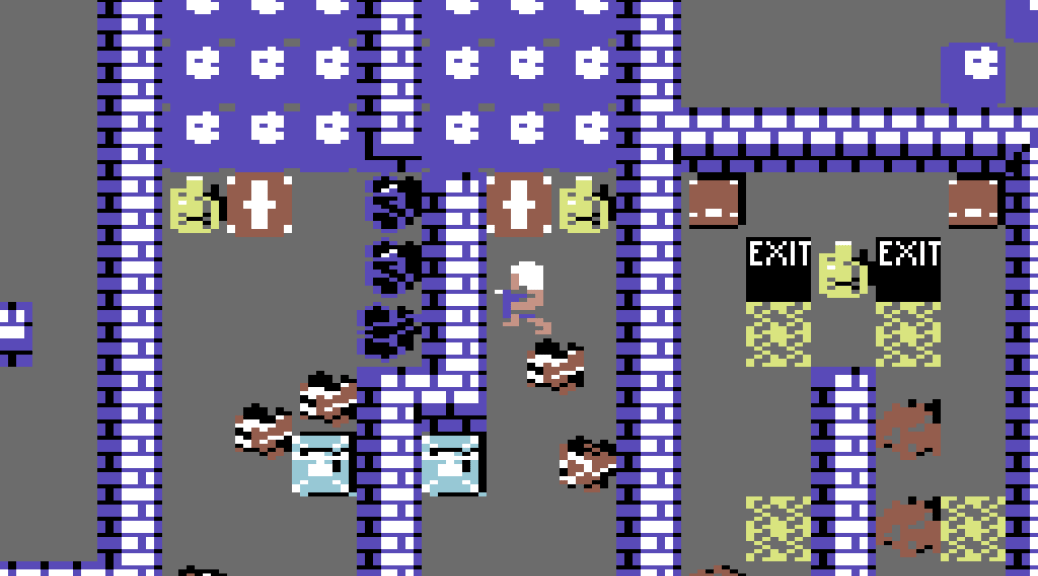
The Commodore 64 version of Gauntlet II was developed by Gremlin Graphics and was published by US Gold in Europe, and Mindscape in North America, in 1987.
Tag Archives: Monsters

The Typing of the Dead: Overkill, PC
The Typing of the Dead: Overkill was developed by Modern Dream and published by Sega in 2013. It is a first-person shooter that fuses the gruesome and colourful horror of the House of the Dead series, with keyboard typing mechanics. A sort of: “Mavis Beacon Teaches Typing with Zombies and Monsters“, if you will.
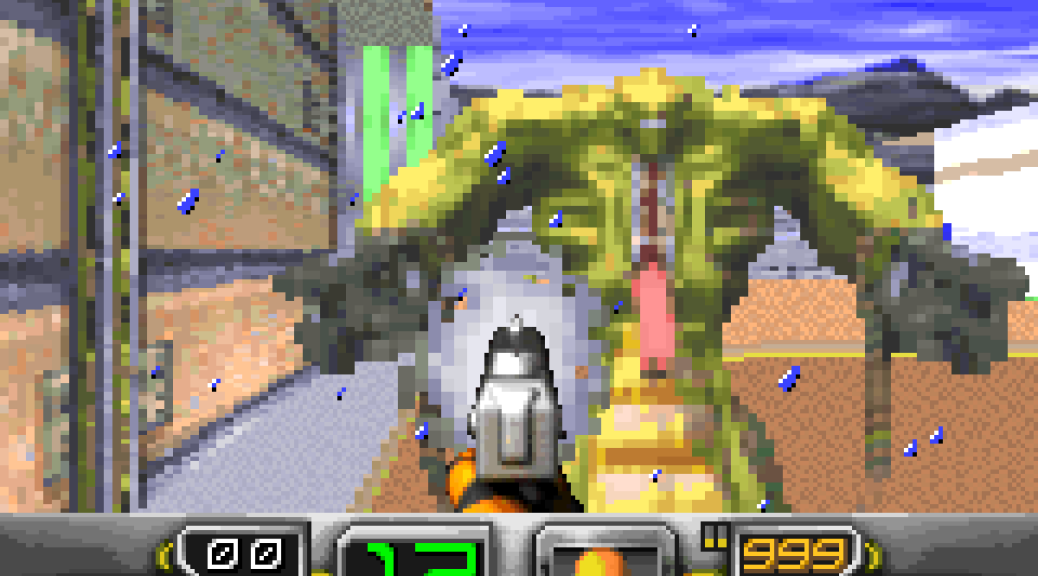
Dark Arena, Game Boy Advance
Developed by Graphic State and published by Majesco/THQ in 2002, Dark Arena is a first-person shooter set in a futuristic environment where you are the only survivor of a team sent in to neutralise a bunch of Genetically-Engineered Organisms (GEOs) inside a top secret training facility.
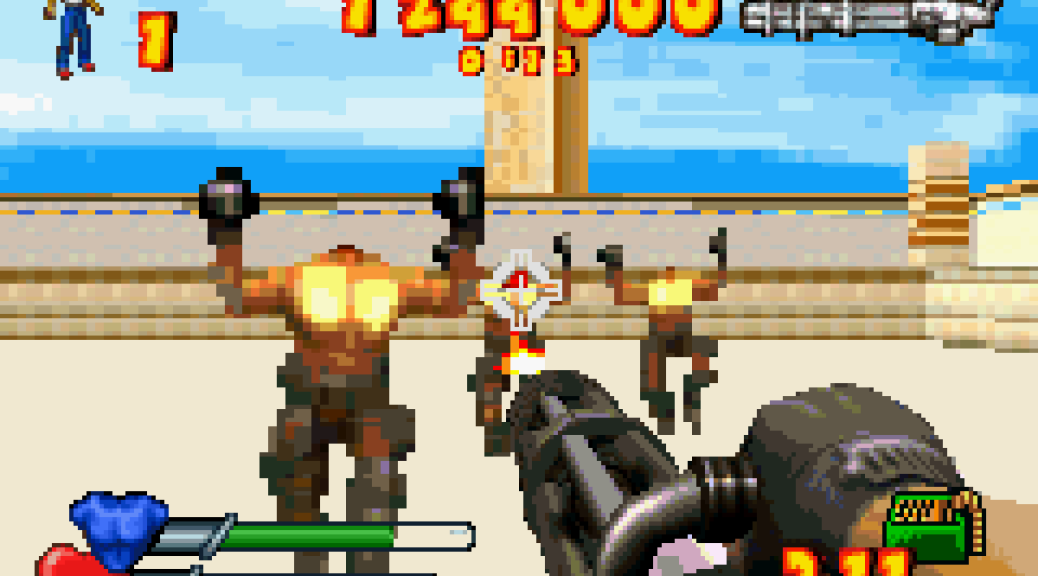
Serious Sam Advance, Game Boy Advance
Serious Sam Advance is a handheld version of Croteam‘s infamous first-person shooter, Serious Sam: The First Encounter. It was developed by Climax Entertainment and published by Global Star (a subsidiary of Take-Two Interactive) in 2004.
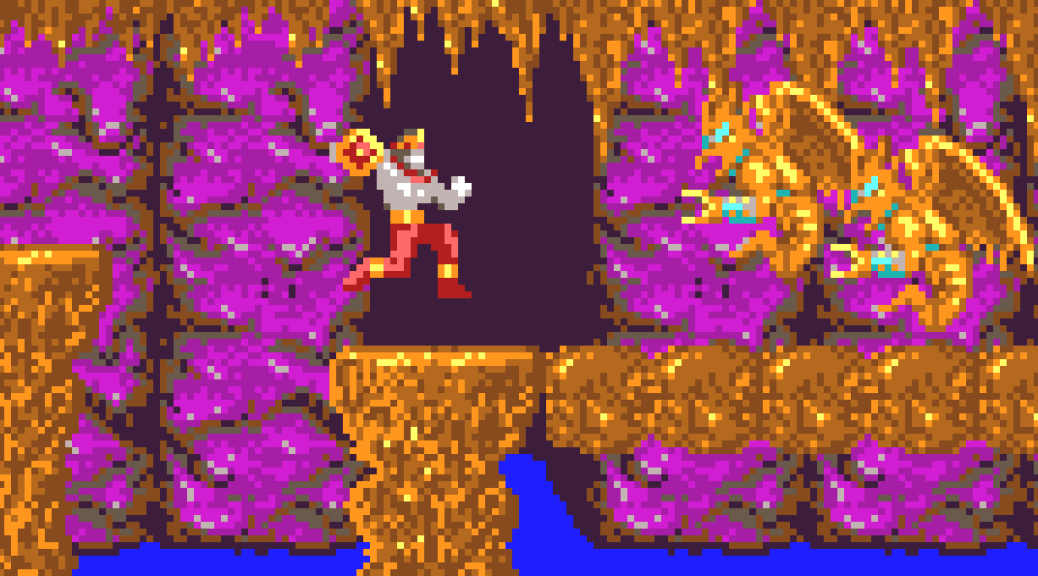
Rygar, Atari Lynx
A port of the 1986 Tecmo arcade game, Rygar on the Atari Lynx is a side-scrolling action game where the hero utilises a thrown shield – called The Diskarmor – to destroy his enemies. Rygar was ported to the Lynx by Haehn Software Productions for NuFX, and published by Atari Corporation in 1990.

Gauntlet, Game Boy Advance
The Game Boy Advance version of Atari‘s classic Gauntlet was released as a double-pack, with Rampart, in 2005. It was developed by EC-Interactive and published by Destination Software, and is pretty close to the arcade original, but doesn’t offer a multiplayer option, in spite of the GBA‘s link-up capabilities.

Gauntlet: Seven Sorrows, PlayStation 2
Gauntlet: Seven Sorrows is the seventh game in the Gauntlet series, and is a much better attempt to bring the game into the 3D gaming realm than Gauntlet Legends or Gauntlet Dark Legacy, the previous two games in the series. It was developed by Midway Studios San Diego and published by Midway Games for the PlayStation 2 and XBox in 2005. An XBox 360 version was released in 2008.

Gauntlet Dark Legacy, Arcade
Gauntlet Dark Legacy is the sixth title in the Gauntlet series, and is an expansion of the previous game, Gauntlet Legends. It was developed by Midway Games West and was first released into arcades in 1999.

Gauntlet, Apple IIgs
The Apple IIgs version of the arcade classic, Gauntlet, was first published by Mindscape in 1988. It’s a reasonable port, although it doesn’t have the variations in colour that most Gauntlet ports have. The levels in this version seem to be mostly the same colour – grey – with spot colours used for doors, items and monsters. Which is disappointing.

Gauntlet, NES/Famicom
The 1988 NES version of Gauntlet was developed and published by Tengen, and – surprisingly – it doesn’t feature the levels from the arcade original, but does its own thing instead.

