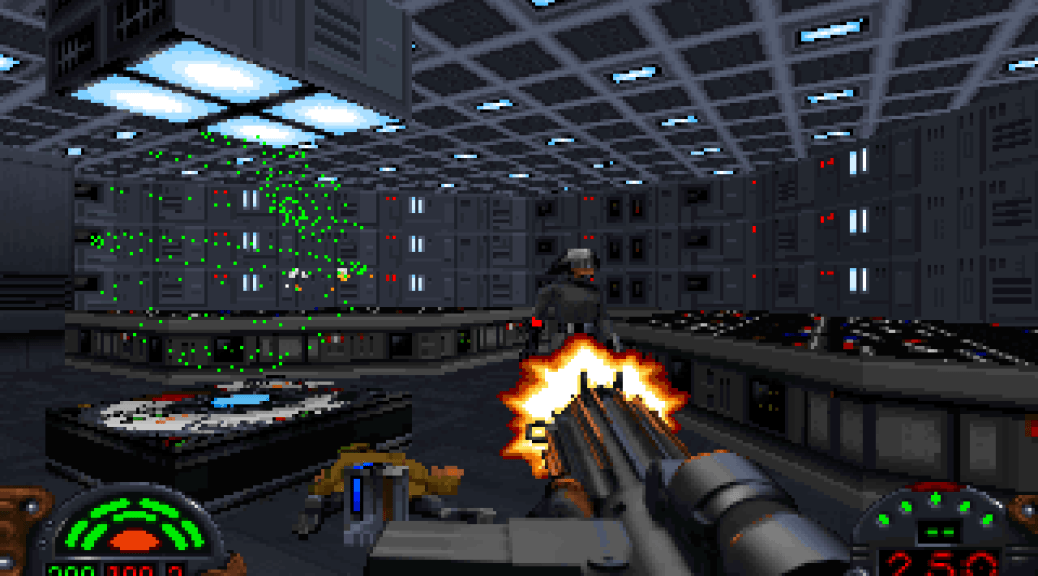
Dark Forces is LucasArts‘ attempt at Doom, with a Star Wars make-over. It was first released in 1995 for MS-DOS PCs.
Looking at it now: it hasn’t aged too well, although it’s still fun to play if you get the controls set up correctly.
Dark Forces is LucasArts‘ attempt at Doom, with a Star Wars make-over. It was first released in 1995 for MS-DOS PCs.
Looking at it now: it hasn’t aged too well, although it’s still fun to play if you get the controls set up correctly.
Gunhed is a classic vertically-scrolling. progressive-weapons shooter released for the PC Engine in 1989. It is based on the Toho film of the same name. In North America the game goes by the name of Blazing Lasers.
Doug Neubauer‘s 1979 release, Star Raiders, is a very important game indeed. Predominantly because it was so hugely influential on many other games that followed it. Some people even point to it being the spark that started the first-person shooter market, but that is probably going a little too far…
Still considered to be one of the best Star Wars games of all time, X-Wing is a serious, high-tech, fantasy combat sim – in space obviously – with all the different ships from the famous films in there somewhere, modelled in low-res 3D.
Juno First is a kind of overhead shoot ’em up, but with a three-quarters perspective into the screen.
This 1994 Super Nintendo exclusive (at the time) is half sequel, half remake of Irem‘s classic arcade shooter, R-Type.
Continue reading R-Type III: The Third Lightning, Super Nintendo
A space exploration and trading game from 1989 that was meant to rival Elite. And it almost did. Except for a fundamental problem… The problem was: travelling around; jumping from planet to planet was… To put it mildly: sticky.
Laser Squad was a great strategy game on early 8-bit home computers. This Atari ST 16-bit conversion retains the same excellent turn-based gameplay, but updates the graphics with extra colours and frame rates.
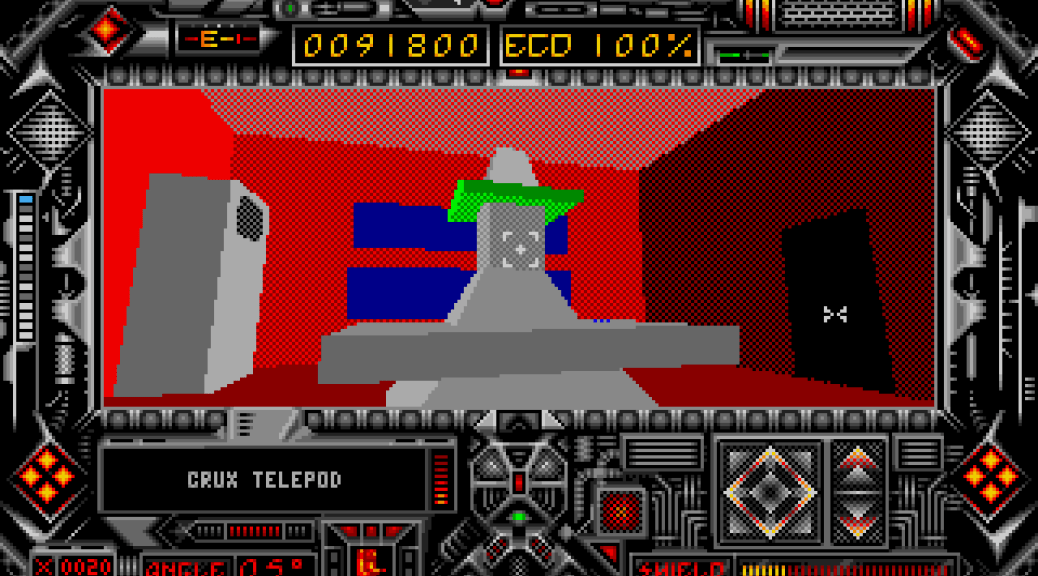
Dark Side is the second Freescape game from Major Developments and was published by Incentive Software (Microprose in the US).
Freescape was one of the earliest (if not THE earliest) 3D game engine and was used to make a series of significant games in the mid Eighties.
Namco‘s groundbreaking Xevious gave you a ship (the Solvalou) that could fire both a laser at flying targets and drop bombs on ground targets. Two fire buttons… Innovative in arcades in 1982.




 The King of Grabs