The Sharp X68000 version of Atari‘s classic Marble Madness is pretty much arcade perfect – barring, of course, the trackball controls of the original arcade game. In fact: if you compare the graphics to the arcade game you might notice that they’re crisper and slightly higher resolution.
Tag Archives: influential
Stargate, Arcade
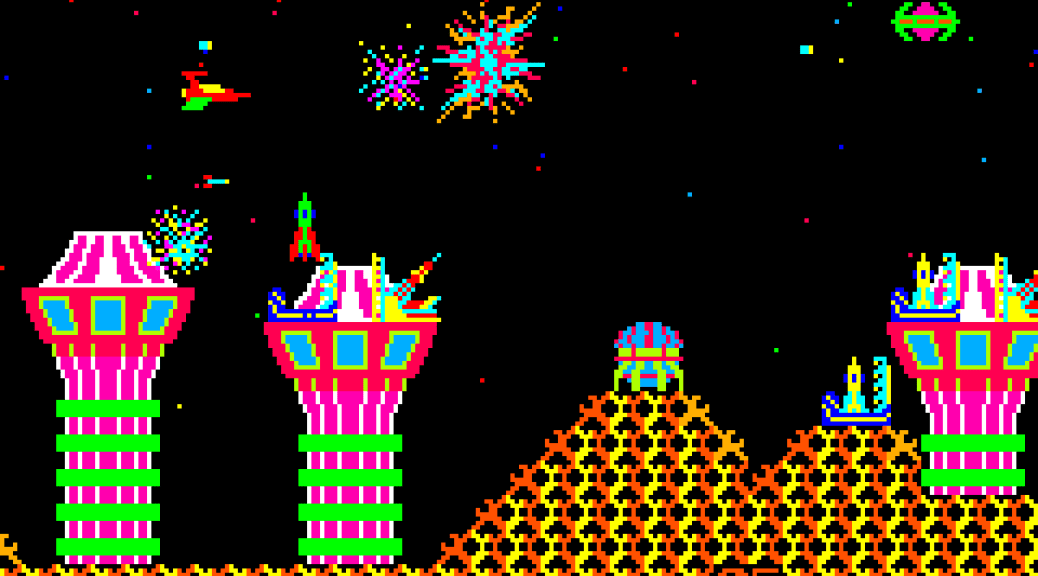
Also known as Defender II, Stargate is the 1981 sequel to Williams Electronics‘ Defender, which was released earlier the same year.
Stargate was designed and programmed by Eugene Jarvis and Larry DeMar of Vid Kidz, for Williams, and it features the same superfast blasting action as Defender, but with subtle differences.
Bubble Memories, Arcade
Bubble Memories: The Story of Bubble Bobble III was released into arcades by Taito in 1996, and – as the subtitle makes clear – this is a canonical Bubble Bobble sequel. It has been described as “Bubble Bobble on steroids”…
Mario Bros., Arcade
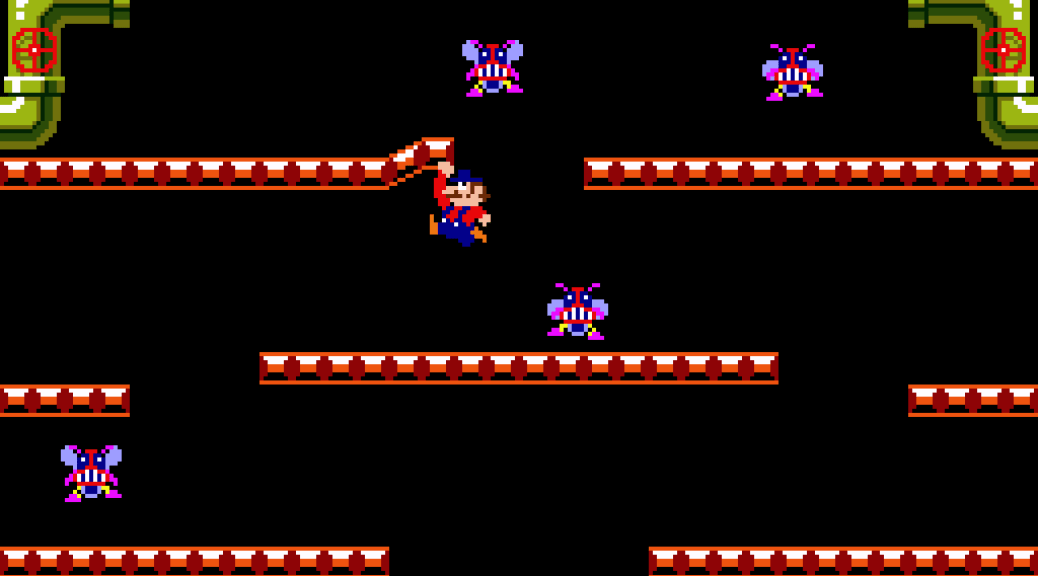
Released into arcades by Nintendo in 1983, Mario Bros. is a one or two-player platform game featuring Mario and Luigi as the main characters. Incidentally, this was the first time Luigi ever appeared in a video game.
Mario Bros. was designed by Shigeru Miyamoto and Gunpei Yokoi – two of the lead creators of Donkey Kong, of which this game is a follow-up.
Crystal Castles, Arcade
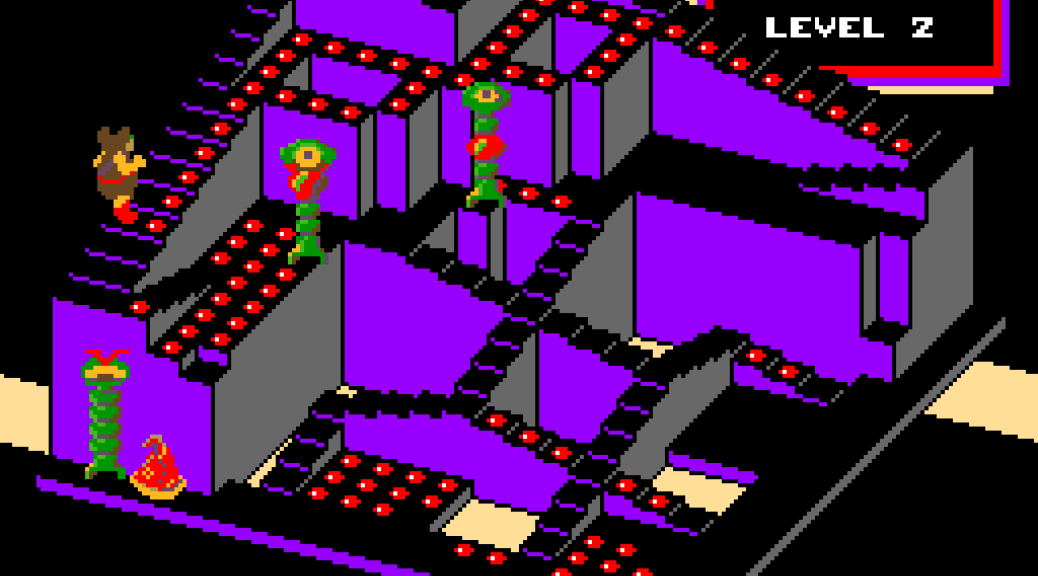
Crystal Castles is a legendary arcade maze game developed and published by Atari, Inc. in 1983. What made the game so good were: the trackball and jump button controls (which gave a good degree of freedom to make headway at pace) and the unusual isometric graphics (which drew on-screen in an unusual and interesting way).
Popeye, Arcade
Nintendo‘s 1982 arcade game, Popeye, was somewhat ahead of its time, and also in some respects as archaic to play as a Game & Watch.
It was ahead of its time in the way that it used a relatively high screen resolution (512×448), which results in quite detailed, high res sprites that are unusual for the time.
Unfortunately the same can’t be said of the background graphics, which look like something designed on an Atari 2600… In fact: Popeye is a weird mix of graphical resolutions, but this weirdness doesn’t affect the gameplay at all.
Mortal Kombat 3, Arcade
Mortal Kombat 3 was co-developed by Midway and Atari Games and was released into arcades by Midway in 1995 and it continues the fine Mortal Kombat tradition of outraging anyone without a sense of humour…
Mortal Kombat II, Arcade
Released a year after the original Mortal Kombat, Mortal Kombat II took arcades by storm in 1993, with its mix of beat ’em up action and absurdly violent parody.
Sprint 2, Arcade
The Sprint series began in 1976 with Sprint 1 and Sprint 2 – not, as you may think, a first game and a sequel, but the “1” and “2” denotes the number of players who can play the game.
Sprint 1 had a single steering wheel, and Sprint 2 had a pair of steering wheels, and in each game players control their vehicles through a variety of overhead, black and white race tracks.
Psycho-Nics Oscar, Arcade
This obscure 1987 arcade game from Data East was a big influence on many games that came after it, in particular Manfred Trenz‘s Turrican series. It is obviously itself influenced by Nintendo‘s 1986 game, Metroid.
It also displays some similarities to Karnov, another Data East arcade game released the same year.
And, while you may have never heard of this game, it’s safe to say that it’s a bit of a ‘hidden gem’ in terms of old arcade games still worth playing today.