
I was hoping that the Atari 8-bit version of Rogue might be better than the other 8-bit versions (or at least a balance between the awful C64 version and the half-decent Amstrad version), but I was hoping for too much – especially as it’s another Mastertronic “special” (ie. a good example of a publisher not giving a sh*t about what they released).
Tag Archives: 1988
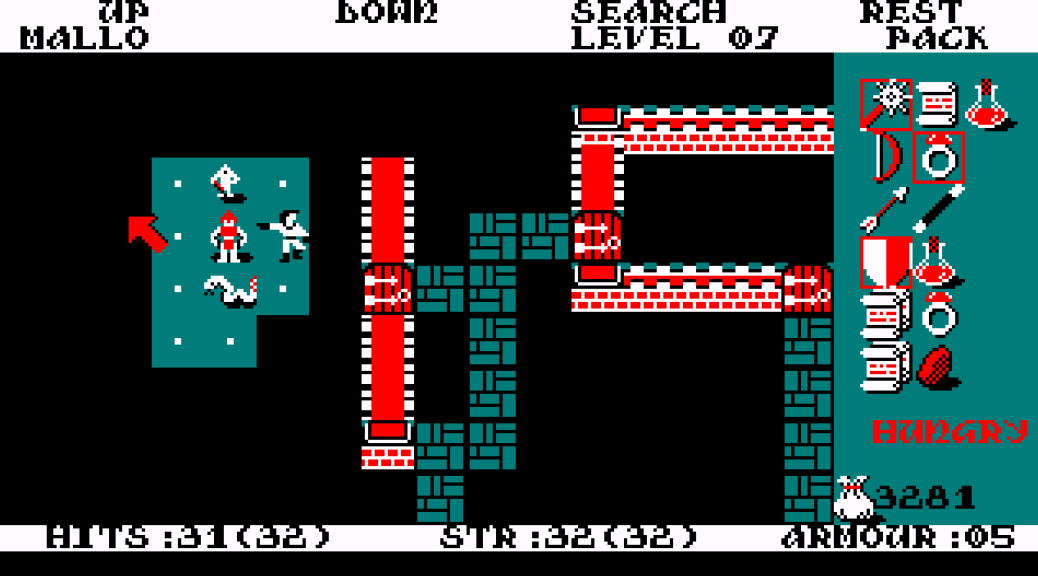
Rogue, Amstrad CPC
The Amstrad CPC version of Rogue is arguably the best of the 8-bit conversions from Mastertronic, although it’s not without its problems. It was developed by Icon Design and first published in 1988.

Rogue, ZX Spectrum
Rogue on the ZX Spectrum was developed by Icon Design and published by Mastertronic Added Diminsion in 1988. And it’s a pretty poor conversion of the classic dungeon-crawler.

Rogue, Commodore 64
The Commodore 64 conversion of Rogue was developed by Icon Design and published by Mastertronic in 1988, and it is a bugged, incomplete, and un-finishable version of the game that demonstrates the utter contempt for which Mastertronic held for both the game, and for gamers who paid money for it.

R.C. Pro-Am, NES/Famicom
Rare‘s R.C. Pro-Am is a classic isometric racing game that was published by Nintendo on the NES in North America and Europe in 1988.
In it you race remote controlled cars around tracks in order to win points and stay in the championship. If you drop too low in the rankings then you are eliminated from the game and must start again.
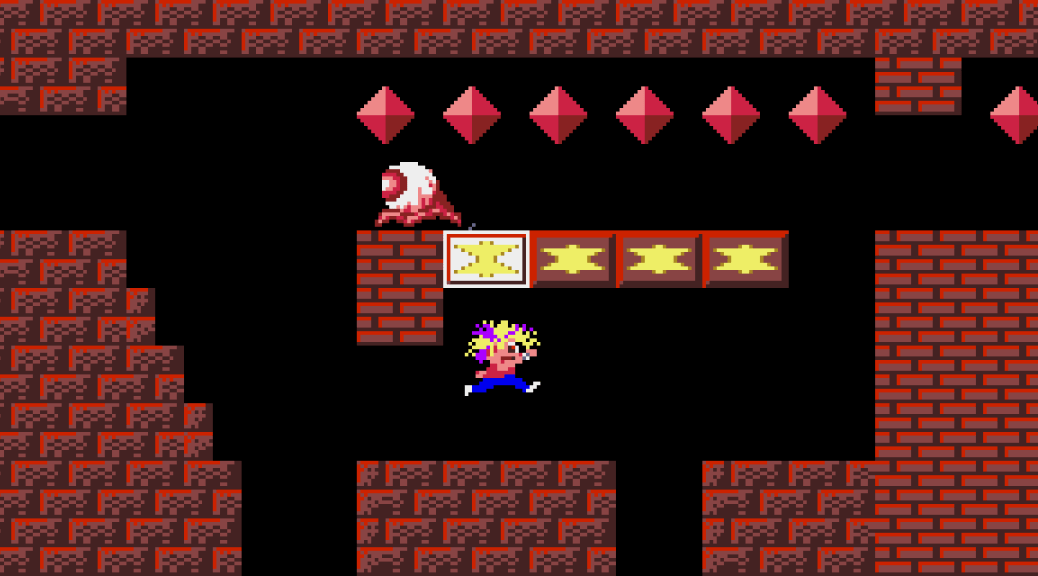
The Great Giana Sisters, Amiga
Developed by Time Warp Productions and published by Rainbow Arts in 1988, the Amiga version of The Great Giana Sisters is maybe the best-looking and most playable version of this infamous and arguably overrated platform game, but it isn’t anything special.

Boulder Dash, BBC Micro
The BBC Micro conversion of Peter Liepa and Chris Gray‘s classic Boulder Dash was programmed by Andrew Bennett and published by Tynesoft in 1988. And I don’t know what it is about this port, but there is something wholly unsatisfactory about it.

Karnov, Commodore 64
This arcade conversion of Data East‘s 1987 coin-op was highly controversial at the time of release, because it was viewed as a “lazy, direct port” of the ZX Spectrum version, which was not what Commodore 64 owners wanted to see.
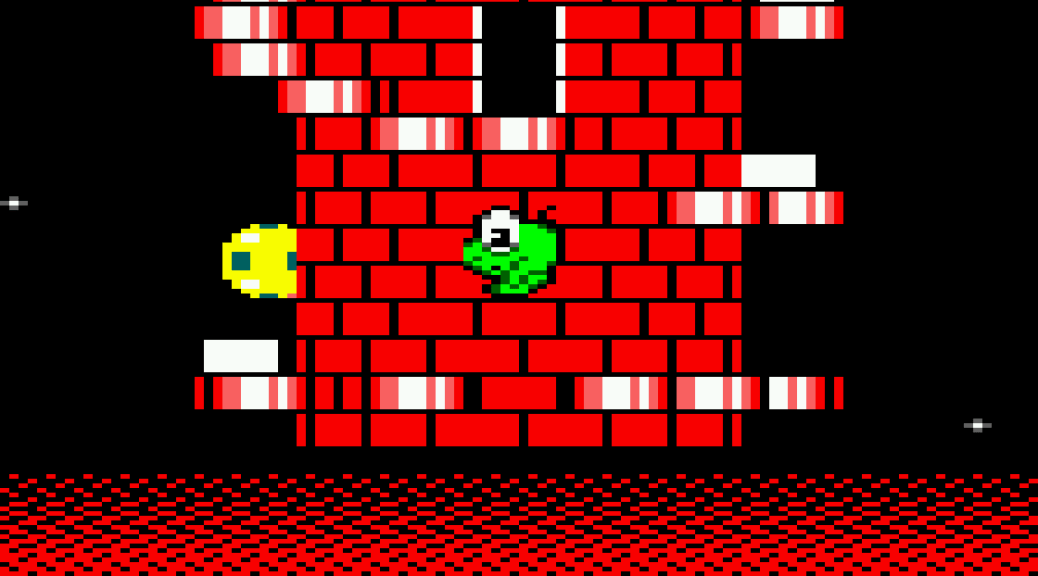
Nebulus, Amstrad CPC
John Phillips‘ Commodore 64 classic, Nebulus, is very good on the Amstrad, although it is quite slow and doesn’t have the intermission challenges of its parent. It doesn’t ruin the game, though. In fact: it may be easier to play than the original due to it being slower.
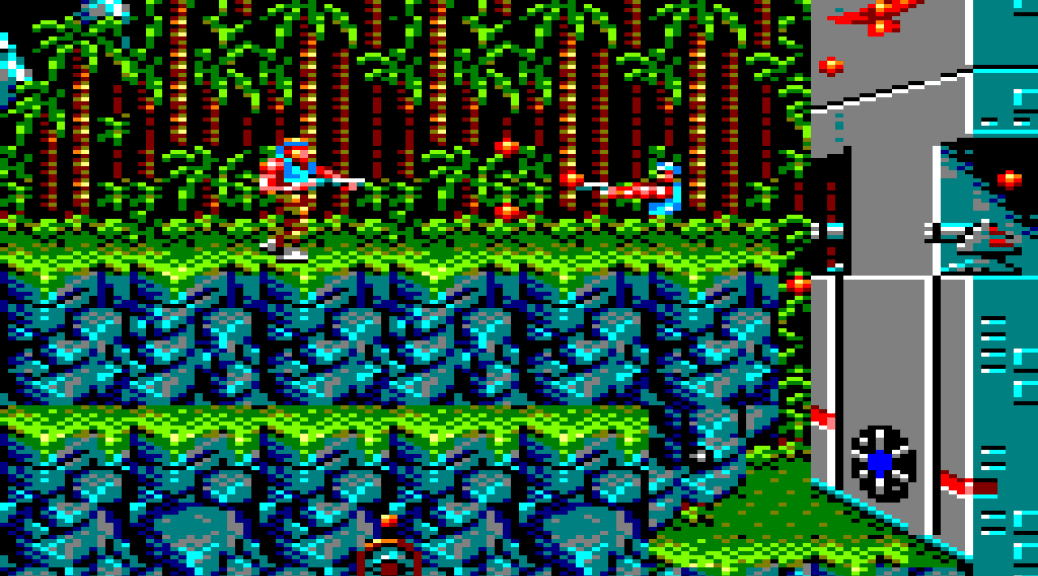
Gryzor, Amstrad CPC
In 1987 Konami released the hugely successful run-and-gun shoot ’em up Contra in arcades, and Gryzor is the localised European conversion of that game, published by Ocean Software in 1988.

