A game with a strange name – actually the name of the planet you’re on: Nonterraqueous.
You control a robot ‘seeker drone’ on a mission to destroy the master computer that is threatening destruction of the entire planet.
A game with a strange name – actually the name of the planet you’re on: Nonterraqueous.
You control a robot ‘seeker drone’ on a mission to destroy the master computer that is threatening destruction of the entire planet.
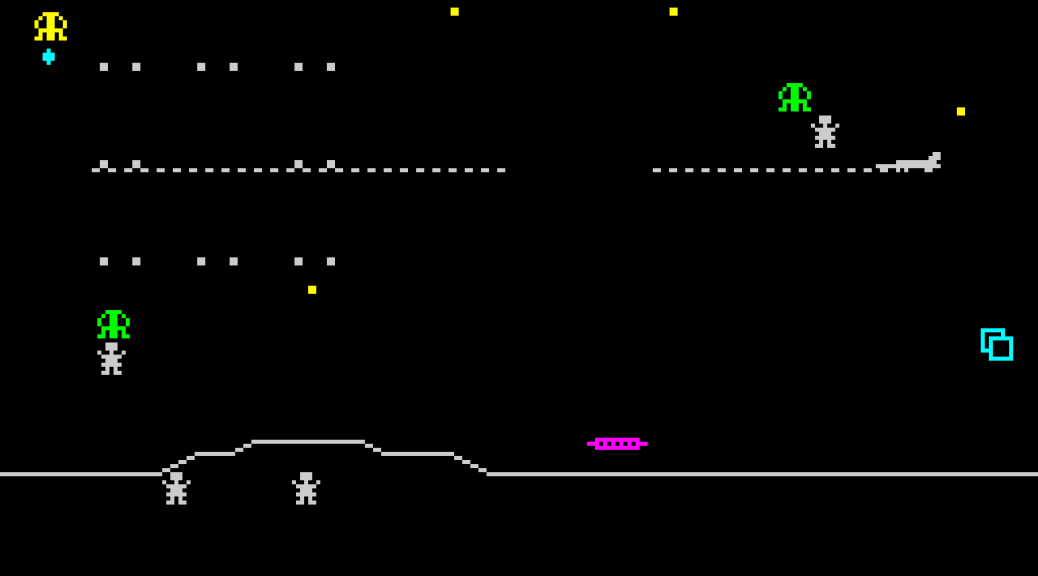
Created by Design Design and first published by Crystal Computing in 1983, Invasion of the Body Snatchas! is a super-hard Defender clone for the ZX Spectrum.
Continue reading Invasion of the Body Snatchas!, ZX Spectrum
Programmed by Mike Follin and published by Firebird in 1987 the ZX Spectrum conversion of Bubble Bobble is excellent, considering the machine’s limitations.
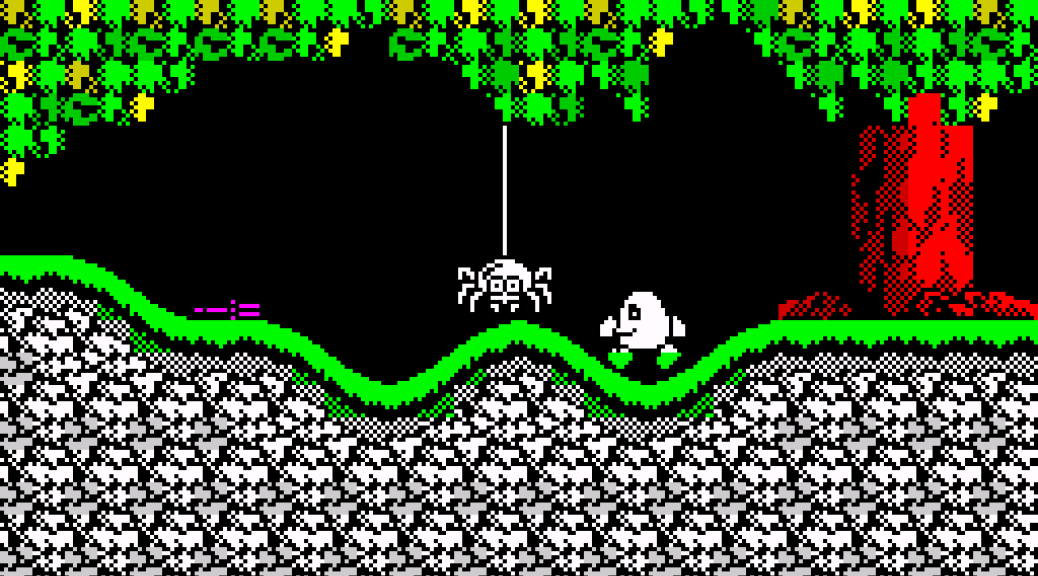
The Dizzy adventures are well-known and much-loved on the ZX Spectrum. Created by The Oliver Twins, they feature an anthropomorphic egg called Dizzy who somersaults when he jumps and solves item-based puzzles, often in an attempt to rescue his friends, the “yolkfolk“.
Wonderful Dizzy is the eighth ‘core’ Dizzy adventure and was released in 2020 for the 128K ZX Spectrum only. It was designed by The Oliver Twins and published by Team Yolkfolk.
The game’s development was tied to the Kickstarter campaign for the ZX Spectrum Next and was first announced in 2017. The Olivers said that they would only go ahead with development of the game if the Kickstarter campaign for the ZX Spectrum Next reached its target, which it eventually did.
The seventh Dizzy adventure, Crystal Kingdom Dizzy was the final release in the core series – until Wonderful Dizzy in 2020. This one was developed by Visual Impact, with some input from Philip Oliver, and was published by Codemasters in 1992.
Dizzy: Prince of the Yolkfolk is the sixth Dizzy platform adventure game. It was designed and coded by Big Red Software and published by Codemasters in December 1991.
Also known as Dizzy V (five), Spellbound Dizzy was once again designed and coded by Big Red Software and was first published by Codemasters in 1991.
Spellbound Dizzy was the biggest Dizzy game yet, with 108 screens to explore, and it had a slightly different graphical style to previous games. Message windows were made to look transparent, with background graphics shown as dark blue on top of which text was overlaid, which is a neat little detail that works well. Dizzy himself looked the same though.
Dizzy 3 and a Half was released for free on a Crash magazine cover tape (issue 84, January 1991) and basically serves as an introduction to (and a sales device for) Magicland Dizzy, the fourth Dizzy adventure.
Magicland Dizzy is the fourth Dizzy adventure game and the first game in the series not designed and coded by The Oliver Twins. Instead it was designed by Neal Vincent and coded by Big Red Software, with The Oliver Twins retaining creative oversight.