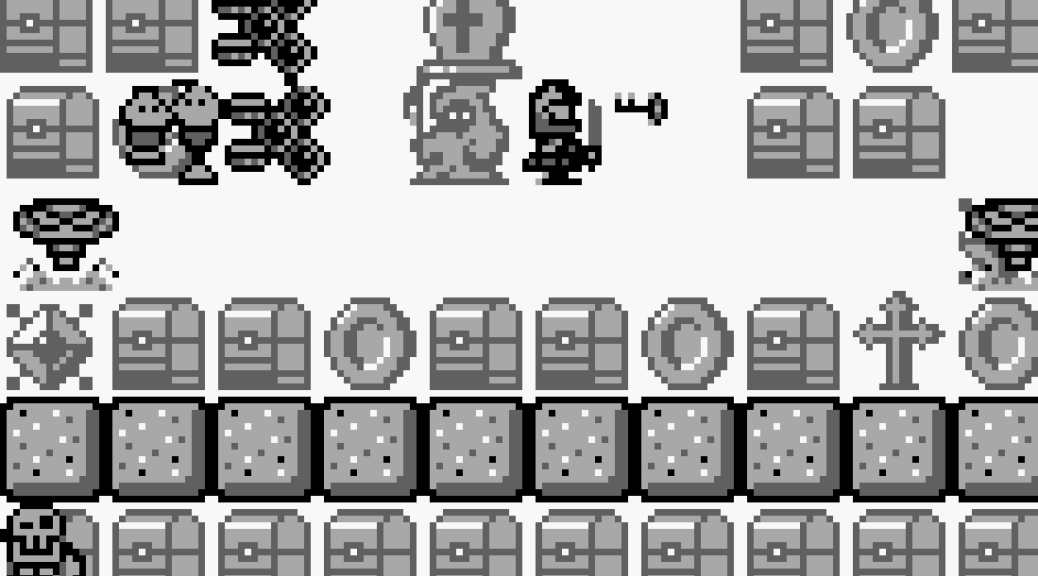
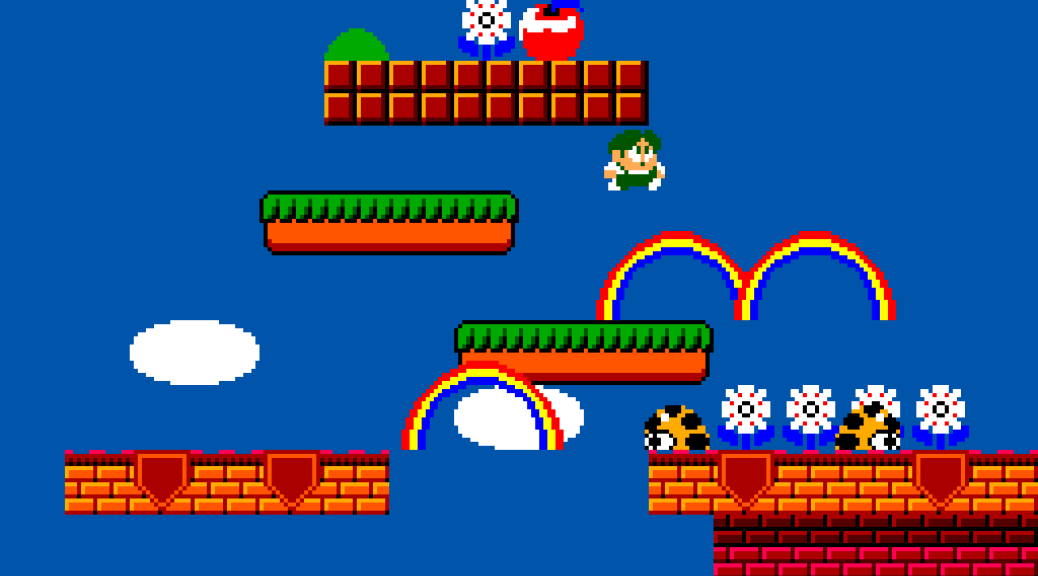
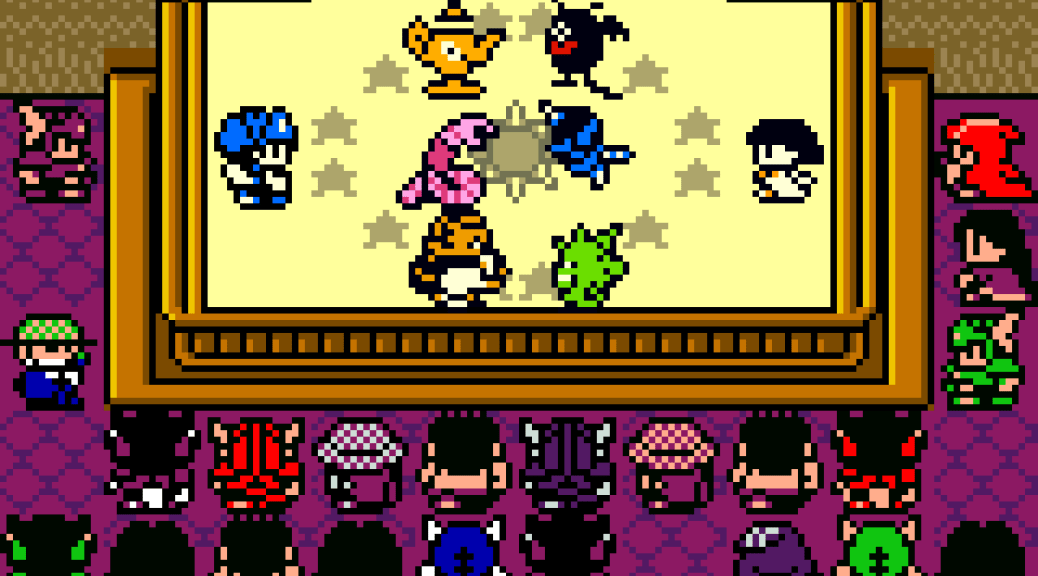
Developed by Sting Entertainment and published by Squaresoft in 1996, Treasure Hunter G is a tactical Japanese Role-Playing Game that features exploration, turn-based combat and a fantasy-based storyline that mixes magic and technology. It was released in Japan only, but a fan translation makes it playable in English.
Tag Archives: 2D graphics
Flat, two-dimensional graphics, usually constructed of pixels. Not three-dimensional.
Qix, Atari 5200
Taito‘s 1981 arcade game, Qix, was ported to the Atari 5200 and published by Atari, Inc. in 1983. It was written by Eric Manghise and is a pretty good version of the box-drawing action/puzzle game.
All Or Nothing, ZX Spectrum
Written by Paul W. Reynolds (the same guy who wrote the classic Krakatoa) and published by Abbex Electronics in 1984, All Or Nothing is an isometric action game where you parachute into an enemy camp on a mission to find and steal their secret plans.
Chase HQ II, Megadrive/Genesis
The Megadrive/Genesis exclusive, Chase HQ II, was developed by ITL Co., Ltd. and published by Taito in 1992. It is an enhanced, multi-vehicle adaptation of the classic 1988 arcade game, with similar gameplay to its parent.
Zaxxon, Atari 5200
The Atari 5200 version of Sega‘s classic arcade game, Zaxxon, was programmed by Ronald J. Fortier and first released in 1984.
Zaxxon, SG-1000
Zaxxon was arguably Sega‘s flagship game during the early 1980s so it was ported to most home computers and consoles. The Japan-only SG-1000 version first came out in 1985 and is a reasonable conversion of the classic isometric shooter.
Paperboy 2, ZX Spectrum
Developed by Probe Software and published by Mindscape in 1992, the ZX Spectrum version of Paperboy 2 is not quite as bad as the terrible Amstrad version, which was written by the same two people (David Perry and Nick Bruty). That said: it’s not that much better either…
Paperboy 2, Amstrad CPC
The Amstrad CPC version of Paperboy 2 was written by David Perry and Nick Bruty for Probe Software, and was published by Mindscape in 1992, and it is by far the worst version of Paperboy 2 available.
Paperboy 2, Game Boy
The Game Boy version of Paperboy 2 was developed and published by Mindscape in 1992. It is not a bad port overall, and doesn’t suffer too badly from having a small play screen (unlike the Game Gear version, which does).
Paperboy II, Game Gear
The Game Gear version of Paperboy 2 (aka Paperboy II) was ported by Manley & Associates and published by Tengen in 1993. While it does at least try to emulate the superior Megadrive/Genesis version (and not the inferior Mindscape ports), it falls flat for a number of reasons.