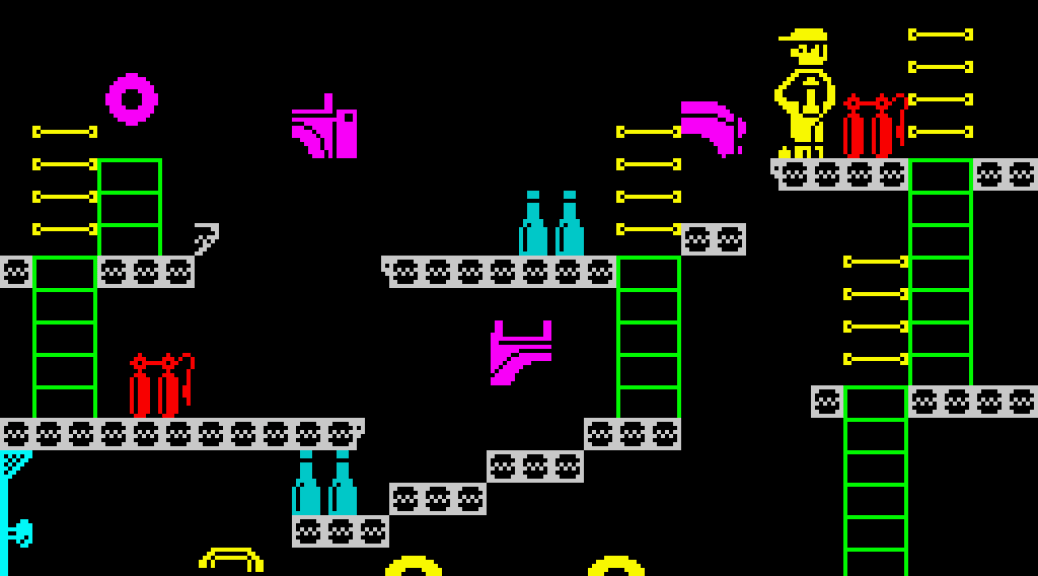
Automania – developed by Chris Hinsley for Mikro-Gen in 1984 – is the first ever appearance of the character Wally Week.
Category Archives: Company
Video game companies.
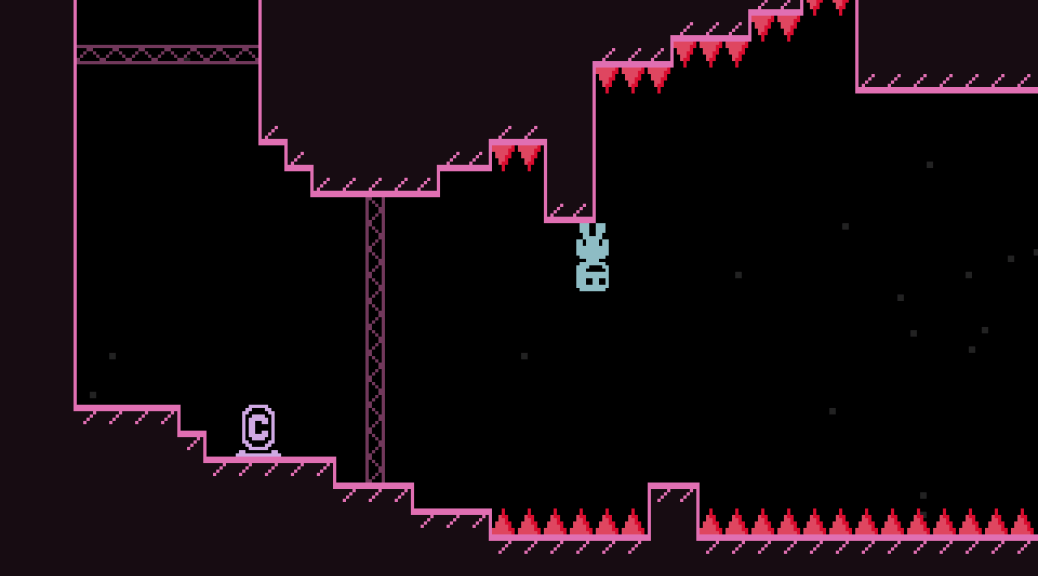
VVVVVV, PC
Terry Cavanagh‘s VVVVVV is an extremely smart-but-simple platform/indie game that feels a lot like a Commodore 64 game from the ’80s, although it was actually released in 2010.
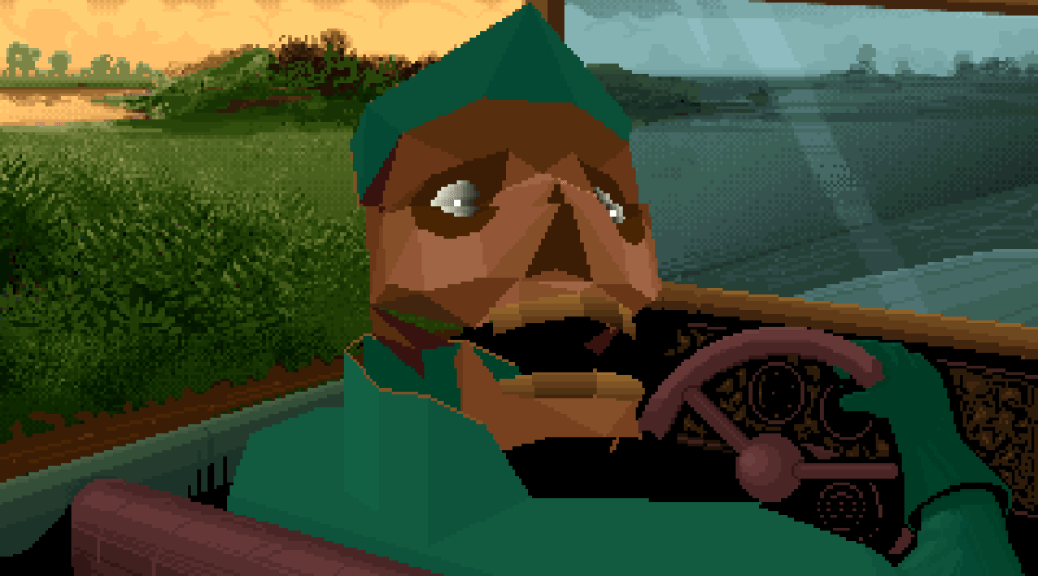
Alone In The Dark, PC
Infogrames‘ Alone In The Dark is one of the earliest survival horror games to use 3D graphics (mixed with 2D graphics), and it really broke new ground when it was first released back in 1992.

Mr. Gimmick, NES/Famicom
Known as Gimmick! in Japan and Mr. Gimmick everywhere else, this 1992 release was an attempt by Sunsoft to push the graphical powers of the Nintendo Entertainment System further than they’d ever been pushed before (in order to compete with the Super Nintendo, which was relatively new on the market).
In order to do this, Sunsoft used all kinds of clever programming techniques using graphical tilesets and colours, and the end result is very striking. But it wasn’t enough to compete with the newer consoles of the time and Mr. Gimmick sank without a trace, into relative obscurity.

Track & Field, Arcade
Konami‘s 1983 arcade hit Track & Field broke new ground with its button-bashing gameplay.
It also broke a fair few cabinets along the way, with arcade machine operators having to repair the buttons on machines quite often, to keep them operative (and therefore earning money). A broken Track & Field machine was no good to anyone, and people tend to get carried away and hit too hard when playing this game.

Metroid Fusion, Game Boy Advance
Also known as “Metroid 4“, Metroid Fusion on the Game Boy Advance is the fourth episode in the famous run-and-gun series from Nintendo and was first released in 2002.

Super Metroid, Super Nintendo
The third game in the Metroid series is a top class Super Nintendo classic.
Super Metroid (1994) is more detailed than both previous Metroid games put together, although the basic structure is the same – explore various levels to find your latent abilities, all of which have been lost (“Why does this keep happening in Metroid games?” you may ask. “It’s in the script,” is my answer).
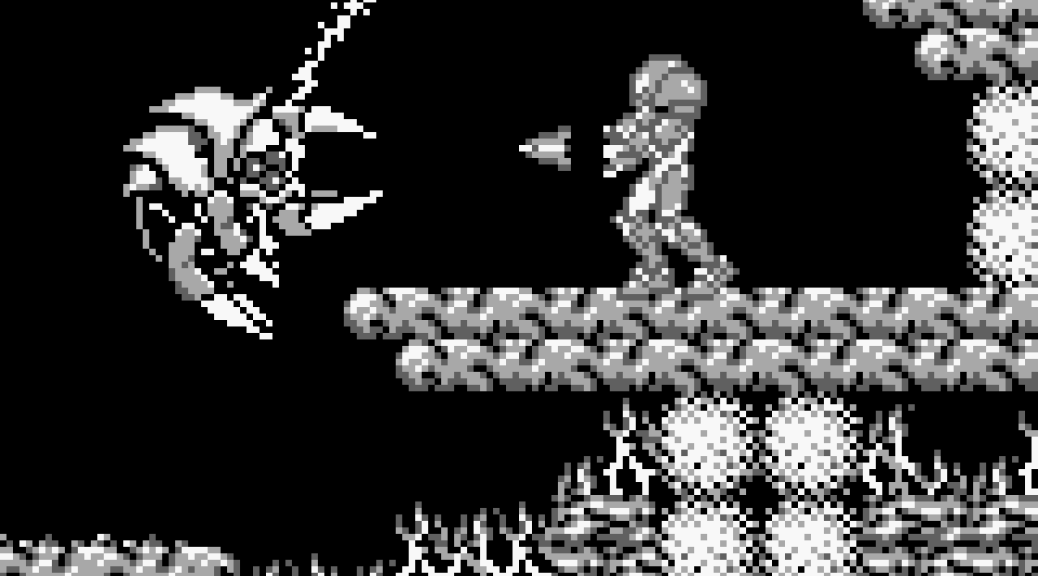
Metroid II: Return of Samus, Game Boy
The second ever Metroid game first appeared on the Nintendo Game Boy in 1991.
Metroid II: Return of Samus is a brilliant continuation of the first Metroid game. The animation of lead character Samus is much more gritty and realistic in this game, compared to the NES original. And the monochromatic graphics actually seem to add to the eerie atmosphere, rather than hamper the game at all.

Metroid, NES
This first Metroid, for the Nintendo Entertainment System, was initially released in 1986 and remains the toughest episode in the whole series to date.

Nemesis/Gradius, Arcade
Known as Gradius in Japan – but Nemesis everywhere else – Konami‘s classic 1985 shoot ’em up is one of the earliest progressive weapons blasters, with distinct levels and boss battles.
The game is somewhat reminiscent of the classic side-scrolling Scramble (also by Konami), but in Nemesis you fly a ship called the “Vic Viper”, and which has a variety of different weapons which can be powered-up by collecting capsules left by destroyed enemies.
 The King of Grabs