
The Atari ST version of Marble Madness was converted by Will Harvey (who also programmed the C64 and Apple II versions – among others), and Jim Nitchals, and was published by Electronic Arts in 1987. It is very similar to the 8-bit ports Harvey produced, rather than the more authentic Amiga version (that he didn’t).
Category Archives: Electronic Arts

Marble Madness, Apple II
The Apple II port of Atari Games‘ classic Marble Madness was first published by Electronic Arts in 1986. It was converted by Will Harvey of Sandcastle Productions, who also made the Commodore 64 version, of which this is basically a copy. Lack of colour aside, this conversion does have some playability issues that make it frustrating to play.

Marble Madness, PC
The PC version of Marble Madness runs under MS-DOS and was developed by Will Harvey (and a small team of other people at Sandcastle), and was published by Electronic Arts in 1987.
Since they were all coded by the same person, the Commodore 64, Atari ST, Apple II, Apple IIgs and PC versions are all very similar. This one also contains the hidden secret level accessible from the first course, although don’t get too excited about it because it’s not very good.

Marble Madness, Commodore 64
The Commodore 64 version of Marble Madness was developed by Will Harvey and published by Electronic Arts in 1986. It has something unique that most other Marble Madness conversions don’t have, which is: a secret extra level that is accessible from the first stage. It also has the two player mode from the arcade original, where both marbles can race to the goal simultaneously.

Marble Madness, Megadrive/Genesis
Did you know that there are two completely different versions of Marble Madness on the Megadrive/Genesis? The European Megadrive and North American Genesis versions of Marble Madness were published by Electronic Arts in 1991. They were coded by Michael Schwartz, with sound and music by Steve Hayes, and while they’re excellent ports of the classic arcade game, they’re nowhere near as good as the superior Japanese version, which is a completely different game.

Marble Madness, Amiga
The Amiga version of Atari Games‘ classic arcade game, Marble Madness, was converted by Larry Reed and published by Electronic Arts in 1986. It is one of those relatively early 16-bit ports that is a little rough around the edges, presentation-wise, but plays perfectly well.

Shadow of the Beast, Megadrive/Genesis
The Megadrive/Genesis conversion of Shadow of the Beast was developed by WJS Design* and published by Electronic Arts in North America and Europe in 1991 (Victor Interactive Software in Japan in 1992). It’s arguably one of the best versions of Shadow of the Beast out there.

Shadowcaster, PC
Shadowcaster is a first-person fantasy-based action game developed by Raven Software and published by Origin Systems in 1993 for MS-DOS (Electronic Arts published it in Europe). The game uses a modified version of the 3D engine used in Wolfenstein 3D, with icons and point-and-click adventure and RPG elements.

Syndicate, Amiga
The Amiga version of Bullfrog‘s classic tactical action game, Syndicate, came out at more or less the same time as the original PC version, and – as good as the game is – I have to say that it is not as good as the MS-DOS version, and I’ll explain why…
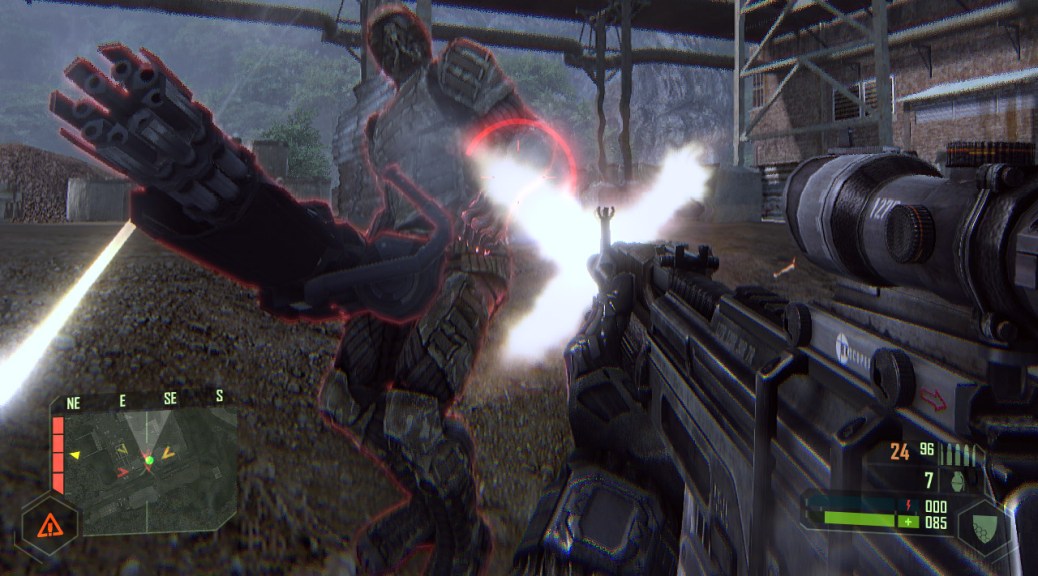
Crysis, PC
Crysis is a futuristic first-person shooter developed by German company Crytek and published by Electronic Arts in 2007. It is the first game in the Crysis series and is known as a game that – at the time of its original release – had relatively high-end system requirements. It’s also quite similar to Crytek‘s previous game, Far Cry, in that it is predominantly combat based in a jungle environment, with vehicles like jeeps, trucks, cars, hovercraft and boats that can be commandeered and driven.
 The King of Grabs