
The Atari ST version of Ultima V: Warriors of Destiny was programmed by Binary Vision and first published by Origin Systems in 1989.
Tag Archives: swords

Ultima V: Warriors of Destiny, PC
The PC MS-DOS version of Ultima V: Warriors of Destiny was first published by Origin Systems in 1988 and it is arguably the best version of this classic RPG available for any system.

Ultima V: Warriors of Destiny, Apple II
Ultima V: Warriors of Destiny was first released in 1988 for the Apple II through Origin Systems. It was the last Ultima game to be developed for the Apple II and it comes on eight floppy disks. It is the second game in the “Age of Enlightenment” trilogy and is similar in style to the previous game, with character creation done by answering a series of virtue-based questions. You can also import a character from Ultima IV if you have one, which is an interesting new feature in the series.
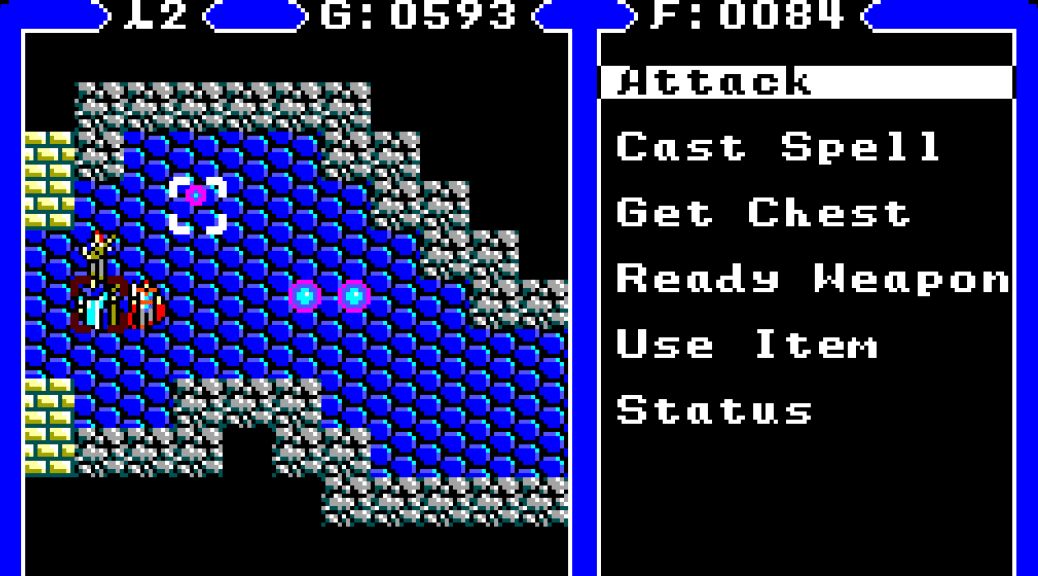
Ultima IV: Quest of the Avatar, Sega Master System
The Sega Master System version of Ultima IV was ported and published by Sega in 1990. It is a faithful adaptation of Richard Garriott‘s classic RPG that uses a menu system instead of keyboard commands, and it plays very well.
Continue reading Ultima IV: Quest of the Avatar, Sega Master System

Ultima: Quest of the Avatar, NES/Famicom
Ultima: Quest of the Avatar on the NES/Famicom was developed by FCI and published by Pony Canyon in 1990. It is the most different Ultima IV port available – in relation to the original – and has been altered to play more like a classic JRPG. Which is not a bad thing. In fact: some may even prefer this over the original.
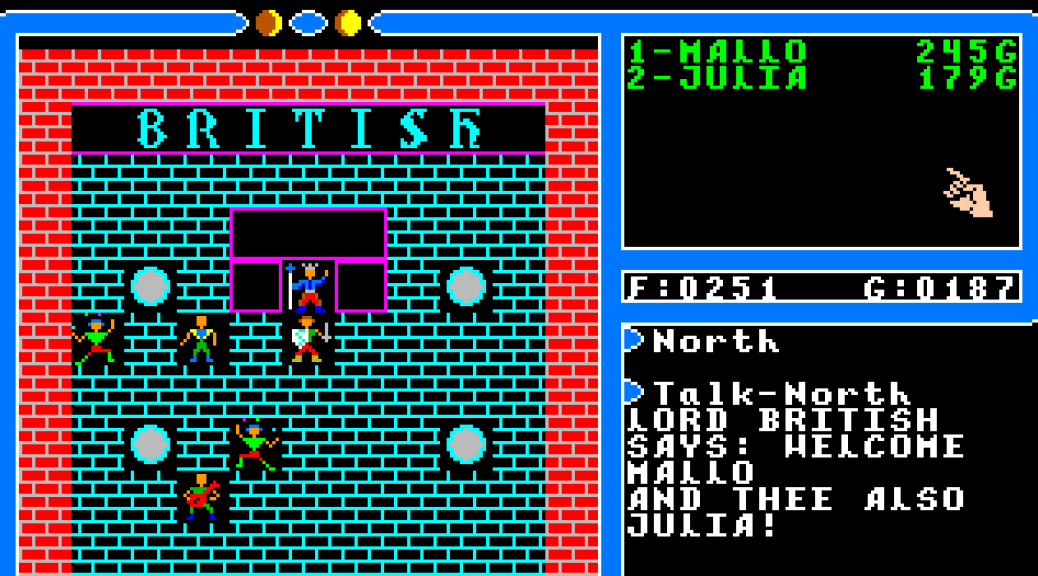
Ultima IV: Quest of the Avatar, Amiga
The Amiga version of Ultima IV: Quest of the Avatar was ported by Bob Hardy and first published by Origin Systems in 1988. Hardy did a sterling job of converting the 16-bit versions of Ultima III, and Ultima IV is very similar to those, but arguably even better.

Ultima IV: Quest of the Avatar, Atari ST
The Atari ST version of Richard Garriott‘s classic Ultima IV: Quest of the Avatar was ported by Bob Hardy (the same guy who converted Ultima III to the ST and Amiga) and first published by Origin Systems in 1987. It is an excellent conversion of a brilliant game and is arguably the best RPG on the ST (barring the mighty Dungeon Master).
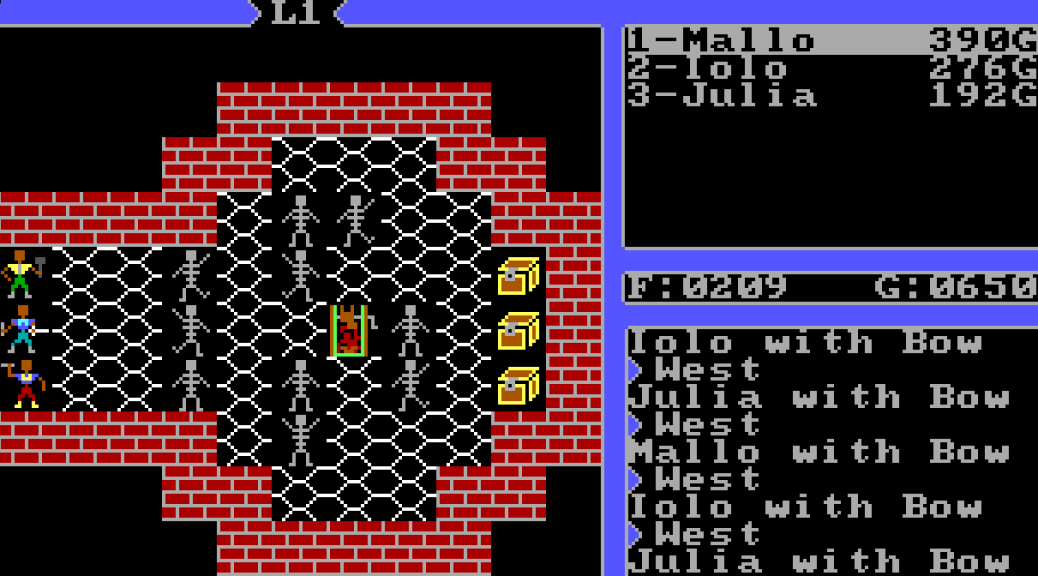
Ultima IV: Quest of the Avatar, PC
The MS-DOS version of Ultima IV: Quest of the Avatar was ported by James Van Artsdalen and first published on the PC by Origin Systems in 1987. It uses 16-colour EGA graphics, which is at least a step up from the previous three (un-patched) Ultimas, which used four-colour CGA graphics. It’s also currently – at the time of writing – available individually FOR FREE on GOG.com, or as a part of a paid-for package with episodes five and six. And it’s well worth playing, even today – some 35 years after the game’s original release. Which demonstrates just how good it is.

Ultima IV: Quest of the Avatar, Atari 8-Bit
Ultima IV: Quest of the Avatar on the Atari 8-bit was ported by David Lubar (who created the excellent Pastfinder) and first published by Origin Systems in 1986. It is an excellent conversion of a brilliant game and is arguably the best Role-Playing Game on Atari‘s 8-bit home computer.
Continue reading Ultima IV: Quest of the Avatar, Atari 8-Bit

Ultima IV: Quest of the Avatar, Commodore 64
The fourth game in the Ultima series first came out on the Commodore 64 in 1985 and the game was converted by Chuck Bueche, who also did a great job of porting the third Ultima to the C64. So it plays similarly to its predecessor. Ultima IV was also re-made by The Genesis Project in 2015, with superb new graphics, a trainer, bugfixes, a savegame editor, fast-loading d81 and CRT (cartridge) versions, and various other enhancements. If you’re playing the C64 version for the first time then that’s the version I’d recommend – unless you deliberately want to play the original version. I’m showing the 2015 remake here first, then at the end of the set I’ve shown screenshots of the original 1985 version, for comparison. It’s easy to tell them apart.
Continue reading Ultima IV: Quest of the Avatar, Commodore 64

