
A relatively obscure Taito arcade game from 1989*, Fighting Hawk is a vertically-scrolling bullet hell shooter where you fly an A-10 ‘Tankbuster’ up the screen, fighting its way through waves of enemies and bosses.
Tag Archives: helicopter
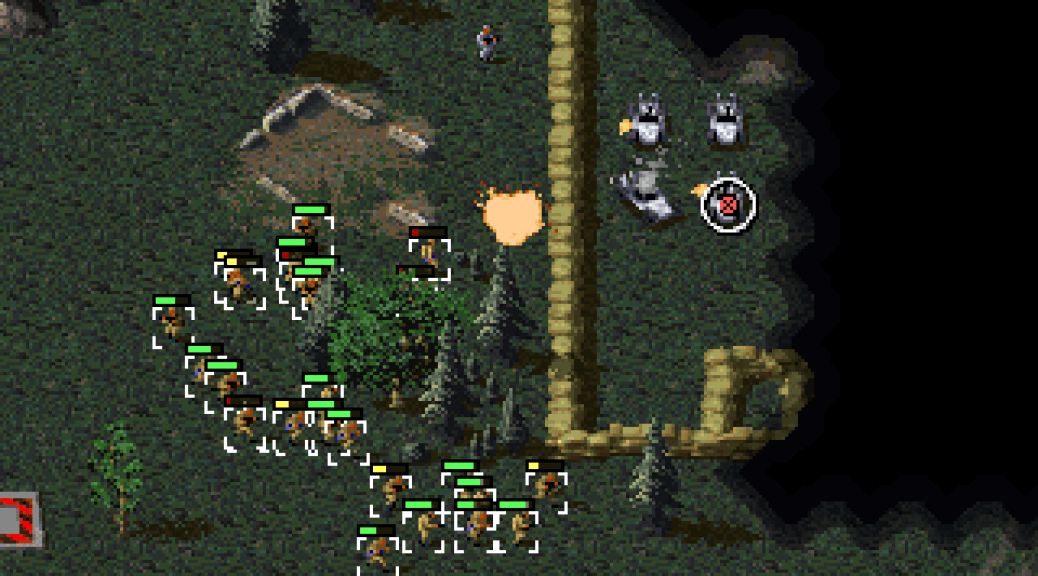
Command & Conquer, PC
The classic Real-Time Strategy game, Command & Conquer, was originally published for PC MS-DOS by Virgin Interactive in 1995.
Command & Conquer was developed by Las Vegas-based company Westwood Studios and it took the world by storm…
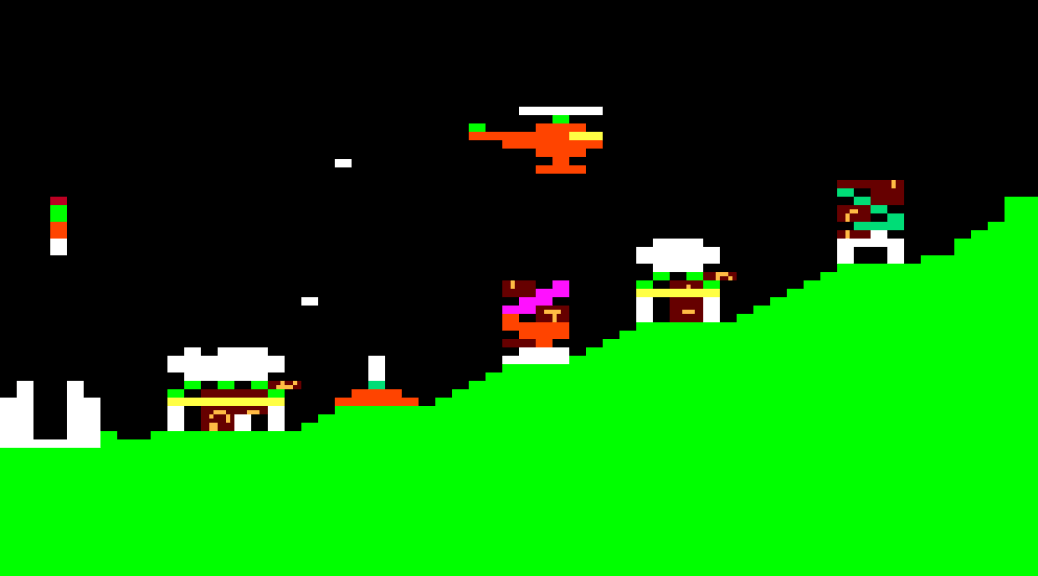
Copta Snatch, Dragon 32
Copta Snatch is a side-scrolling shoot ’em up for the Dragon 32. It was written by David K. Pridmore and published by Blaby Computer Games of Leicester in 1984.

Thunder Blade, Arcade
Thunder Blade is a single-player helicopter combat game that debuted in arcades in 1987, courtesy of Sega. It combines overhead shooting sections with third-person, ‘over-the-shoulder’ shooting sections and it features lots of impressive graphical scaling effects on the buildings and enemies.
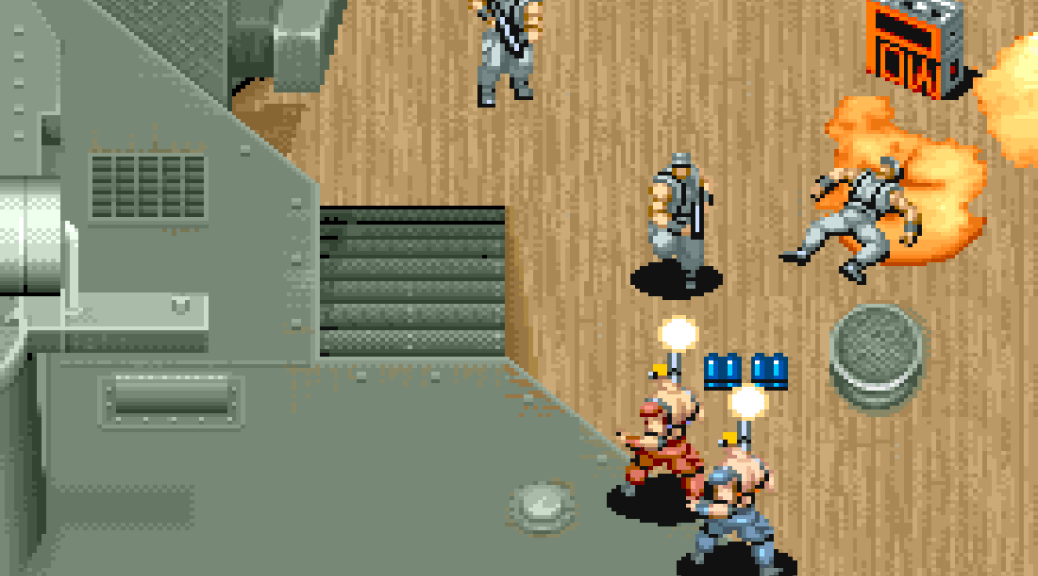
Mercs, Arcade
Mercs is a classic arcade shooter from 1990. It was jointly developed by Sega and Capcom and features simultaneous three-player cooperative gameplay.

Crazy Climber 2, Arcade
The 1988 sequel to Crazy Climber, Crazy Climber 2 is much the same as before. That is: scaling up the side of large buildings; avoiding hazards as you do so.
And, like the first game, it was developed by Nihon Bussan Co. Ltd. and manufactured by Nichibutsu.
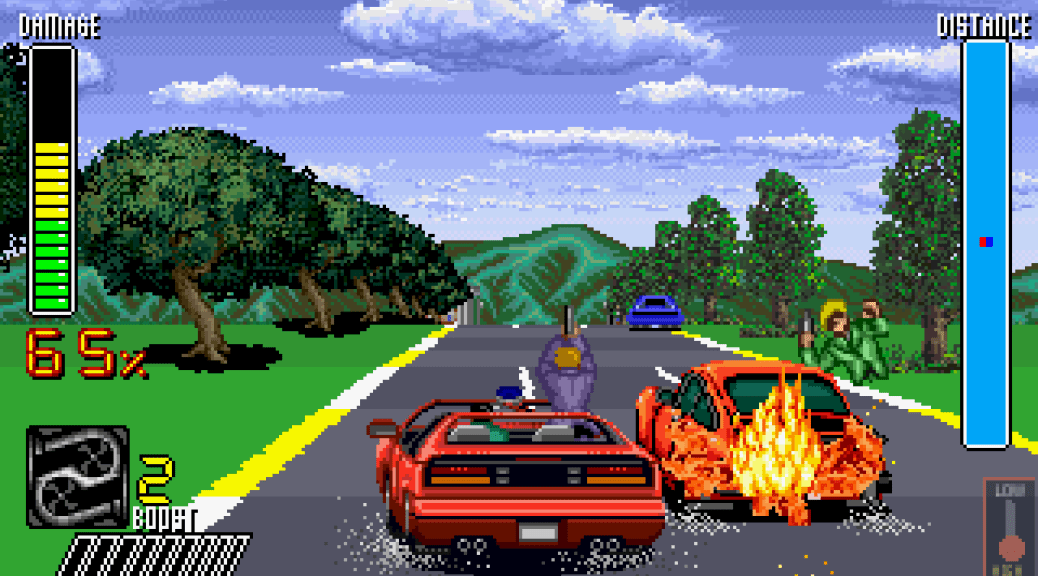
Special Criminal Investigation, Arcade
Sometimes known simply as S.C.I. or Chase HQ 2: Special Criminal Investigation, this high octane driving sequel to Chase HQ is another fast-paced driving game with you playing a cop hot on the heels of some nasty criminals.
It was developed and manufactured by Taito and released into arcades in 1989, and – for my money – is one of the most exciting and heart-pumping 2D chase games ever made.

Battle Command, Amiga
Battle Command is a classic Amiga tank game, developed by Realtime Games Software and published by Ocean Software in 1990.

Platoon, Commodore 64
Developed and published by Ocean Software and licensed from the 1986 Oliver Stone film of the same name, Platoon on the Commodore 64 managed to win over gamers and critics, back in 1987 when it was first released, with its atmospheric and varied gameplay.
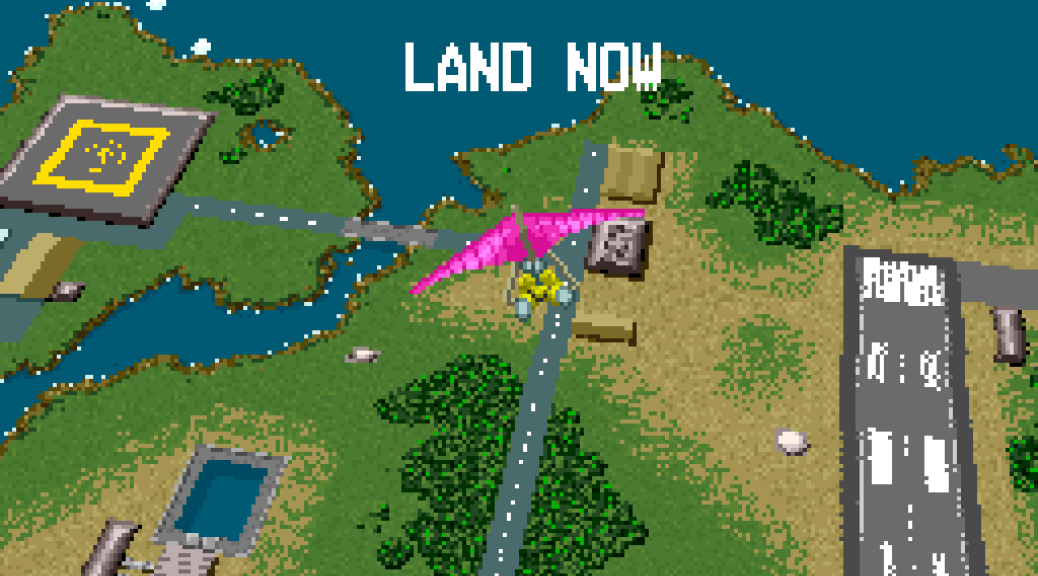
Pilotwings, Super Nintendo
Nintendo‘s famous flying game, Pilotwings, first came out in Japan in 1990, then the following year was a launch title for the North American and European releases of the Super Nintendo.
Pilotwings uses scaling and rotation effects (known as ‘Mode 7’ in some circles) to give a visual representation of the ground, with regular 2D sprites making up everything else, and it works extremely well.

