
The Game Boy version of Boulder Dash was programmed by Beam Software and is somewhat similar to the NES version (not exactly the same since it was developed by a completely different company). It is a jolly re-imagining with different graphics, but the same devious level designs as the original. And it is of course monochrome, rather than colour.
Tag Archives: action

Boulder Dash, BBC Micro
The BBC Micro conversion of Peter Liepa and Chris Gray‘s classic Boulder Dash was programmed by Andrew Bennett and published by Tynesoft in 1988. And I don’t know what it is about this port, but there is something wholly unsatisfactory about it.

Boulder Dash, PC
The MS-DOS version of Boulder Dash uses CGA graphics, so doesn’t look the best, but – like the Apple II version – the lack of colour doesn’t affect the gameplay at all. In fact: just four colours seems to suit it well; if those colours are used a certain way.

Boulder Dash, ZX Spectrum
Boulder Dash on the ZX Spectrum is a decent, playable conversion, but it isn’t great and does have its issues. It was programmed by Dalali Software and published by Front Runner (a software label owned by K-Tel Productions, a famous British record label) in 1985.
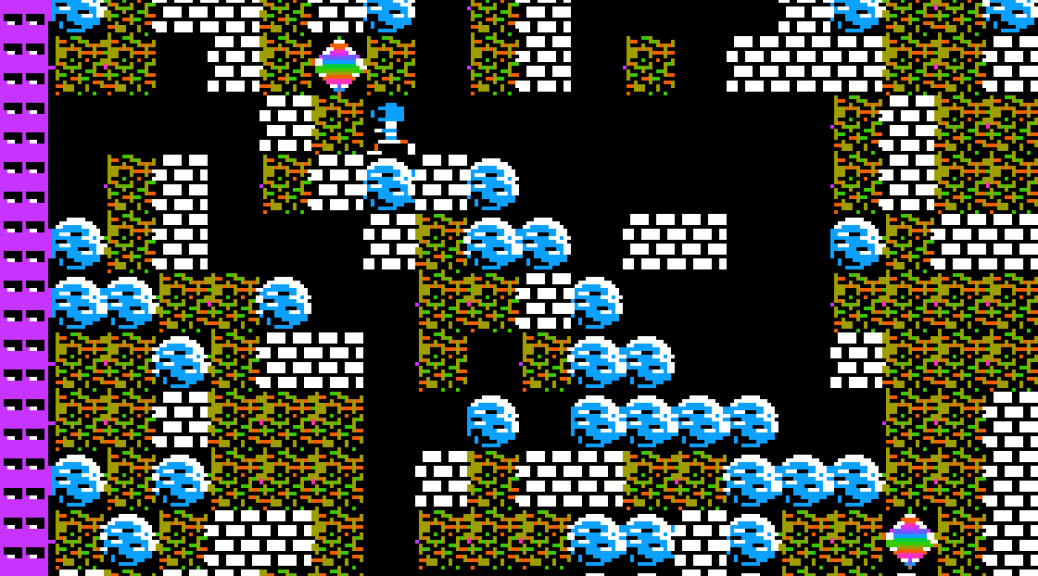
Boulder Dash, Apple II
Boulder Dash on the Apple II was coded by Pat Montelo and published by Micro Fun in 1984, and it is arguably one of the best games on the system.
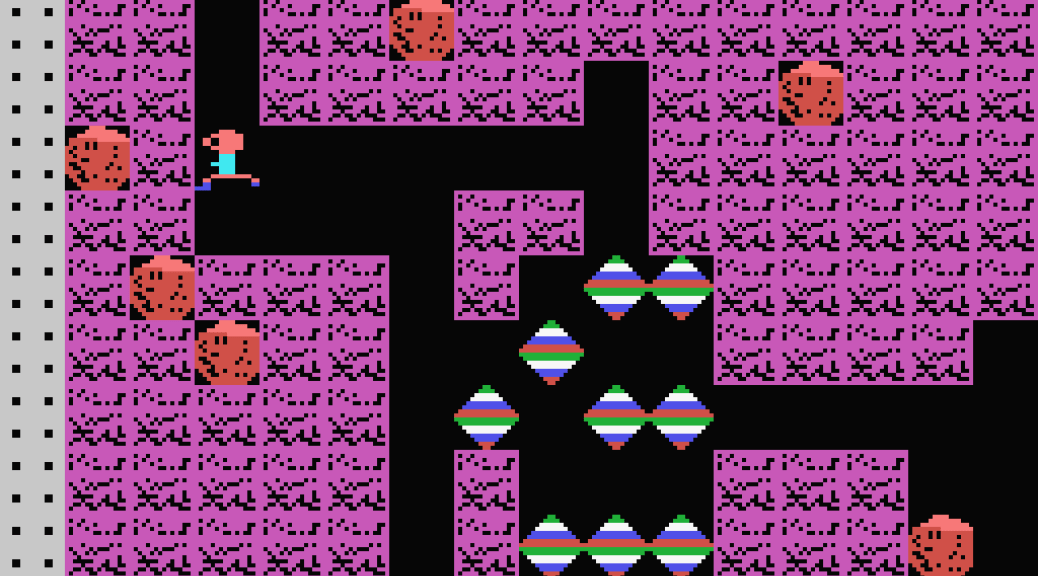
Boulder Dash, MSX
The MSX version of Boulder Dash was developed by Orpheus and published by Comptiq in 1985. It is another excellent 8-bit conversion, with feather light controls (TM) and authentic gameplay.

Boulder Dash, Amstrad CPC
The Amstrad CPC conversion of Peter Liepa and Chris Gray‘s Boulder Dash is an almost perfect conversion of the classic Atari 8-bit game. The game was published by Mirrorsoft 1985, and converted by Dalali Software Ltd.
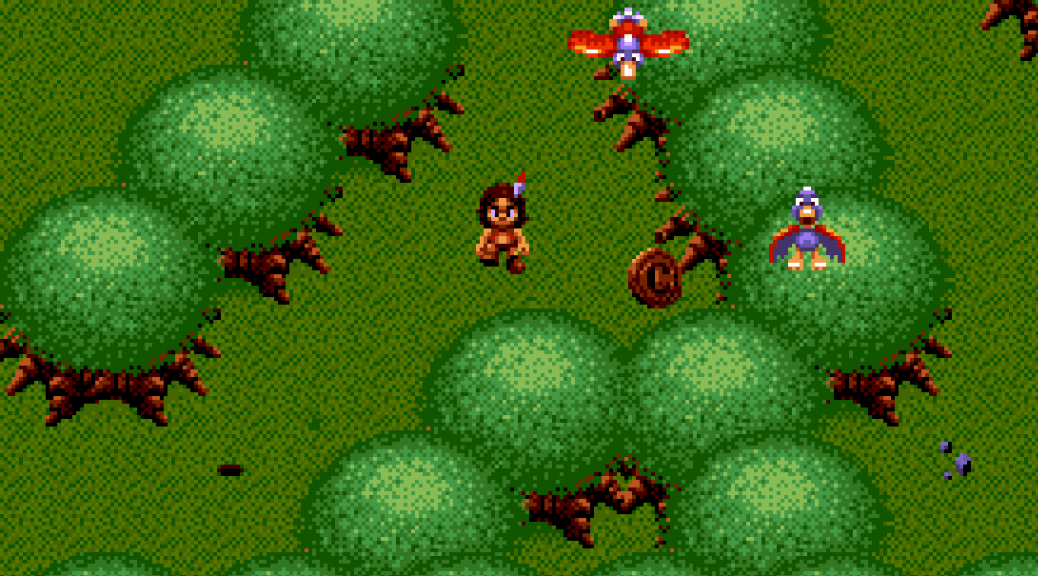
Legends, Amiga
Legends is a cutesy action adventure game developed for the Amiga by Yorkshire-based Krisalis Software and first published in 1996 by Guildhall Leisure Services. It takes many of its cues from Nintendo‘s early Zelda games, but unfortunately doesn’t come close to the greatness of those games.

Run Saber, Super Nintendo
Run Saber is a side-scrolling action game developed by Hori Electric and published by Atlus in 1993 for the Super Nintendo. It is something of a clone of Capcom‘s classic arcade game, Strider.
Although Run Saber was developed in Japan it was only released in North America and Europe. A later Japanese release was cancelled.

Grand Theft Auto III, PlayStation 2
DMA Design‘s Grand Theft Auto III was where the GTA series really took off. It was released in October 2001 via Rockstar Games and took the series in a whole new direction, with a third-person street view perspective, rather than the overhead view of the previous two games.
 The King of Grabs