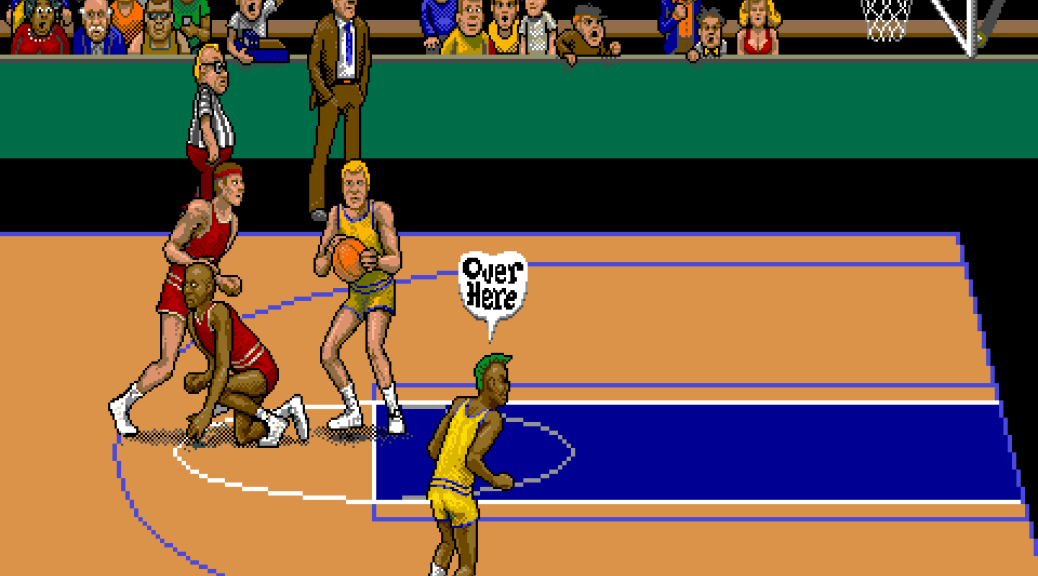
Arch Rivals is a classic basketball video game, developed and manufactured by Midway in 1989. It’s a two-on-two basketball game, and one that encourages players to hit each other to steal the ball.
Tag Archives: 1989

S.T.U.N. Runner, Arcade
S.T.U.N. Runner is a 1989 arcade game by Atari Games that uses 3D polygonal graphics to create a fast-paced tunnel shooter.
The “S.T.U.N.“, by the way, means “Spread Tunnel Underground Network“, which doesn’t mean a great deal in the grand scheme of things…

Golden Axe, Arcade
Sega‘s classic Golden Axe is a scrolling beat ’em up first released into arcades in 1989. It is fondly-remembered, often re-released, and has been converted to many other systems.
What’s so good about Golden Axe, then?

Puzznic, Arcade
Puzznic is a one or two-player, puzzle-based, tile-matching arcade game, released by Taito in 1989.
And, while it might not look like much, it is actually a very clever and compelling game.

Retrograde, Commodore 64
Developed by Apex Computer Productions, in association with Transmission Software, and published by Thalamus in 1989, Retrograde is a side-scrolling, progressive weapons shooter written by the same guys who made Creatures.
Retrograde came before Creatures, though.
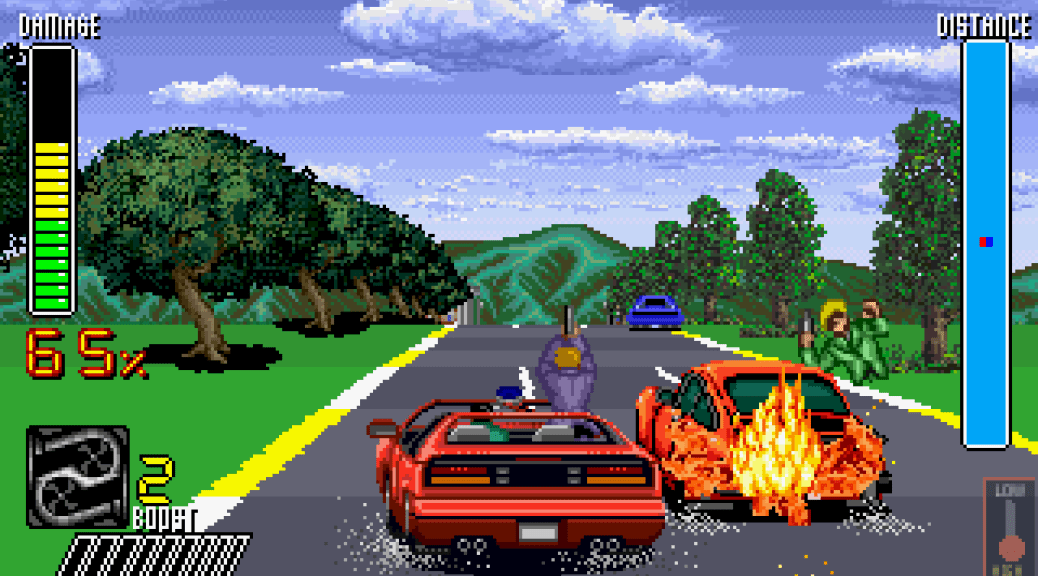
Special Criminal Investigation, Arcade
Sometimes known simply as S.C.I. or Chase HQ 2: Special Criminal Investigation, this high octane driving sequel to Chase HQ is another fast-paced driving game with you playing a cop hot on the heels of some nasty criminals.
It was developed and manufactured by Taito and released into arcades in 1989, and – for my money – is one of the most exciting and heart-pumping 2D chase games ever made.

Aleste Gaiden, MSX
Developed by Compile and released in Japan only in 1989, Aleste Gaiden is the third Aleste game to come out for MSX home computers – specifically: for the MSX2.
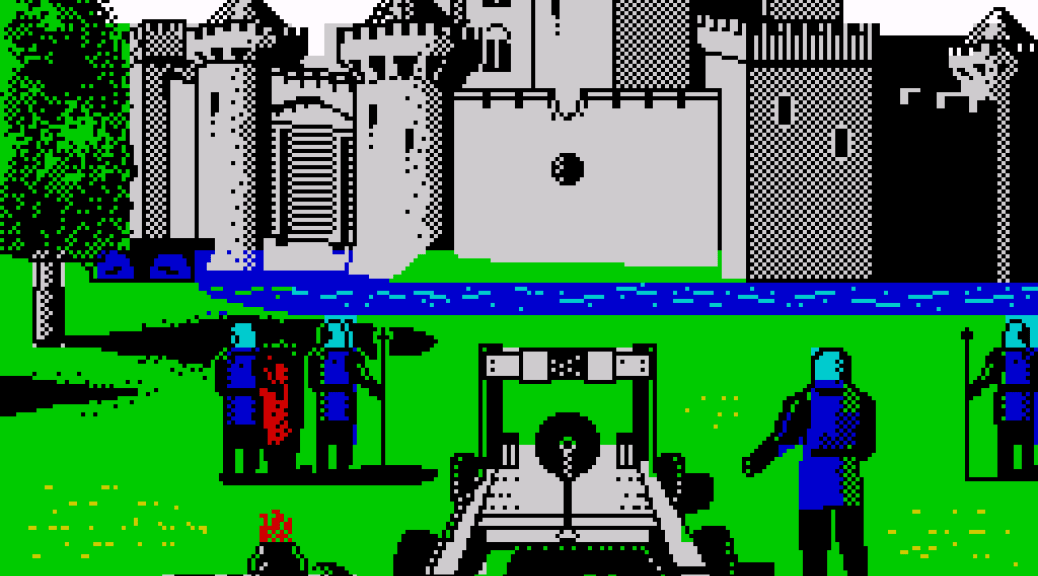
Defender of the Crown, ZX Spectrum
A very good 1989 homebrew conversion of Cinemaware‘s classic Defender of the Crown, programmed by The Cat, from Hungary.

Little Ninja Brothers, NES
Little Ninja Brothers is the second game in the “Super Chinese” series* and the predecessor of Super Ninja Boy on the SNES. It was developed and published by Culture Brain in Japan in 1989. North America got it in 1990 and Europe in 1991.
It is an excellent one or two-player level-grinding RPG, with random battles, but instead of turn-based combat you get real time beat ’em up action instead, and works very well.

Boxxle, Game Boy
Boxxle is the Game Boy conversion of the classic box-shifting game, Sokoban. It was released in Japan in 1989 and in Europe and North America in 1990.

