
Turok: Dinosaur Hunter is a first-person shooter, developed by Iguana Entertainment and published by Acclaim for the Nintendo 64 console and Microsoft Windows. It was initially released in 1997 in North America and Europe.
Tag Archives: shotgun

Doom, 3DO
The beleaguered 3DO port of id Software‘s classic Doom is often referred to as “the worst port of Doom” by fans of the game, but it’s actually not a bad conversion at all. Yes: it is relatively slow, compared to other Doom ports, and yes: the game runs in a reduced-size window, but it still plays pretty well and does have its plus points.

Maximum Force, Arcade
Maximum Force is the ‘spiritual successor’ to Atari Games‘ hit lightgun shooter, Area 51. It was developed by Mesa Logic (the same company who made Area 51) and features the same style of gameplay and graphics – pre-rendered backgrounds and environments; fixed, on-rails camera movement, and shot-on-video digitised characters. The game was first released into arcades in 1997 and caters for one or two players.
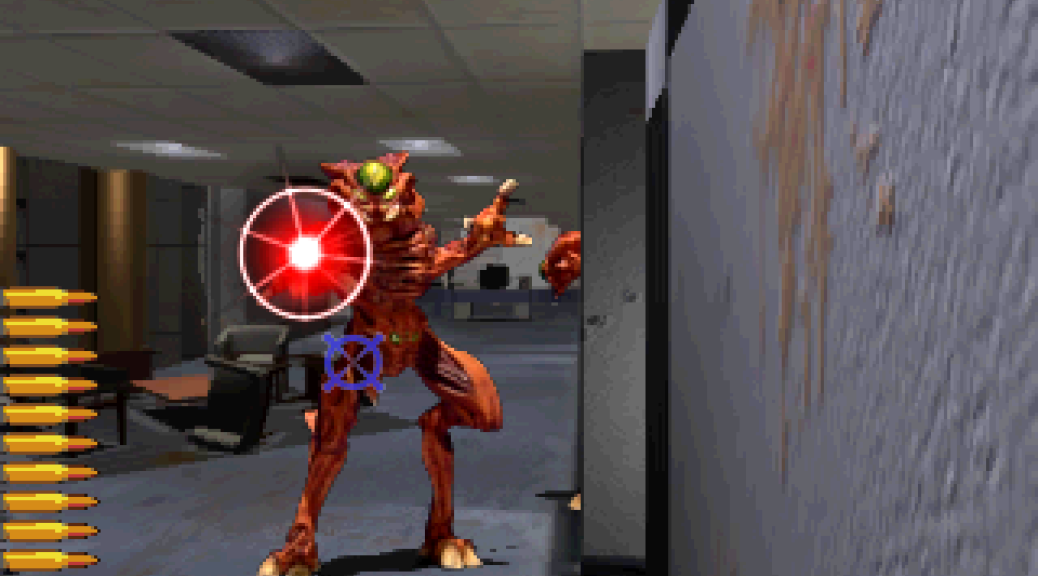
Area 51, Arcade
Developed by Mesa Logic and distributed into arcades by Atari Games in 1995, Area 51 is a lightgun shooter for one or two players where you play as a member of a military incursion team, called the Strategic Tactical Advanced Alien Response (STAAR), which has been sent in to prevent aliens – known as The Kronn – and alien-created zombies, from taking over the infamous Area 51 military facility.
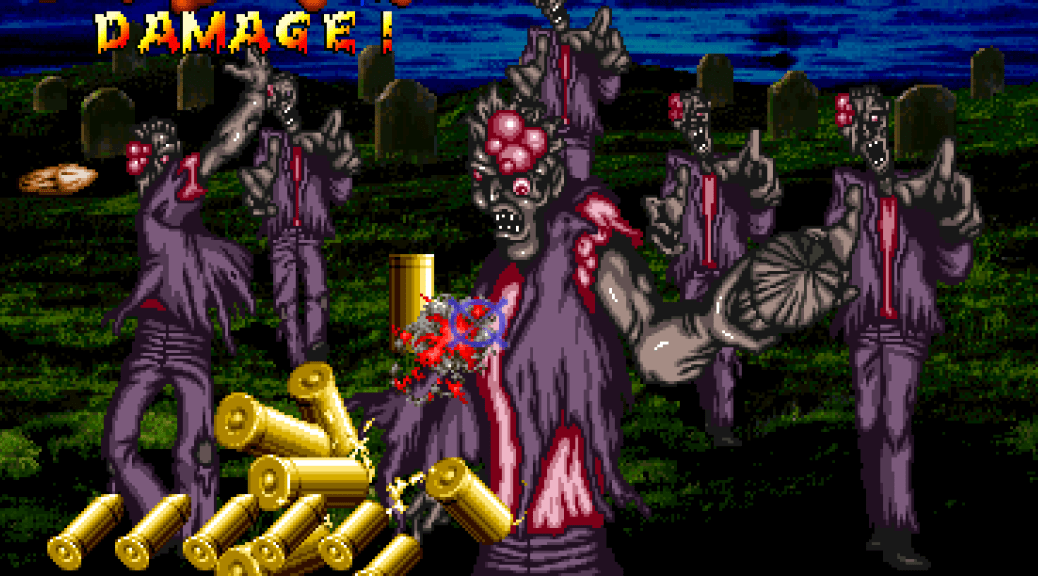
Zombie Raid, Arcade
Zombie Raid is a first-person arcade lightgun shooter for one or two simultaneous players. It was developed and distributed by American Sammy in 1996.

Crypt Killer, Arcade
Crypt Killer is a three-player, horror-themed lightgun shooter that was first distributed into arcades by Konami in 1995. It uses 3D polygonal graphics for the backgrounds and 2D scaled sprites for the enemies and objects. In some respects it is Konami‘s attempt at producing a House of the Dead-style shooter, although in my humble opinion it isn’t as good as Sega‘s famous horror shooter series.
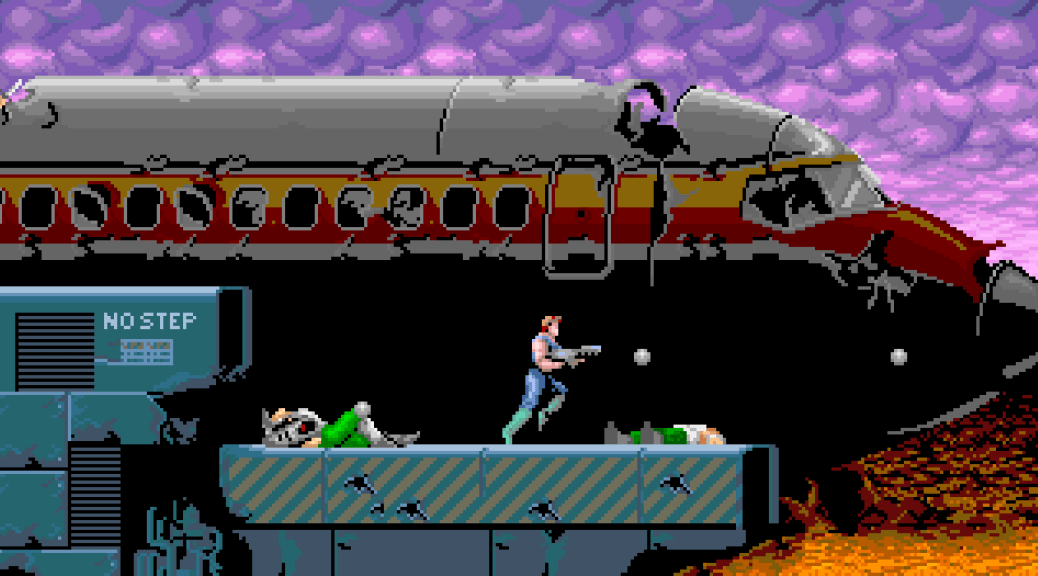
Bay Route, Arcade
This terrible pun of a title (meant to ‘parody’ the word Beirut, the capital city of Lebanon) was developed by Sunsoft and distributed into arcades by Sega in 1989. It’s a one or simultaneous two-player Contra clone scrolling through a futuristic warzone.

Doom, Sega Saturn
The Sega Saturn port of Doom was developed by Rage Software and distributed by GT Interactive in 1997. Like the PlayStation version (on which this port is based) it contains both Ultimate Doom and Doom II, but is a little disappointing in terms of performance and presentation.

Doom, Sega 32X
The Sega 32X port of id Software‘s Doom was developed and published by Sega of America in 1994. While the game doesn’t run in a full window (there’s a permanent border around the screen, probably to keep the frame rate up, which is unfortunate), it is an otherwise very good conversion, with smooth movement and decent controls.

Doom II, Game Boy Advance
The Game Boy Advance port of id Software‘s classic first-person shooter sequel, Doom II, was developed by Torus Games and first published by Activision in 2002. Unlike the first Doom on the GBA this port doesn’t use the original Doom engine, but instead uses the Southpaw Engine, that was designed for native use on the GBA and has been used in a number of other games. Torus Games had to therefore recreate all the levels from scratch for this port, and I have to say that they did a great job.

