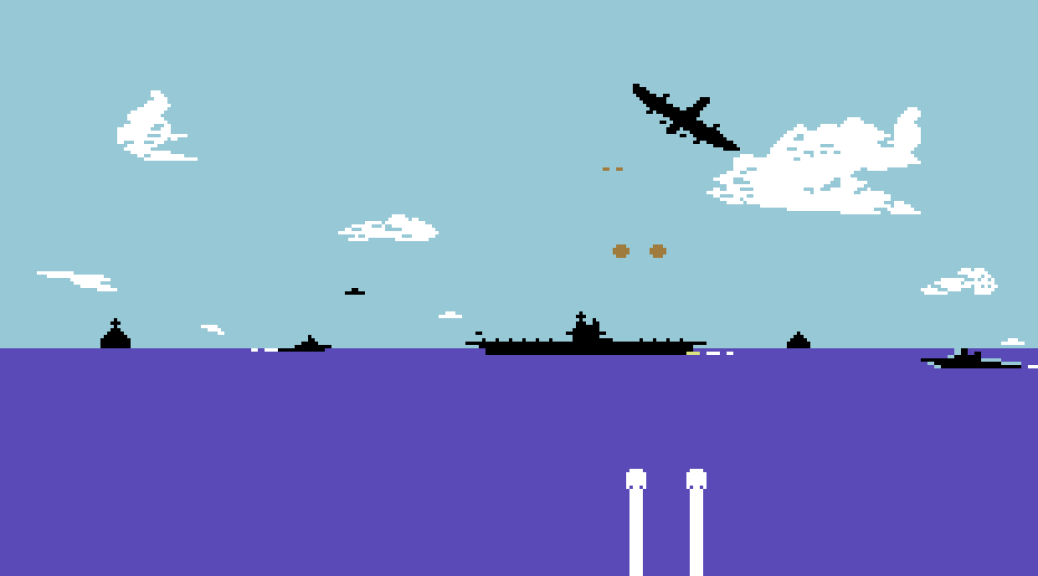
Fortress on the BBC Micro is a bland and overly-difficult Zaxxon clone written by Matthew Newman and first published by Pace in 1983.
Tag Archives: scrolling
Cool Spot, Megadrive/Genesis
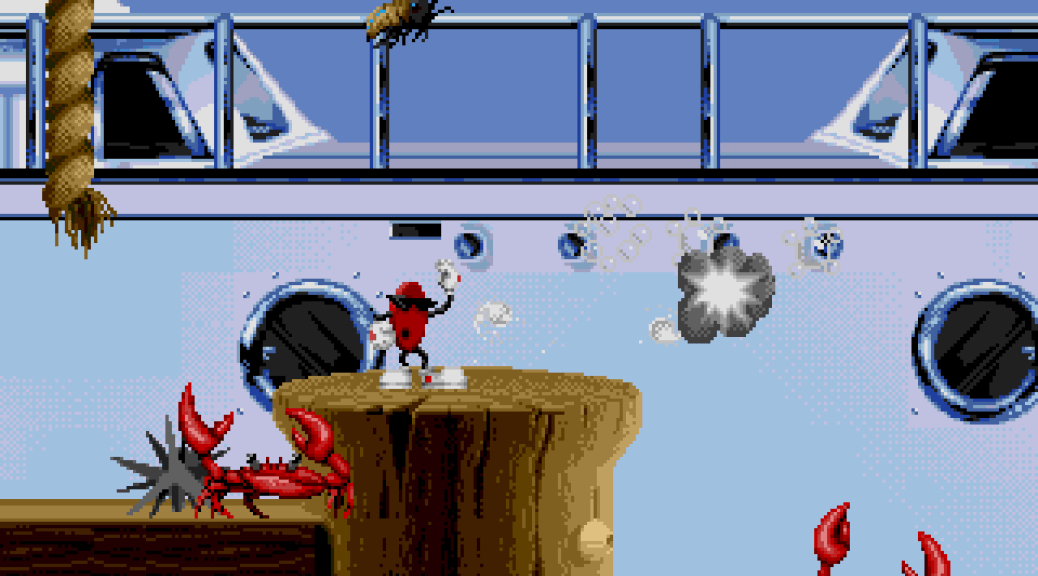
Cool Spot is a cartoony platform game featuring the brand mascot* for the soft drink 7 Up. It was programmed by David Perry and first published by Virgin Games for the Sega Megadrive/Genesis in 1993.
Demon Front, Arcade
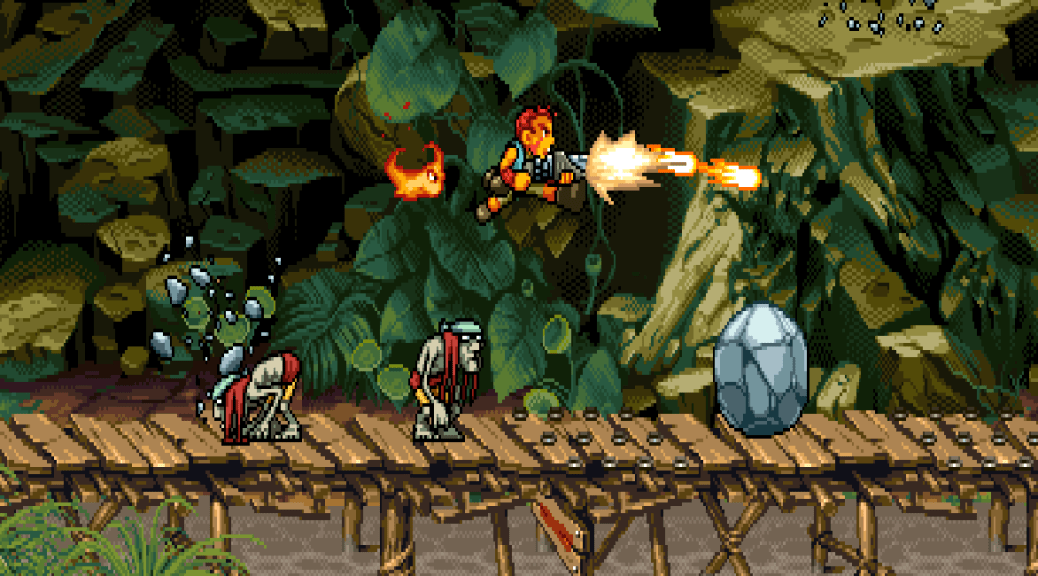
Demon Front is a 2002 arcade game developed and manufactured by Taiwanese company International Games System. It is a scrolling run-and-gun shooter that is basically a shameless clone of Metal Slug, but with a few unique ideas of its own.
You can play either single player or two player simultaneous and can choose between four different characters at the start of the game. There are three different buttons on the arcade cabinet – shoot, jump, and shield – and the basic idea is to run left to right, blasting everything that gets in your way.
The Kristal, Amiga
The Kristal is an obscure British adventure game based on an un-produced theatre play written in 1976 (called “The Kristal of Konos“), developed by Fissionchip Software and published by Addictive Games in Europe and Cinemaware in North America. The fact that Cinemaware picked up The Kristal for distribution in the US and Canada is a surprise in itself, as that kind of thing didn’t happen very often back in 1989 when this game was first released.
Jackie Chan’s Action Kung Fu, PC Engine
Jackie Chan’s Action Kung Fu is a scrolling beat ’em up with platforming elements, first released for the NES by Hudson Soft in 1990, and was later released for the PC Engine in 1991.
Jackie Chan’s Action Kung Fu, NES
The Famicom/NES version of Jackie Chan’s Action Kung Fu was developed by Now Production (who made Splatterhouse: Wanpaku Graffiti and Splatterhouse 3, among others) and was published by Hudson Soft in 1990. It’s a side-scrolling beat ’em up with platforming elements based around the famous movie actor Jackie Chan.
Pitfall II: Lost Caverns, Atari 8-bit
This Atari 8-bit conversion of David Crane‘s classic Atari 2600 platform game is subtitled the “Adventurer’s Edition” because it contains a whole new second level that becomes available after you complete the first.
Pitfall II: Lost Caverns, Atari 2600
Activision‘s 1984 sequel to Pitfall! – Pitfall II: Lost Caverns – was again designed and programmed by David Crane. This time, though, the cartridge had a custom display processor chip inside, which allowed for improved visuals and continuous four channel music (the Atari 2600 is normally only capable of two channel sound).
Gameplay is similar to Pitfall!, although in this follow-up the world you can explore is much bigger than previously and is made up of eight screens in width, by 27 screens in height, making 216 screens in total. When you walk from one screen to another the new screen scrolls smoothly into view.
Super Turrican 2, Super Nintendo
This sequel to Super Turrican was again created by German developer Factor 5 and was published by Ocean Software for the Super Nintendo in 1995.
Mega Turrican, Megadrive/Genesis
Mega Turrican is a Megadrive/Genesis-exclusive remake of the famous run-and-gun shooter which was popularised on the Commodore 64 by Rainbow Arts and later ported to other systems. This version was developed by Factor 5 (as were all of the later ports) and published by Data East in North America and Sony Imagesoft in Europe in 1994.