Millipede is a direct sequel to Atari‘s Centipede and was first distributed into video game arcades in 1982.
It’s basically the same trackball-controlled gameplay as before, but with a few changes and enhancements.
Millipede is a direct sequel to Atari‘s Centipede and was first distributed into video game arcades in 1982.
It’s basically the same trackball-controlled gameplay as before, but with a few changes and enhancements.
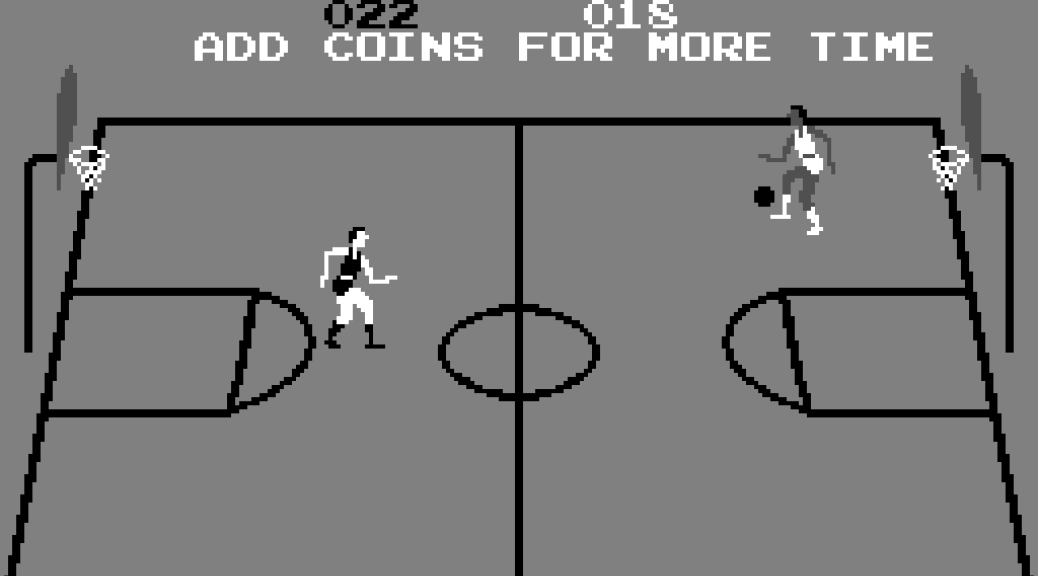
This is the 1979, black and white arcade game, Basketball, as developed and manufactured by Atari Inc. It had two trackballs on the cabinet – one for each player.
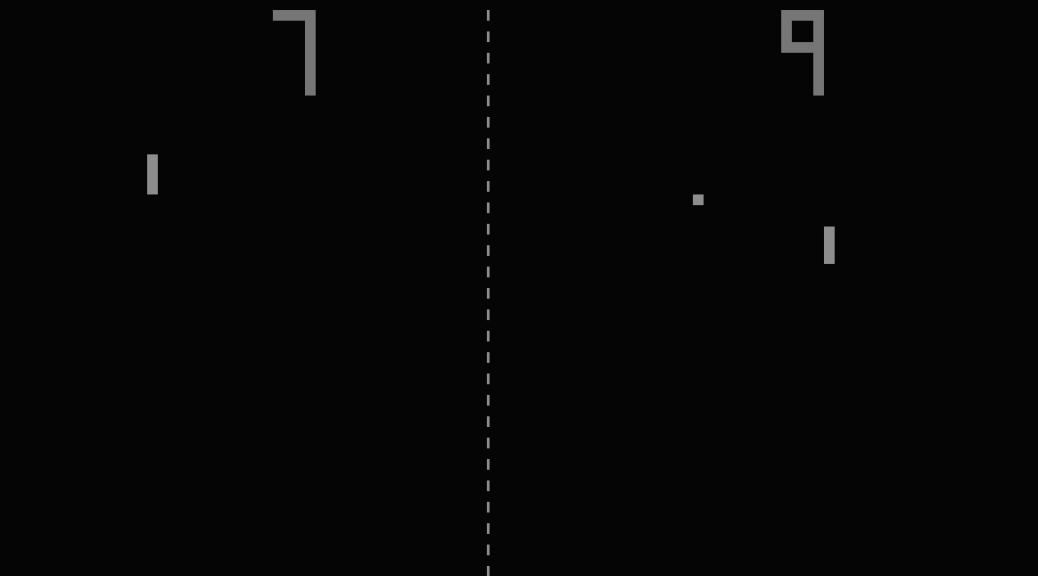
Atari‘s Pong is a legendary black and white ‘bat and ball’ game from 1972, and was one of the earliest video game successes.
It’s basically a two-player table tennis simulation, with two ‘bats’ on either side of the screen, moving vertically to return a bouncing ball. If you fail to return the ball your opponent scores a point, and the first to eleven points wins.
Konami‘s 1981 arcade classic, Amidar, is a maze game with a difference.
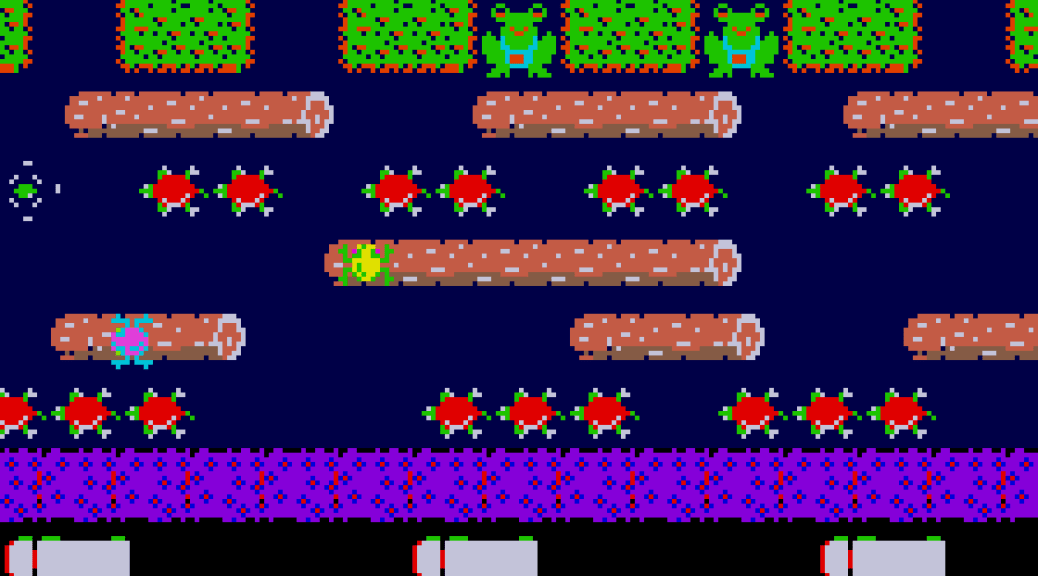
Konami‘s Frogger was released into video game arcades in 1981 and was an instant hit with gamers.
The basic premise of Frogger is to guide a hopping frog over a road and a river, to reach a safe haven on the other side.
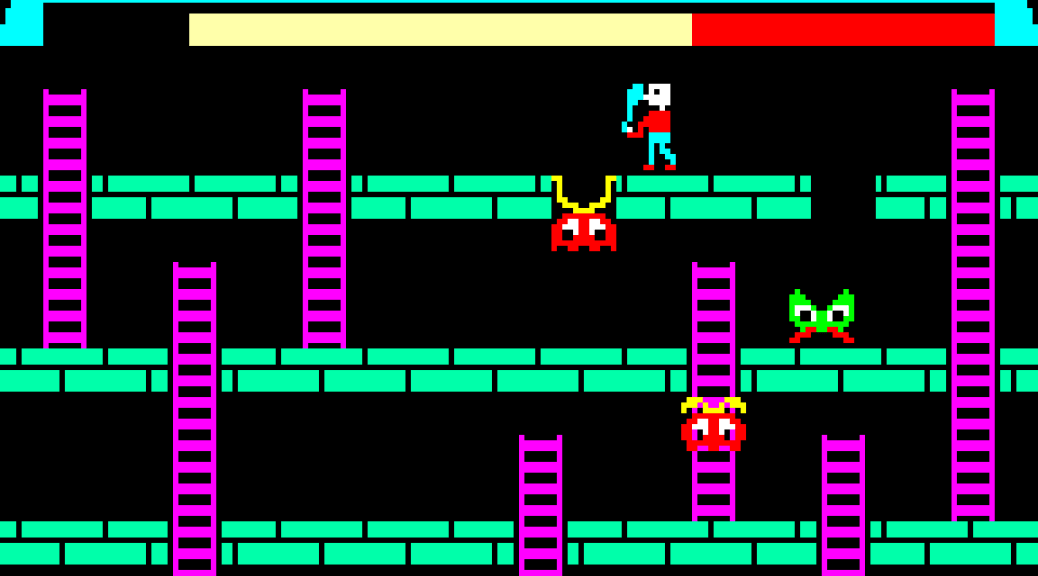
Universal‘s 1980 arcade platformer, Space Panic, may not look like much by today’s standards, but it is a hugely influential video game.
Known as “Puck Man” in its native Japan, and renamed as “Pac-Man” in the West*, this 1980 video game is one of the most iconic brands ever created in the history of the human race. And I’m not being funny here – Pac-Man is actually seen by historians as exactly that: instantly recognisable to most people and indelibly fixed in our consciousness.
This handheld conversion of Archer Maclean‘s classic IK+ was published in 2002 by Ignition Entertainment and is generally quite excellent.
Continue reading International Karate Plus, Game Boy Advance
The full title of this 1995 sequel is Magic Carpet 2: The Netherworlds, and it is an excellent continuation of the series.
Magic Carpet from Bullfrog was first released in 1994 through Electronic Arts. It is a DOS-based, first-person action game with you – the player character – flying a ‘magic carpet’ around a series of islands, fighting evil wizards and monsters and collecting ‘mana’ to increase your magical powers.