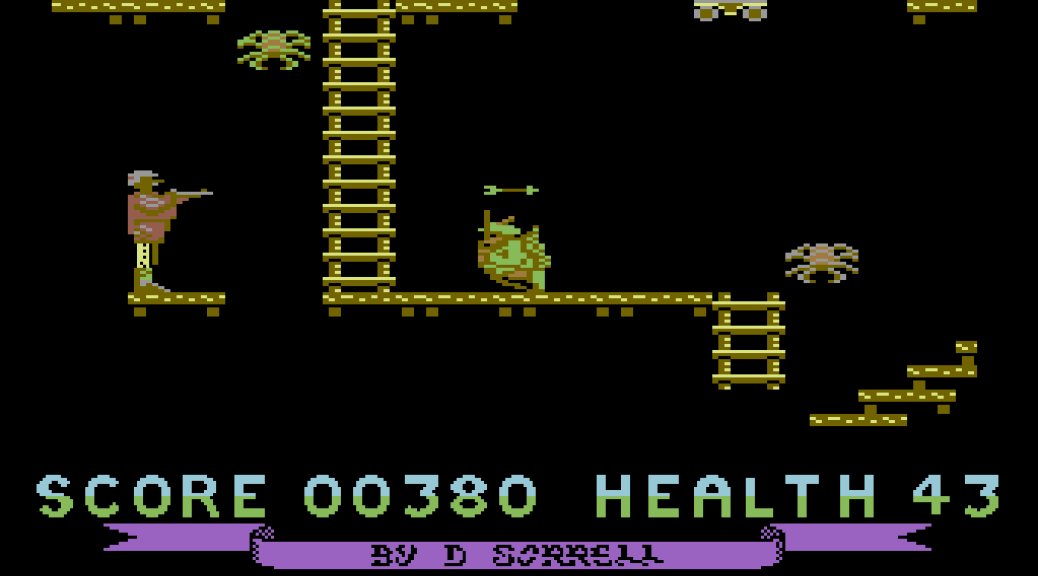
This Commodore 64 version of the Oliver Twins‘ classic platforms and ladders game, Super Robin Hood, first came out in 1987.
It was programmed by Delvin Sorrell, with graphics by James Wilson and music by David Whittaker.
This Commodore 64 version of the Oliver Twins‘ classic platforms and ladders game, Super Robin Hood, first came out in 1987.
It was programmed by Delvin Sorrell, with graphics by James Wilson and music by David Whittaker.
This Amstrad CPC version of Super Robin Hood is the original release from The Oliver Twins, published by Codemasters in 1985.
Written by The Oliver Twins in 1985, and published by Codemasters, Super Robin Hood is a smart little platform game that came out on the Amstrad CPC originally, then on the ZX Spectrum a short time afterwards.
Rendering Ranger: R2 is a rare run-and-gun game from the end of the life of the Super Nintendo. It was published by Virgin Interactive in Japan only in 1995. Which is strange for a German game…
Jeremy Smith and Peter Irvin‘s groundbreaking Exile first came out on the BBC Model B in 1988 and was later converted to other systems.
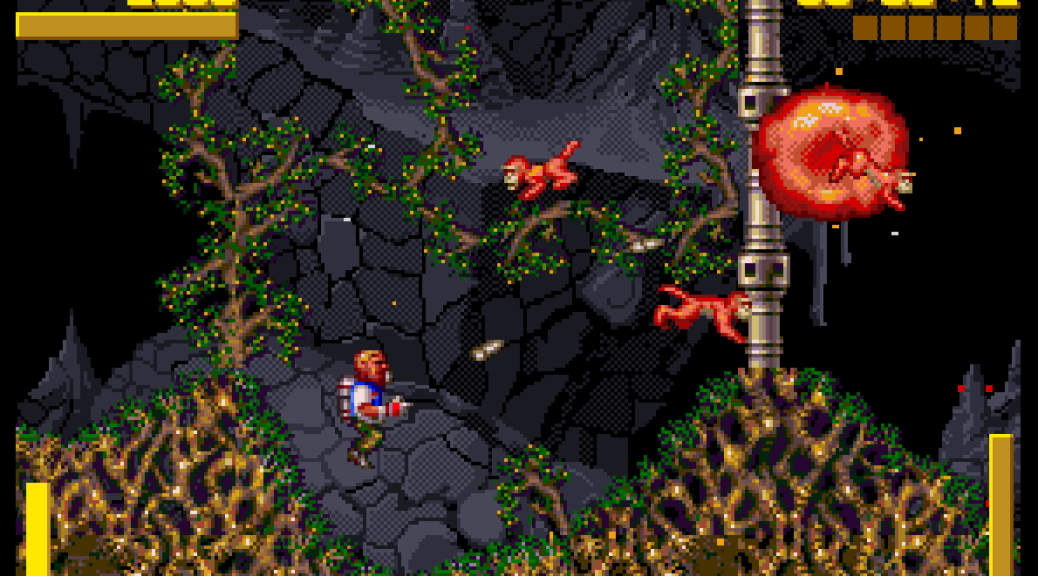
The Amiga AGA version of Exile was handled by Audiogenic and came out in 1995.
Jeremy Smith and Peter Irvin‘s groundbreaking Exile first came out on the BBC Model B in 1988 and was later converted to other systems.
The Amiga OCS version of Exile was handled by Audiogenic and came out in 1991.
The BBC Micro version was the very first version of Jeremy Smith and Peter Irvin‘s classic Exile, released through Superior Software in 1988.
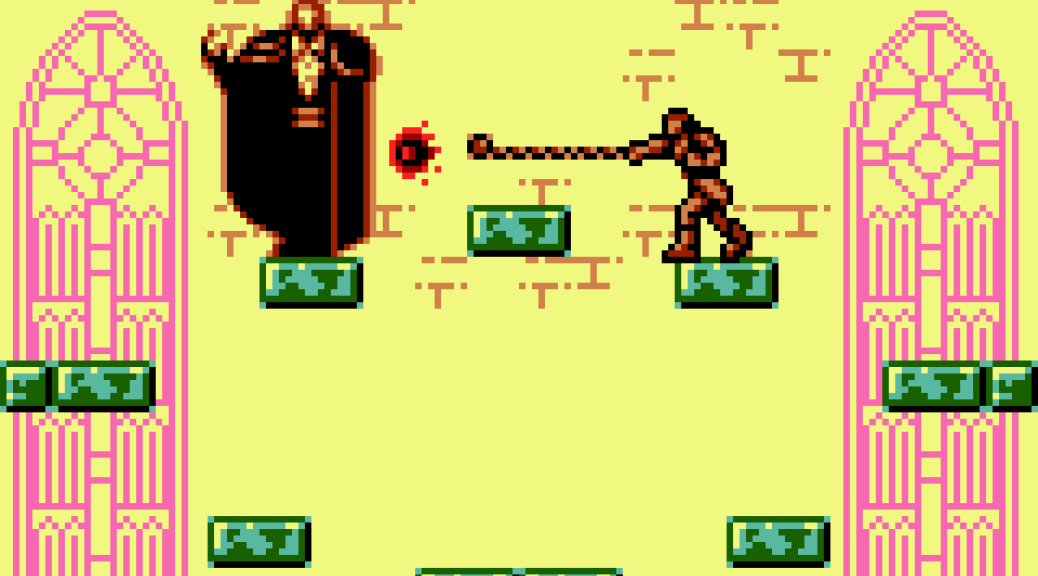
This colour remake of Castlevania II: Belmont’s Revenge was released as part of the Konami GB Collection Vol. 4 compilation in 2000.
Continue reading Castlevania II: Belmont’s Revenge, Game Boy Color
Castlevania II: Belmont’s Revenge was first released in 1991 and is the sequel to Castlevania: The Adventure on the Nintendo Game Boy.
Castlevania II makes much better use of the Game Boy‘s hardware than its predecessor, and is considered to be one of the best titles on Nintendo‘s monochrome handheld.
Continue reading Castlevania II: Belmont’s Revenge, Game Boy
The third game in the Metroid series is a top class Super Nintendo classic.
Super Metroid (1994) is more detailed than both previous Metroid games put together, although the basic structure is the same – explore various levels to find your latent abilities, all of which have been lost (“Why does this keep happening in Metroid games?” you may ask. “It’s in the script,” is my answer).






 The King of Grabs