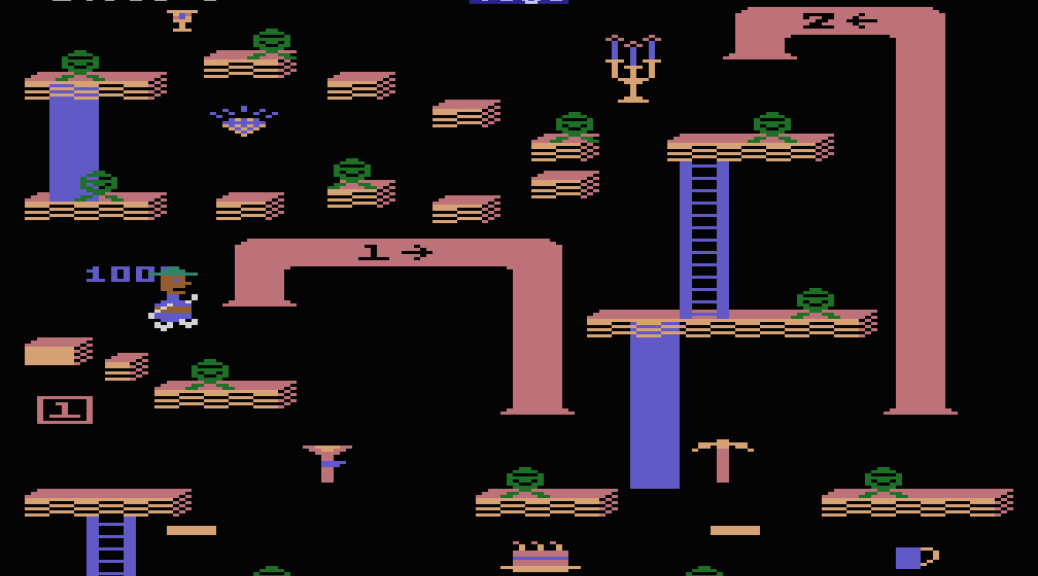
The sequel to Miner 2049er, Bounty Bob Strikes Back, again features the jumping cowboy trying to walk on every piece of platform surface, although this game is much more subtle and challenging than the first one.
Tag Archives: Colourful

Miner 2049er, Atari 8-bit
The original Miner 2049er fitted into just 16K of RAM, so would run on an Atari 400 (as well as any other Atari 8-bit home computer). It is a very early platform game, written by Bill Hogue in 1982, and featuring the character ‘Bounty Bob’.
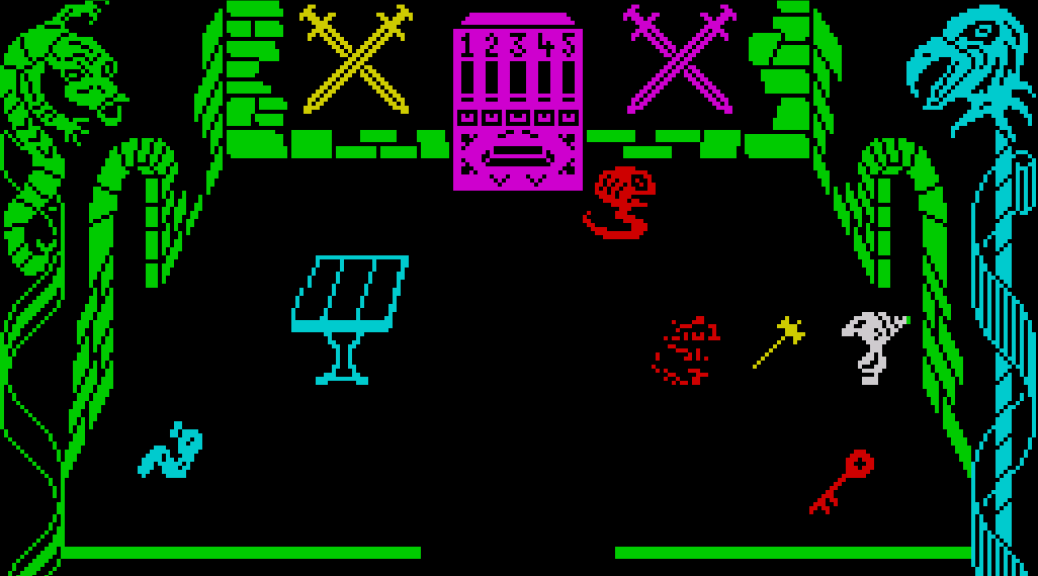
Con-Quest, ZX Spectrum
Con-Quest is a 1986 ZX Spectrum release from Mastertronic, created by the inimitable Derek Brewster.
In it you play a character called Oscar who has just inherited a large castle. The castle isn’t vacant though – it’s full of the evil minions of the demon Grell, who you must evict.

The Curse of Sherwood, ZX Spectrum
The Curse of Sherwood is a 1987 action/adventure game from the prolific programmer/designer Derek Brewster.

Kentilla, ZX Spectrum
Kentilla is a text adventure – with graphics – released on the ZX Spectrum by Micromega in 1984. It was written by the prolific (back then) Derek Brewster.
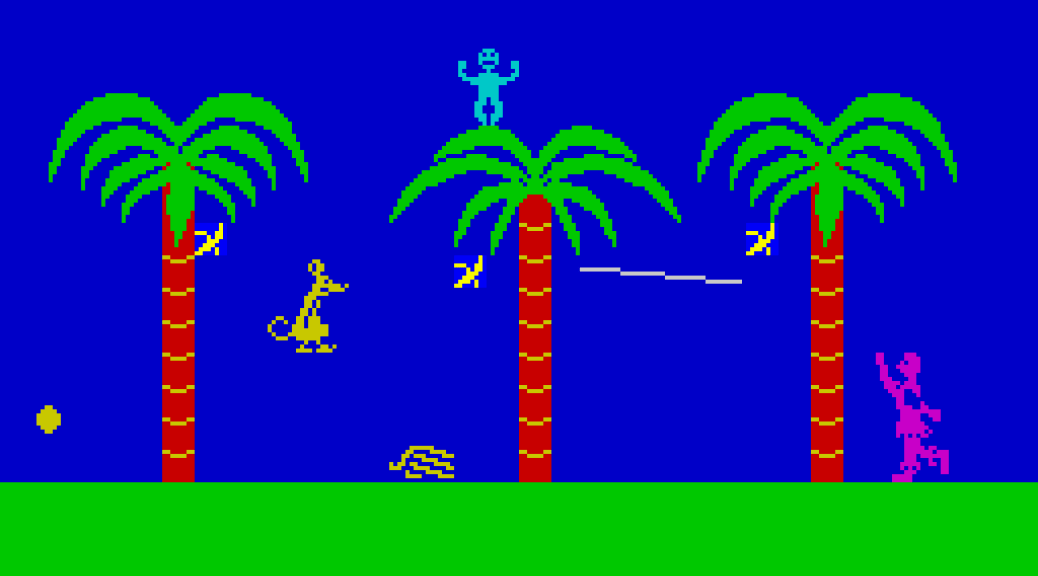
Jasper, ZX Spectrum
Derek Brewster‘s Jasper is a decent platform game from the early days of the ZX Spectrum. It was first published by Micromega in 1984.
Jasper himself is a yellow mouse, and his raison d’etre in life is: making it home across 22 screens of obstacles.
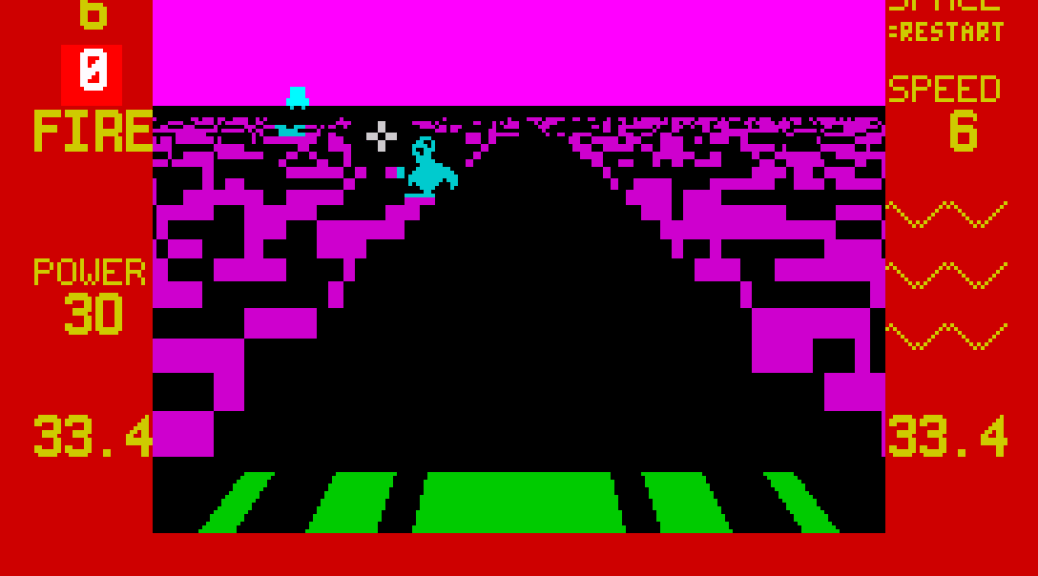
Braxx Bluff, ZX Spectrum
Braxx Bluff was released by Micromega for the ZX Spectrum in 1984. It was written by Tony Poulter.
It’s a weird game – of space exploration – well, the exploration of a planet and its surface.
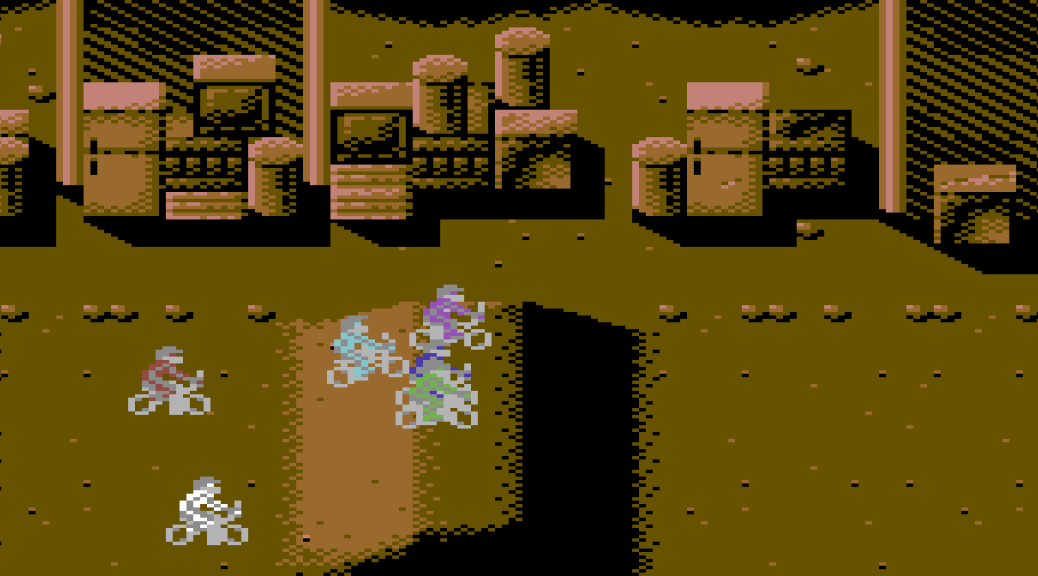
BMX Kidz, Commodore 64
Firebird Software released BMX Kidz for the Commodore 64 in 1987.

Breath of Fire II, Super Nintendo
Breath of Fire II is a direct sequel to Breath of Fire, first released in Japan in 1994.
Set 500 years after the events of Breath of Fire, you again assume the role of a young boy called Ryu, this time a descendant of the hero of the first game. You initially begin a quest to clear the name of one of your friends, and this snowballs into something epic.

Breath of Fire, Super Nintendo
Capcom‘s Breath of Fire is the first major, traditional Role-Playing Game from the company and was released on the Super Nintendo in 1993 in Japan, and 1994 in English-speaking territories.

