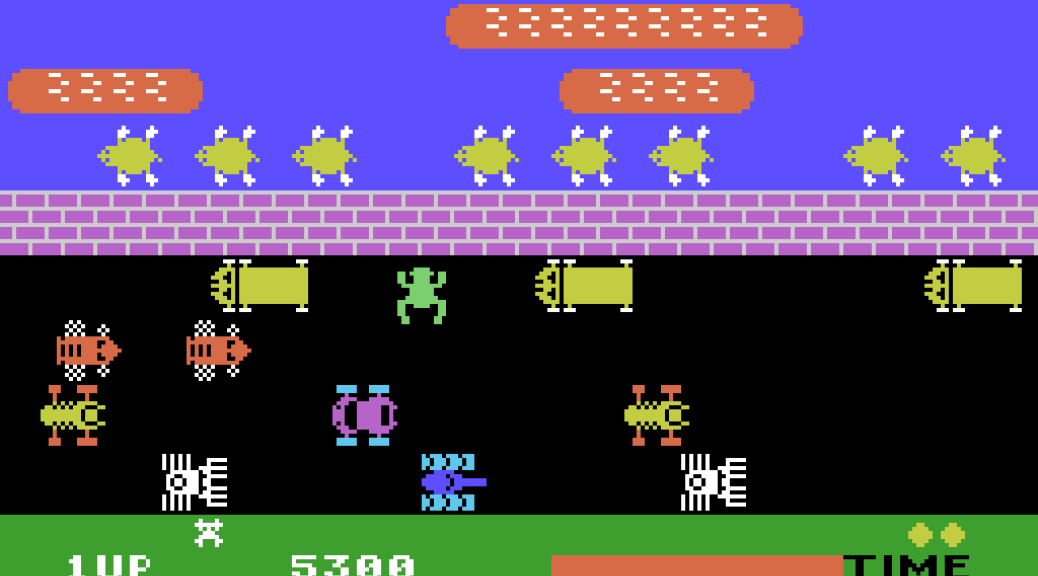
Konami‘s classic arcade game, Frogger, was first released for the ColecoVision in November of 1983 and it immediately became one of the console’s biggest-selling cartridges.
Tag Archives: 1983

Donkey Kong Jr., ColecoVision
The famous sequel to Nintendo‘s classic Donkey Kong, Donkey Kong Jr. sees the roles reversed in this cute platform game, in that this time it’s Mario (aka Jumpman, as he was known back then) who is the protagonist, and Donkey Kong who has been kidnapped and must be rescued. This time, by his son, Donkey Kong Junior.

ColecoVision Special
The ColecoVision console was first launched in North America in August 1982, then a year later in Europe, in 1983, and offered a closer experience to arcade games of the time than many of its competitors did (such as the Atari 2600 and Mattel Intellivision).
The Hobbit, PC
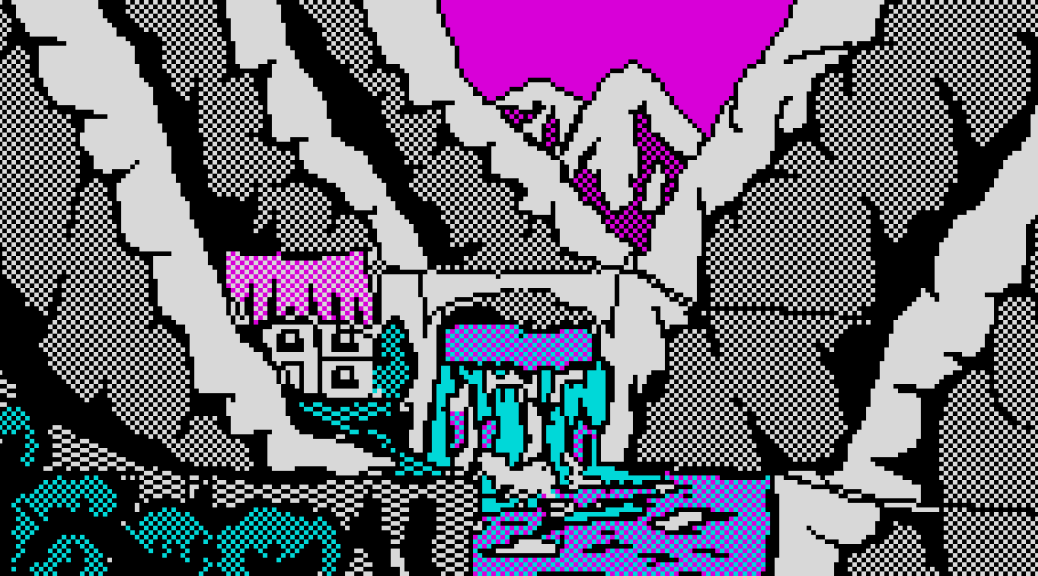
The 1983 MS-DOS version of Beam Software‘s classic text adventure, The Hobbit, allows you to choose between 40 or 80 column display for the text parser, and whether you want to play the game with pictures or not.
Frankenstein’s Monster, Atari 2600
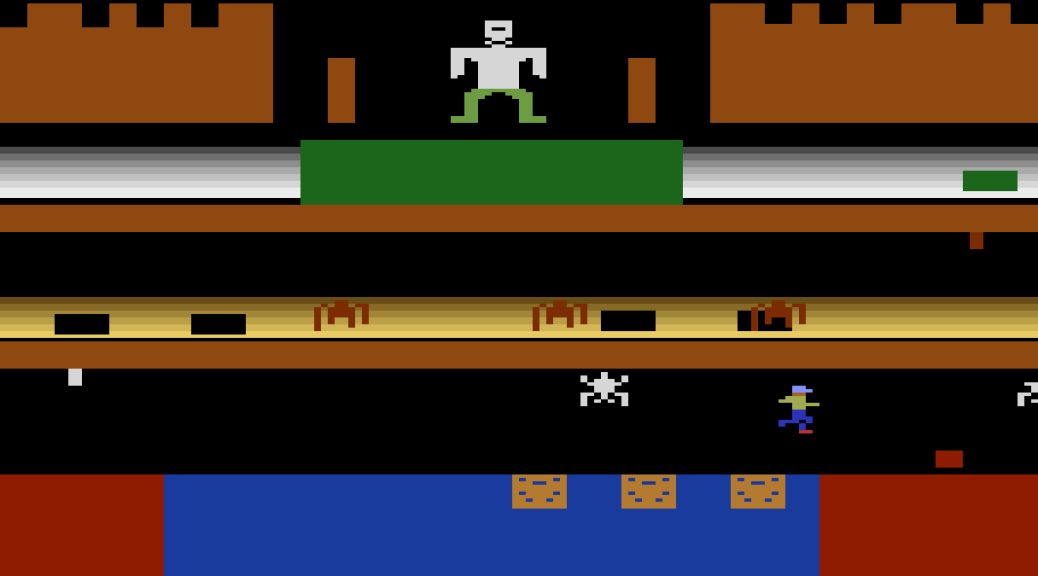
Frankenstein’s Monster is a relatively obscure game for the Atari 2600 and was developed and published by Data Age, Inc. in 1983. It is one of the earliest video games to use the famous Mary Shelley novel as the basis for its story and gameplay.

Ah Diddums, ZX Spectrum
Written by David H. Lawson (co-founder of Imagine Software), Ah Diddums is a 1983 action game in which you play as a teddy bear trying to escape from inside a toy box (to comfort his crying baby owner) by arranging coloured blocks into a staircase the top of the screen. This allows him to climb up to the next level. And there are 99 levels in this particular toy box, so his journey is going to be a long one…

Barmy Burgers, ZX Spectrum
Barmy Burgers is an early ZX Spectrum BurgerTime clone, programmed by Gary Capewell and published by Blaby Computer Games in 1983.

Bear Bovver, ZX Spectrum
Bear Bovver was created by well-known coder Jon Ritman, with music by Guy Stevens, and was published for the ZX Spectrum by Artic Computing in 1983. It’s basically a BurgerTime clone, except you’re dropping batteries down a series of platforms, onto a car at the bottom of the screen, instead of burger buns and patties onto plates.

Ultima III: Exodus, Commodore 64
The Commodore 64 version of Ultima III: Exodus was first published by Origin Systems in 1983 and came on three floppy disks. There is a fan-made ‘Gold’ version of the game available, that has compressed these down to a single floppy disk file, which saves a lot of disk-swapping, and that’s the version that’s probably worth finding, if you want to play this game on the C64.

Ultima III: Exodus, Atari 8-Bit
The Atari 8-bit version of Richard Garriott‘s Ultima III: Exodus was first published by Origin Systems in 1983. It again uses graphical artifacting (which the first two Ultima games did on the Atari), which results in it looking very similar to the Apple II original.

