
Japanese developer Compile – who made Aleste – has a history of producing classic shoot ’em ups. This one was released for the Sega Master System in 1988.
Tag Archives: Single-Player

Zany Golf, Atari ST
Zany Golf was released by Electronic Arts in 1988. It originated on the Apple IIgs but was quickly ported to 16-bit computers, including this fine Atari ST version.
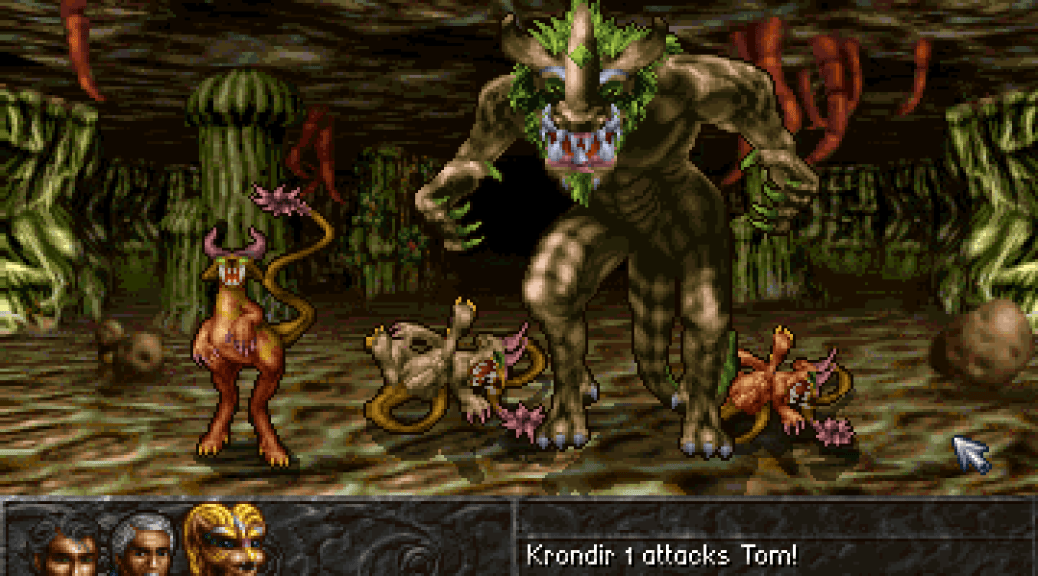
Albion, PC
Blue Byte‘s 1996 PC release, Albion, is a classic science fiction role-playing game.
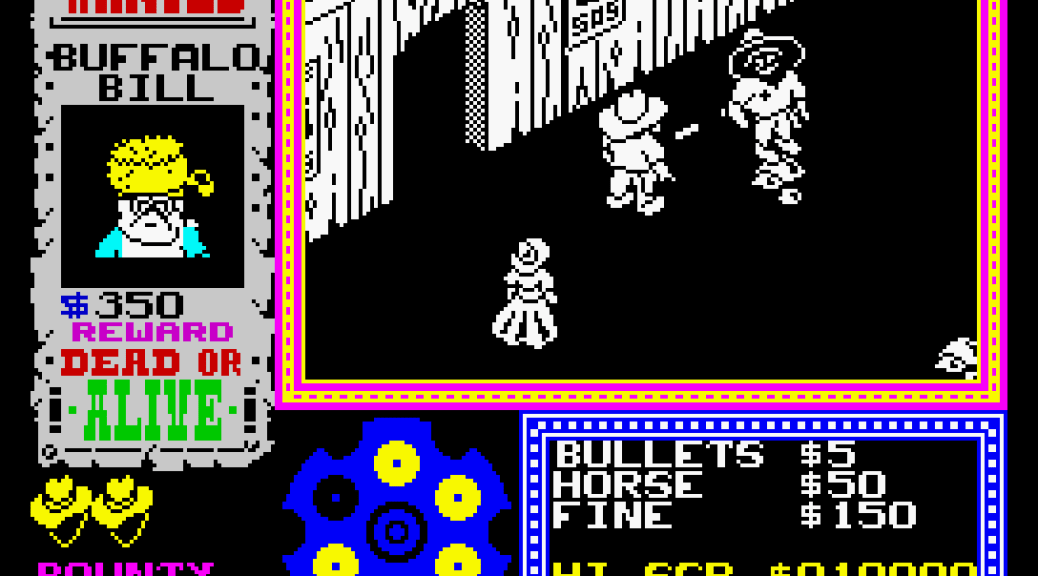
Gunfright, ZX Spectrum
Another isometric action adventure from Ultimate Play The Game, this one with a Wild West theme.
Gunfright was first released in 1985 and uses the Filmation II Engine as first seen in Nightshade.

Nightshade, ZX Spectrum
Nightshade is an isometric action adventure, released by Ultimate Play The Game for the ZX Spectrum in 1985.

Klax, Arcade
It says “copyright 1989” on the title screen, but Klax actually made it into arcades in June 1990. Klax is a real-time puzzle game – for one or two players – with falling tiles that you must catch, then drop, into a small trough at the bottom of the screen.

Wings, Amiga
One of Cinemaware‘s last games, Wings was released in 1990 to critical acclaim.
It’s a First World War-based scenario, with you piloting a biplane over German lines, dogfighting enemy fighters and bombing positions on the ground.

The Three Stooges, Amiga
The original Amiga version of Cinemaware‘s The Three Stooges was released in 1987.
With ‘mini games’ inspired by classic Three Stooges films, it features Larry, Moe and Curly on a quest to save an orphanage from an evil landlord.

Rocket Ranger, Amiga
Cinemaware‘s Rocket Ranger was first released in 1988 to much critical acclaim.
The game follows the format of most Cinemaware games, with cut scenes interspersed between planning screens and action screens.

Kirby’s Adventure, NES
Kirby’s Adventure is the second game in the Kirby series (after Kirby’s Dream Land on the Game Boy), and – boy – doesn’t it look good in colour?
 The King of Grabs