
Apocalypse is a fast-paced, overrated 3D shoot ’em up that was written by Gordon J. Key (the same guy who wrote E-Type) and published by The Fourth Dimension for the Acorn Archimedes in 1990.
Tag Archives: polygons

Chocks Away, Archimedes
Chocks Away is a flight combat game for the Acorn Archimedes that is loosely set in the First World War, although it does mix elements from other timelines and simplifies the realism in a way that might not appeal to a historian. The game is meant to appeal to those who just like flying around and shooting things and it provides a fairly open-ended and enjoyable experience on that front.

Battlezone 2000, Atari Lynx
Battlezone 2000 is a conversion of the classic Atari arcade game Battle Zone, although in truth it is much more than just a conversion. The game actually has two distinctly different play modes, one of which is hidden and must be unlocked.
Steel Talons, Arcade
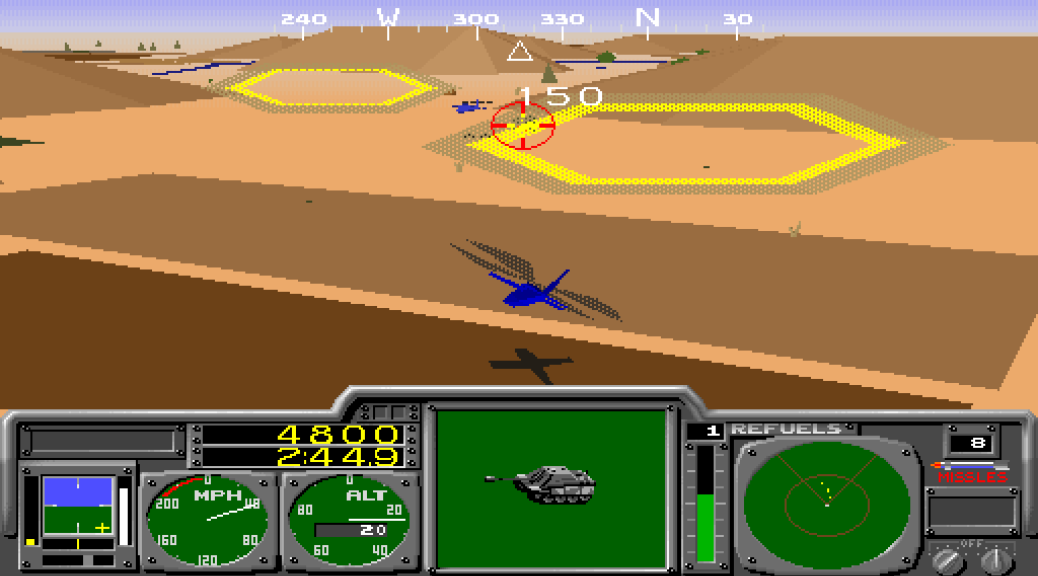
Steel Talons is a helicopter action game that uses 3D, polygonal graphics to represent the playing area. It was developed and manufactured by Atari Games in 1991.
This being from the early 1990s: the 3D graphics are quite simple, and Steel Talons does look complicated to play on first inspection, but the gameplay is actually fairly simple.

S.T.U.N. Runner, Arcade
S.T.U.N. Runner is a 1989 arcade game by Atari Games that uses 3D polygonal graphics to create a fast-paced tunnel shooter.
The “S.T.U.N.“, by the way, means “Spread Tunnel Underground Network“, which doesn’t mean a great deal in the grand scheme of things…

Battle Command, Amiga
Battle Command is a classic Amiga tank game, developed by Realtime Games Software and published by Ocean Software in 1990.
Castle Master, PC
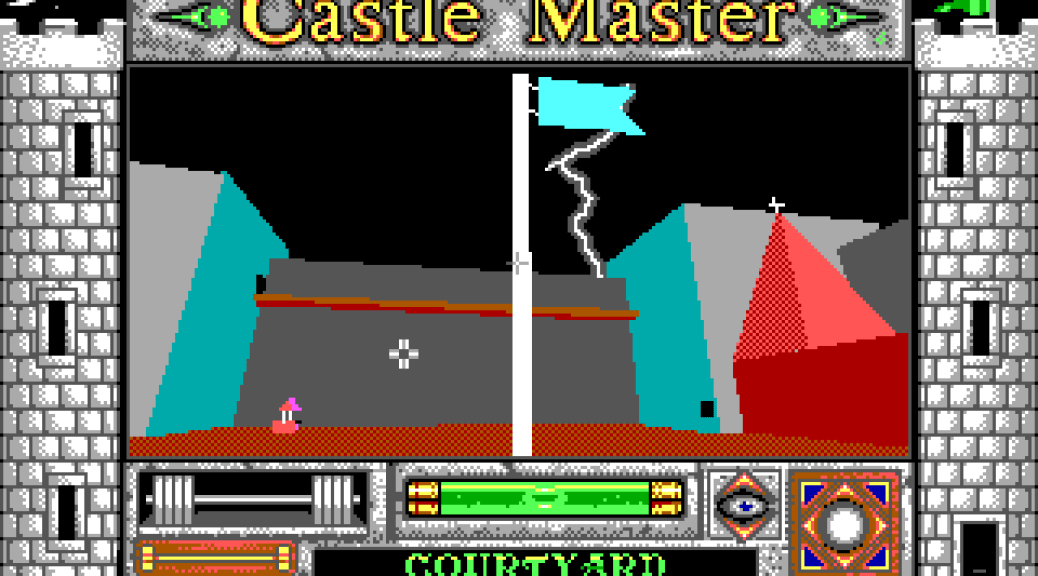
The PC DOS version of Castle Master was released in 1990. And, while the EGA 16-colour graphics are not quite a nice as those seen in the Amiga version, they are colourful enough, and move at a fast pace.

I, of the Mask, ZX Spectrum
I, of the Mask is a strange 3D action game written by Ant Attack author, Sandy White. It was published in 1985 by Electric Dreams Software, and it still confuses games-players to this day…

Total Eclipse 2: The Sphinx Jinx, ZX Spectrum
Published by Incentive Software in 1991, Total Eclipse 2: The Sphinx Jinx is a direct follow-up to the 1988 Freescape classic, Total Eclipse.
Continue reading Total Eclipse 2: The Sphinx Jinx, ZX Spectrum

Total Eclipse, ZX Spectrum
The ZX Spectrum version of Total Eclipse was the first version of the game released.
Using the legendary Freescape Engine, Total Eclipse is an Egyptian-themed exploration/puzzle game set in a primitive 3D world. Primitive because it was one of the first ever games to allow games-players to explore a 3D world in this way, and it worked quite well, in spite of the low frame rate and slowdown.

