
Richard Garriott‘s famous Role-Playing Game series began officially in 1981 with “Ultima” for the Apple II. It was a pioneering mixture of single-player adventuring, combat and levelling, with humble beginnings, starting out on early 8-bit systems and working its way up to modern PCs in the 1990s. The Ultima series was always evolving; always innovating, and constantly proving to be a considerable influence on story-based, single-player RPGs, and the fantasy adventure game market in general.
Tag Archives: pioneering

Ultima IX: Ascension, PC
Ultima IX: Ascension is the ninth and final instalment of the core Ultima series and was developed by Origin Systems and published for Windows-based PCs by Electronic Arts in 1999. It was the first Ultima game to use polygonal rendering in a full 3D environment.

Ultima VIII: Pagan, PC
Ultima VIII: Pagan is the eighth entry in the Ultima series and was developed and published by Origin Systems for PC MS-DOS in 1994. Like its predecessor (The Black Gate), Pagan goes for a darker, more mature tone than most of the previous Ultima games, and it is also more puzzle and action-oriented.
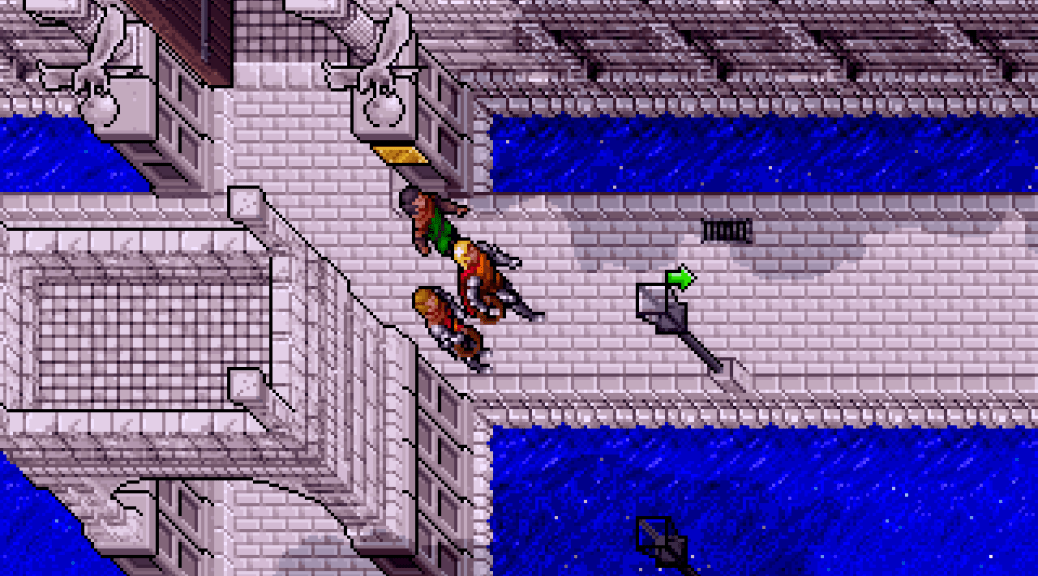
Ultima VII Part Two: Serpent Isle, PC
Serpent Isle is an oddity in the Ultima series in that it is a direct sequel to the previous game – Ultima VII: The Black Gate – which uses the same game engine, but with a few enhancements. It was published by Origin Systems in 1993 and only ever appeared on the PC, running under MS-DOS.

Ultima VII: The Black Gate, PC
Ultima VII: The Black Gate is the seventh game in the Ultima series and the first part of the “Age of Armageddon” trilogy, and was first released for PC MS-DOS by Origin Systems in 1992. The game is highly-rated among RPG fans and even series creator, Richard Garriott, describes Ultima VII as “the most masterfully-executed” of the Ultima series.

Ultima VI: The False Prophet, PC
Ultima VI: The False Prophet is the sixth game in the Ultima series and the third and final game in the “Age of Enlightenment” trilogy. It was first released by Origin Systems in 1990 and the PC MS-DOS version was the original target platform. There is no Apple II version of this game. It is also the most complex game in the series so far.

Ultima: Warriors of Destiny, NES/Famicom
Ultima: Warriors of Destiny on the NES/Famicom was developed by FCI and first published by Pony Canyon in 1992. It is the fifth entry in the Ultima series and this console port is a simplification of the original game.

Ultima V: Warriors of Destiny, Amiga
The Amiga version of Ultima V: Warriors of Destiny was converted by Keith Jackson of DMA Systems Ltd. and was first published by Origin Systems in 1990.

Ultima V: Warriors of Destiny, Commodore 64
Ultima V: Warriors of Destiny was originally released by Origin Systems in 1988 for the Commodore 128, with a Commodore 64 version following in 1989. The game was remastered in 2020 by Drunella, to provide CRT (cartridge) and d81 versions for fastloading, although the graphics remain the same as the original (there are no enhanced graphics, like in the remaster of Ultima IV). The music from the C128 version of Ultima V has been included in the remaster, though.
Continue reading Ultima V: Warriors of Destiny, Commodore 64

Ultima V: Warriors of Destiny, Atari ST
The Atari ST version of Ultima V: Warriors of Destiny was programmed by Binary Vision and first published by Origin Systems in 1989.

