
The 1991 PC Engine/TurboGrafx-16 version of Gremlin Graphics‘ classic Monty Mole game is a rare treat: it’s a British-developed PC Engine game, and an alright one at that. And, believe it or not, but the PC Engine version of the game is the one that’s currently available on Steam and GOG.com.
Tag Archives: ladders
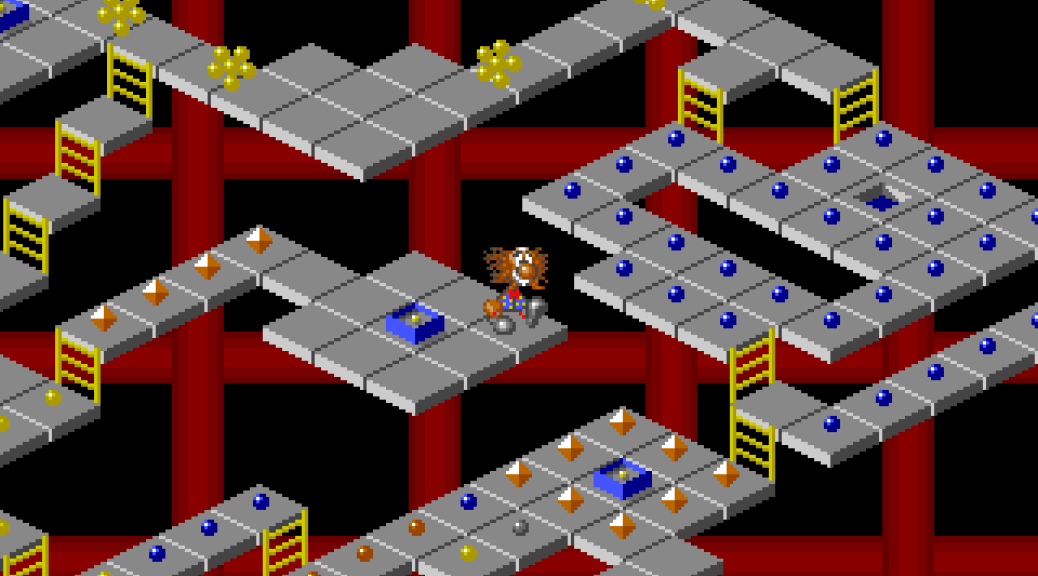
Clown-O-Mania, Amiga
This obscure isometric action/maze game was published by German company Starbyte in 1989 and is basically a clone of the 1983 Atari 8-bit game Flip and Flop. And it’s not a bad game, even though the title of it doesn’t make sense (it really should be “Clown-O-Rama” or “Clown-Mania” – the use of the “O” in this context doesn’t work in English).

Flip and Flop, Atari 8-bit
Flip and Flop is an isometric action/maze/platform game designed by Jim Nangano and first published for Atari 8-bit computers by First Star Software in 1983.
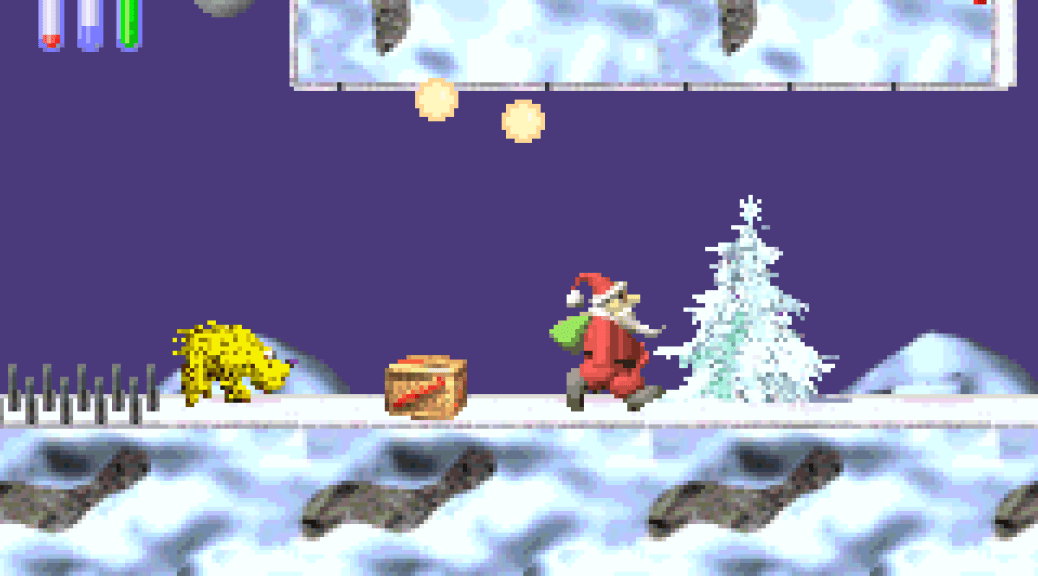
Santa Claus Saves The Earth, Game Boy Advance
Created by Lithuanian developer Ivolgamus and released for the PlayStation and Game Boy Advance by Telegames in 2002, Santa Claus Saves The Earth is a Christmas-themed platform game that plays better than it looks. Not that it looks particularly bad – it doesn’t; it just doesn’t look that good either. Let’s just call it “middle of the road“… 🙂
Continue reading Santa Claus Saves The Earth, Game Boy Advance
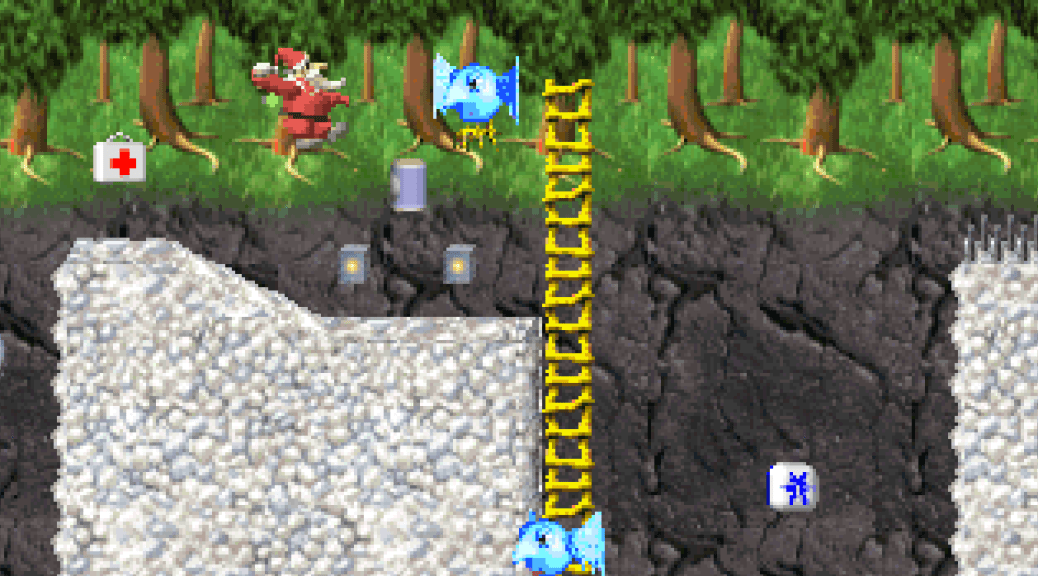
Santa Claus Saves The Earth, PlayStation
Santa Claus Saves The Earth is a Christmas-themed platform game developed by Lithuanian company Ivolgamus and released for the PlayStation and Game Boy Advance by Telegames in 2002.

Rod Land, Amiga
The Amiga conversion of Rod Land is an enhanced port of the Jaleco arcade game from 1990. It features extra levels, extra animation, hidden features and bonuses, and glitch fixes. The conversion was done by Random Access and was published by Storm (a sub-label of The Sales Curve) in 1991.
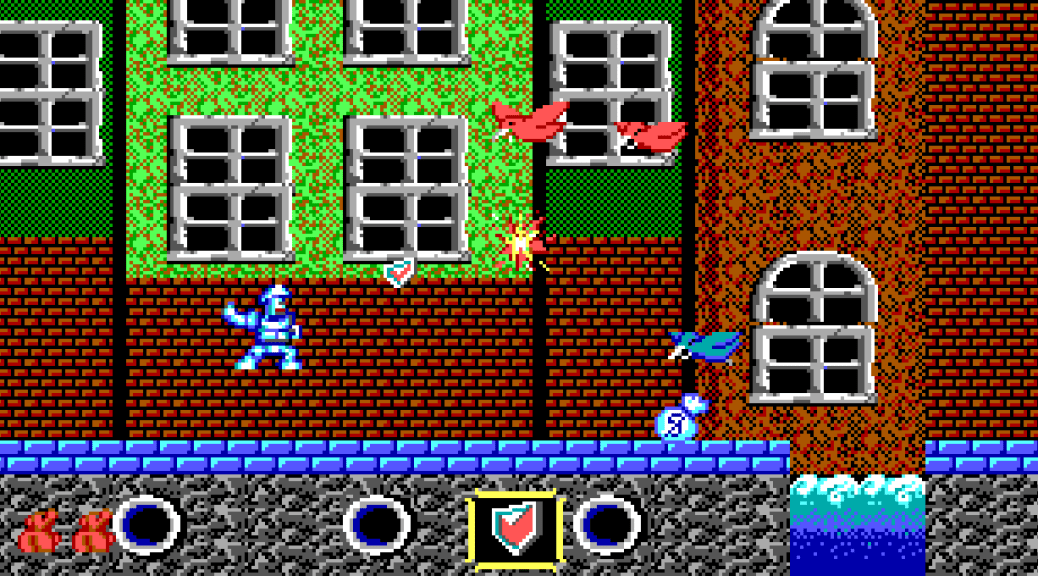
Ghosts ‘N Goblins, PC
The 1987 PC MS-DOS version of Ghosts ‘N Goblins, I’m sorry to say, is a bit of a travesty. It looks terrible, and also plays like a lame duck. In fact, unless you can get the game set up properly in DOSBox (which took me some time to do), then it’s pretty much unplayable*.

Ghosts ‘N Goblins, Amstrad CPC
The Amstrad CPC version of Ghosts ‘N Goblins was developed and published by Elite Systems in 1986, and it looks pretty rough, and seems to be missing a good chunk of the original game.

Ghosts ‘N Goblins, Amiga
It has to be said that the Amiga port of Capcom‘s classic Ghosts ‘N Goblins is a damn sight better than the Atari ST version, or any of the other conversions from the 16-bit era. It was developed and published by Elite Systems in 1990 and is as close to the arcade parent as is possible on the Amiga.

Ghosts ‘N Goblins, Atari ST
The Atari ST version of Ghosts ‘N Goblins was programmed by Michael Delves, with graphics by Zippo Games, and was published by Elite Systems in 1990. It is a somewhat ‘funky’ port, with cartoony graphics and gameplay that is easier than the arcade parent.

