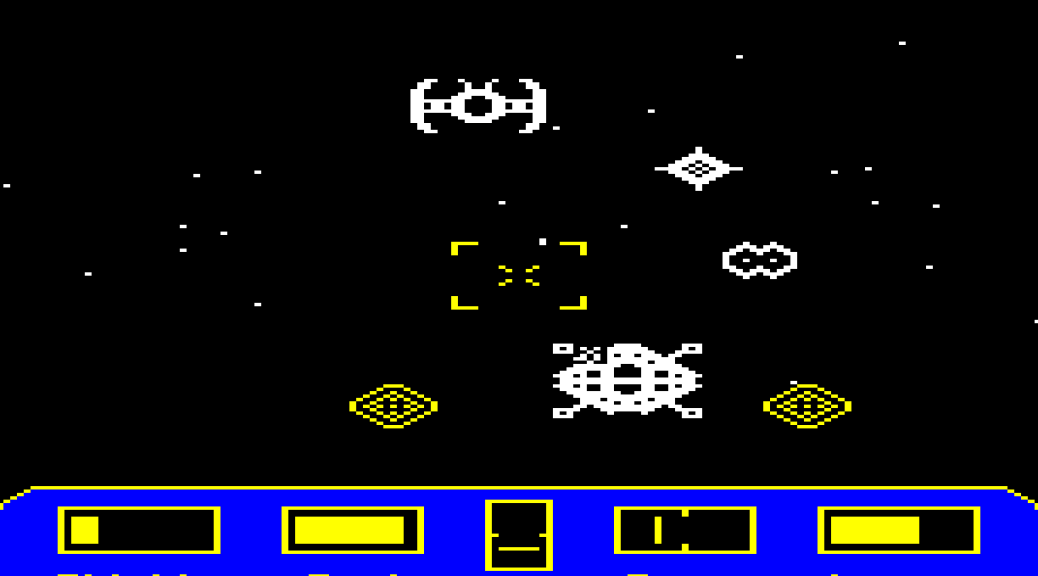
Programmed by Doug Anderson and published by A&F Software in 1983, Cylon Attack is an early cockpit-based space shooter for the BBC Micro that still plays quite well today.
Tag Archives: First-Person

Deus Ex: Human Revolution, PC
Deus Ex: Human Revolution is a futuristic action RPG developed by Eidos-Montréal and published by Square Enix Europe in 2011. It is the third game in the Deus Ex series and is a prequel to the original Deus Ex.

Deus Ex: Invisible War, PC
Deus Ex: Invisible War is an action RPG developed by Ion Storm and published by Eidos in 2003. It is the second game in the Deus Ex series and is set twenty years after the first Deus Ex.
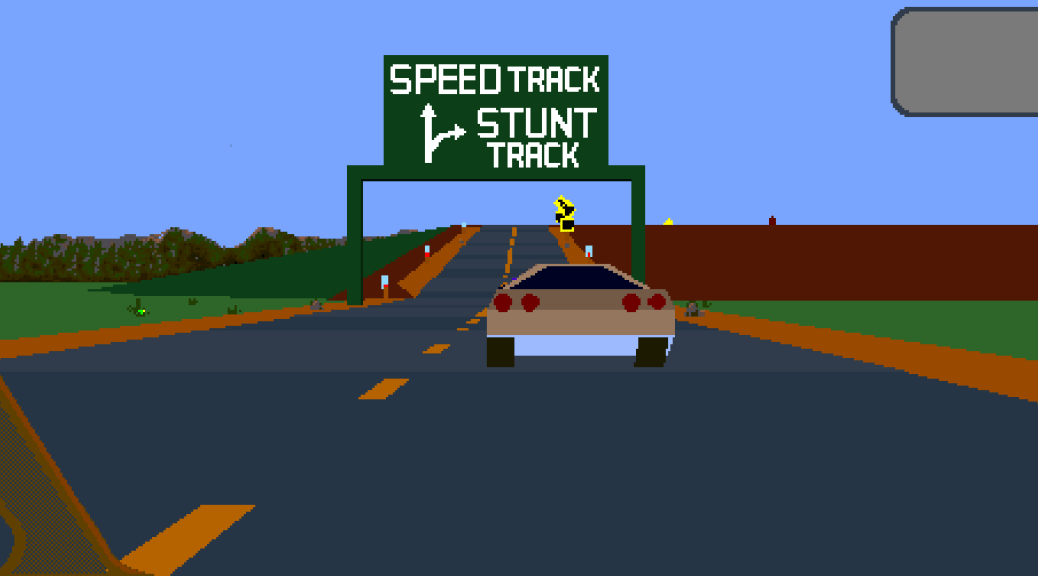
Hard Drivin’, Arcade
Hard Drivin’ is a 1989 arcade game developed and manufactured by Atari Games. It allows the player to drive a sports car on a track that emphasises speed and stunts, and was one of the first driving games with a fully 3D polygonal environment.

Doom, Super Nintendo
The Super Nintendo conversion of id Software‘s classic Doom was developed by Sculptured Software and published by Williams Electronics in 1995. It uses the Super FX chip to help render the 3D graphics, but in truth: even with the extra processing power it’s a pretty poor effort.

Vortex, Super Nintendo
Vortex is a 3D shoot ’em up developed by Argonaut Software and published by Electro Brain in North America, Sony in Europe, and Pack-In-Video in Japan in 1994. It is one of the few games (other than Star Fox, Stunt Race FX, Yoshi’s Island, Doom, Dirt Trax FX, Winter Gold, and Star Fox 2) to use the Super FX co-processor chip to allow for faster 3D graphics than the vanilla SNES is capable of.

TRON 2.0, PC
TRON 2.0 is a first-person action RPG developed by Monolith Productions and published by Buena Vista Interactive in 2003. It is a sequel to the 1982 film, TRON, but is based in an alternate ‘reality’ due to the de-canonisation of the first film by the 2010 re-boot, Tron: Legacy.

Ravenloft: Stone Prophet, PC
Developed by Dreamforge Intertainment and published by SSI for PC MS-DOS in 1995, Ravenloft: Stone Prophet is a first-person Role-Playing Game and follow-up to Ravenloft: Strahd’s Possession and it uses the same game engine as its predecessor but is generally considered to be a better game overall.

Alien: Isolation, PC
Developed by Creative Assembly and published by Sega in 2014, Alien: Isolation is a first-person survival horror game that is considered a classic by many who’ve played it.
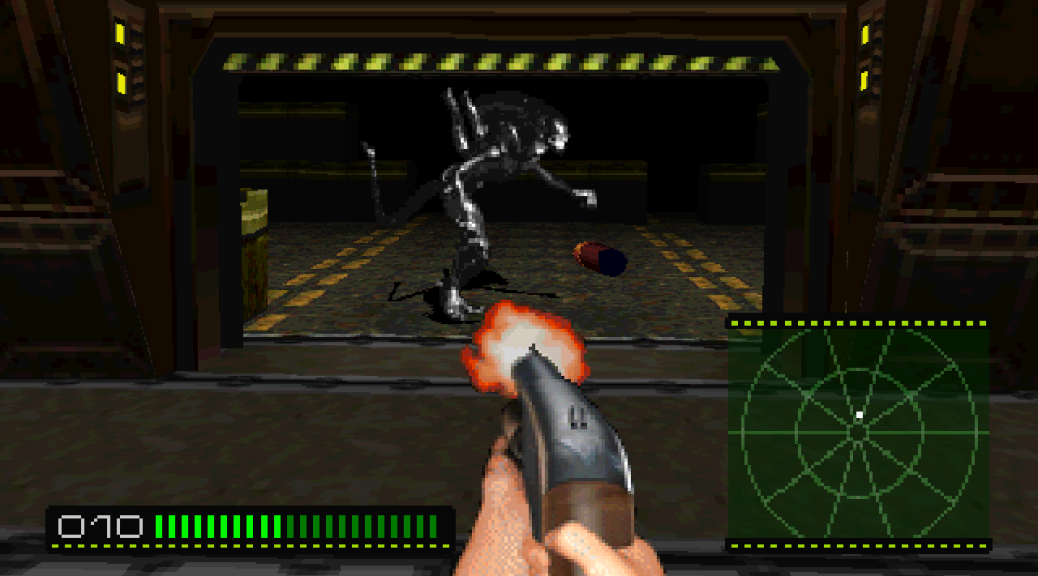
Alien Trilogy, PlayStation
Developed by Probe and published by Acclaim in 1996, Alien Trilogy is a first-person shooter that uses elements from the famous Alien series, but doesn’t stick closely to the characters or plots of the first three films.

