
Point Blank (aka Gun Bullet in Japan) is a minigame-based, humorous lightgun shooter for one or two players. It was created by Namco and initially distributed into arcades in 1994.
Tag Archives: Cult Game

Lucky & Wild, Arcade
Lucky & Wild is a one or two-player lightgun shooter from Namco that is incorporated into a driving game. Not only does each player hold a handgun in one hand, but they also have a steering wheel and two pedals (accelerate and brake) to contend with. That might sound like too much to handle, but it works well in the context of a car chase shoot ’em up. Which is what this game is. Imagine Chase HQ crossed with Operation Wolf, and you get Lucky & Wild.

Maximum Force, Arcade
Maximum Force is the ‘spiritual successor’ to Atari Games‘ hit lightgun shooter, Area 51. It was developed by Mesa Logic (the same company who made Area 51) and features the same style of gameplay and graphics – pre-rendered backgrounds and environments; fixed, on-rails camera movement, and shot-on-video digitised characters. The game was first released into arcades in 1997 and caters for one or two players.

Switchblade II, Atari Lynx
Switchblade II is a platform action game that originated on the Amiga; was developed by Gremlin Graphics, and published for the Atari Lynx by Atari Corporation in 1992. It is similar in some respects to Capcom‘s Strider, although the main character – Hiro – isn’t quite as dynamic as Strider Hiryu. The first Switchblade wasn’t released for the Lynx – just the sequel was.

Switchblade II, Amiga
The sequel to Switchblade, Switchblade II originally came out on the Amiga and was developed and published by Gremlin Graphics in 1991. The designer/programmer of the original Switchblade, Simon Phipps of Core Design, had no involvement in the creation of this follow-up.

Switchblade, Atari ST
Created by Simon Phipps (co-founder of Core Design), and published by Gremlin Graphics in 1989, Switchblade is a platform action game that could be described as a ‘spiritual successor’ to the Rick Dangerous games (also created by Simon Phipps). Switchblade features similar gameplay and graphics to Rick Dangerous, although it is more refined, less cartoony, and is far less frustrating to play. Switchblade came out on the Atari ST first and ports for the Amiga, C64, Amstrad CPC and ZX Spectrum followed.
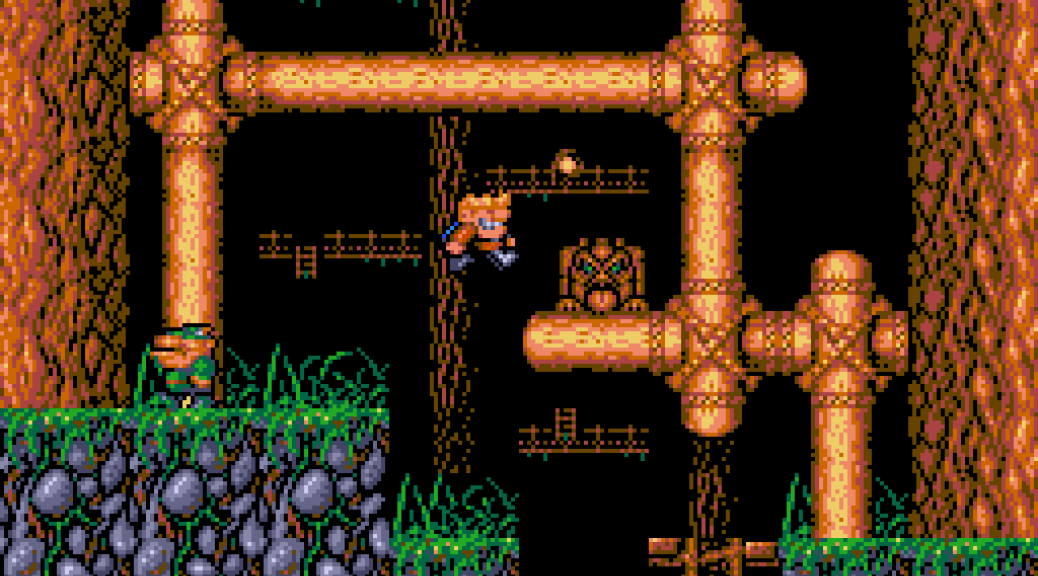
Rick Dangerous 2, Amiga
Rick Dangerous 2 is the sequel to 1989’s Rick Dangerous. It was developed by Core Design (with programming by Simon Phipps, graphics by Terry Lloyd, level design by Robert Churchill and sound/music by David Pridmore), and published by Micro Style (a Microprose sub-label) in 1990.
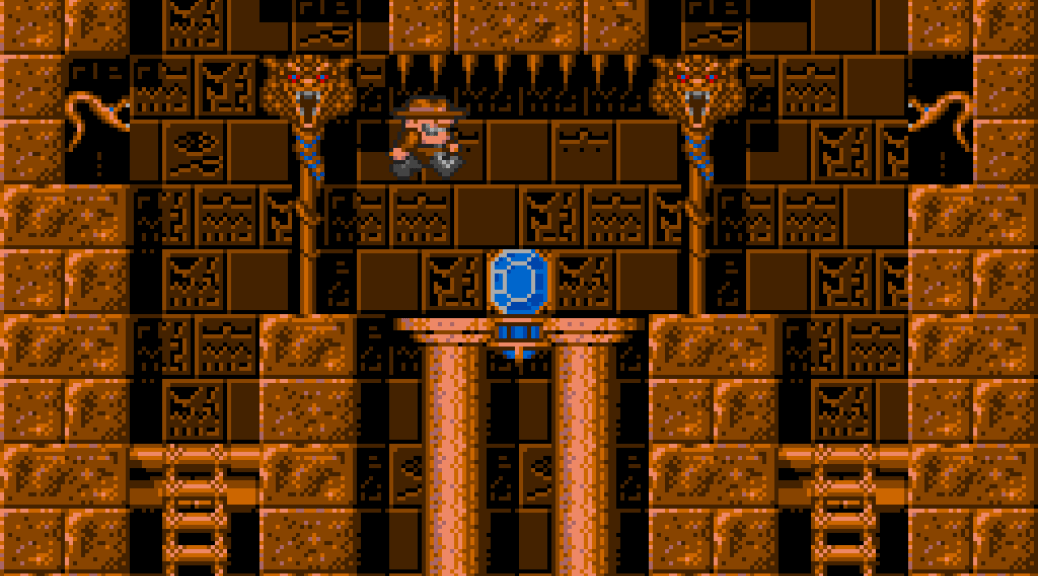
Rick Dangerous, Amiga
Rick Dangerous is a cartoony Indiana Jones parody that was written by Simon Phipps, co-founder of Core Design, with graphics by Terry Lloyd. It was published on various 8-bit and 16-bit home computers by Firebird Software in 1989 and was generally well-received.

Metro-Cross, Arcade
Metro-Cross is a scrolling race/action game in which you control a character known as “The Runner“, who must cross the finish line on a course full of obstacles, before the timer reaches zero. It was developed and distributed into arcades by Namco in 1985.

Eric and the Floaters, ZX Spectrum
I find it pretty amazing that Hudson Soft‘s famous maze-based, bomb-blasting game, Bomberman, was released for the ZX Spectrum in 1984, but it was. It was developed by Hudson Soft themselves and published by Sinclair Research in the UK (much like Hudson Soft‘s other famous Spectrum game, Stop the Express). Even more bizarre is the name of the game, but there was a good reason for the change…
 The King of Grabs