
Kid Chaos is a scrolling platform game created by Shaun Southern and Andrew Morris of Magnetic Fields, and published by Ocean Software in 1994.
Tag Archives: birds
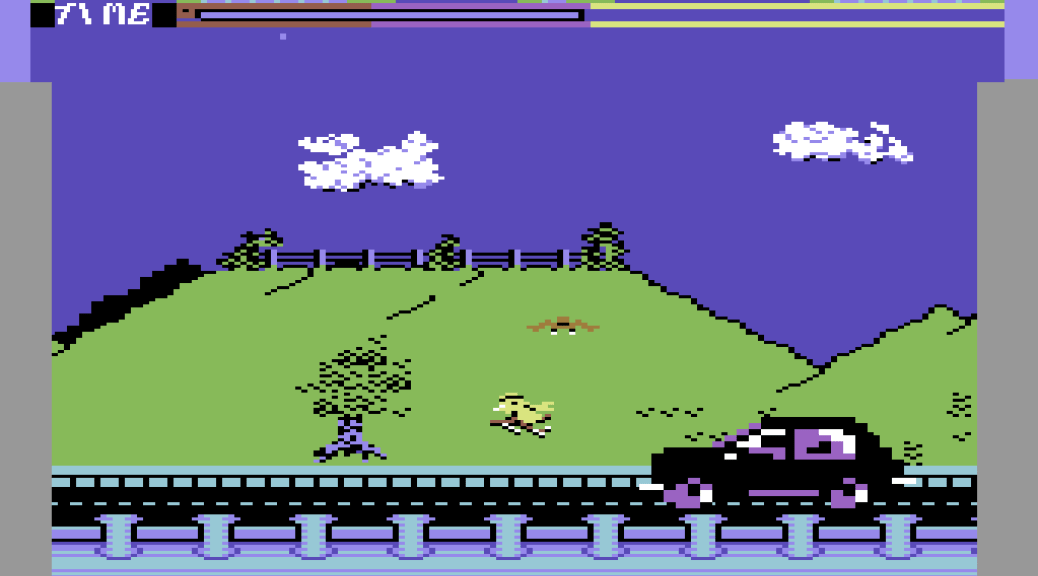
Potty Pigeon, Commodore 64
Percy the Potty Pigeon (to give the game its full title) was coded by Tony Crowther and published by Gremlin Graphics for the C64 in 1984. It was a minor hit at the time.
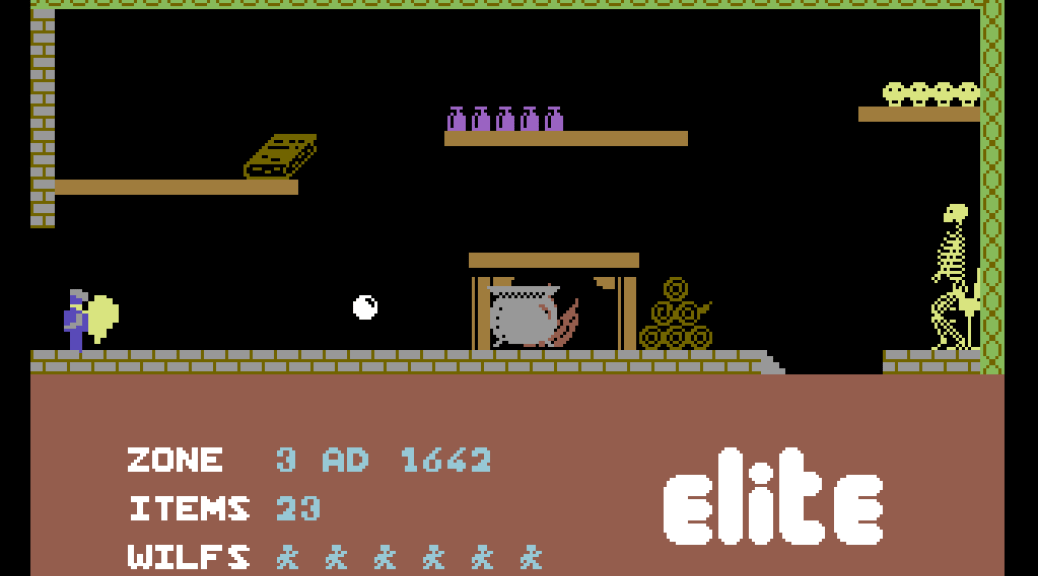
Kokotoni Wilf, Commodore 64
Of the three versions of Kokotoni Wilf released by Elite Systems, the Commodore 64 version is arguably the worst.
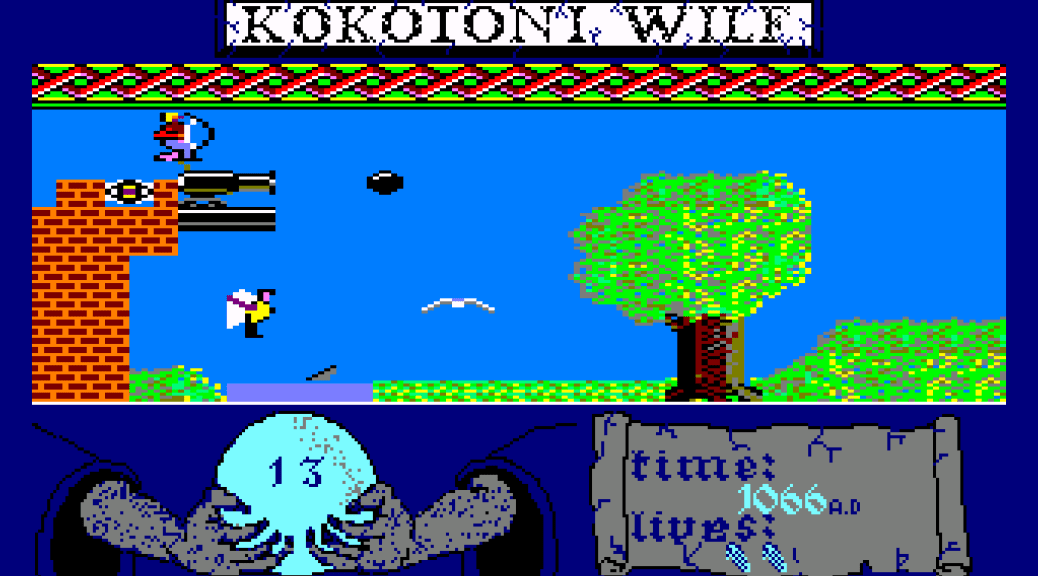
Kokotoni Wilf, Amstrad CPC
Compared to the Spectrum original, Amstrad Kokotoni Wilf is pretty ugly. The developers have chosen a dark blue background with green caves, and the odd splash of colour in the (very flickery) sprites and landscape decorations. The graphics are very poor in my opinion.

Kokotoni Wilf, ZX Spectrum
A leading contender for the game with the silliest name of all-time, Kokotoni Wilf is an early platform action game with you in the role of the titular Mr. Wilf.

Karateka, Commodore 64
Karateka was Prince of Persia creator Jordan Mechner‘s first published game. He programmed it (originally for the Apple II) while attending Yale University in 1984.
It’s a simple martial arts fighting game that uses rotoscoped graphics to create realistic animation. Back in 1984 they were pretty revolutionary.

Desert Falcon, Atari 7800
Desert Falcon is an obscure isometric shooter with an Egyptian theme, released exclusively for the Atari 7800 in 1987.
You play as a falcon, flying diagonally over the landscape, shooting stuff as you go, in a way similar to that seen in Sega‘s classic coin-op, Zaxxon.

Raffles, Atari ST
Known as Inside Outing on 8-bit home computers, and Raffles on 16-bit computers, this excellent isometric platform game translates very well to the Atari ST.

Inside Outing, ZX Spectrum
The ZX Spectrum conversion of Michael St. Aubyn‘s Inside Outing was programmed by Pamela Roberts with graphics by Mike Smith.
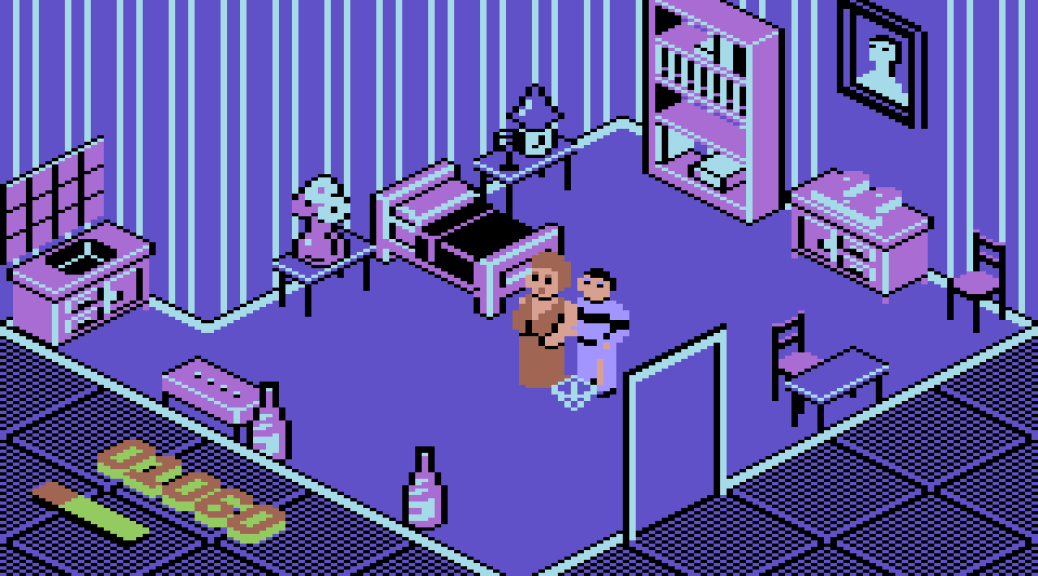
Inside Outing, Commodore 64
The Commodore 64 version of Inside Outing features graphics by the game’s original designer – Michael St. Aubyn – although the coding itself was done by Timedata/Pamela Roberts.

