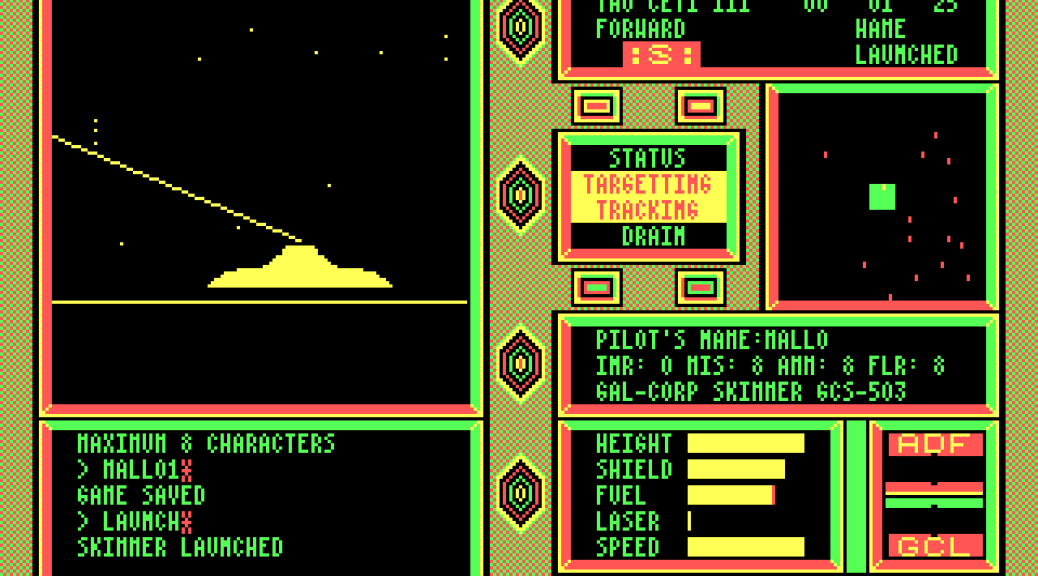
The PC MS-DOS version of Tau Ceti was coded by Derek Baker at Comtec and published by CRL Group (Thunder Mountain in North America) in 1987.
It features gaudy, four-colour, CGA graphics, but is otherwise the Tau Ceti we know and love.
The PC MS-DOS version of Tau Ceti was coded by Derek Baker at Comtec and published by CRL Group (Thunder Mountain in North America) in 1987.
It features gaudy, four-colour, CGA graphics, but is otherwise the Tau Ceti we know and love.
The 1986 Atari ST conversion of Tau Ceti – by Ron De Santi of Comtec – is much faster than the 8-bit versions and therefore more challenging. And what a brilliant challenge it is!
John Twiddy‘s C64 conversion of Pete Cooke‘s classic space shooter is arguably even better than the Spectrum original.
Graphically it’s a little chunkier, but the extra colours make a difference.
Penn & Teller’s Smoke and Mirrors is a “legendary” game that never came out…
Originally planned for a 1995 release on the Sega CD, Smoke and Mirrors was due to be published by Absolute Entertainment but they went out of business before the game’s release and it therefore sank without a trace.
Conqueror is a 1988 release from Superior Software, designed and programmed by Jonathan Griffiths. It’s a 3D tank game that was released as a sequel to Zarch – and it uses the same game engine.
Also known as “Star Fighter” in some quarters, Star Fighter 3000 is a game from Fednet Software, published by Krisalis in 1994.
It’s a third-person shooter with relatively primitive 3D graphics, in a similar kind of style to Nintendo‘s Star Fox.
The Acorn Archimedes conversion of the classic Cannon Fodder is pretty much identical to the Amiga original, even down the music, which is not always the case with Cannon Fodder conversions.
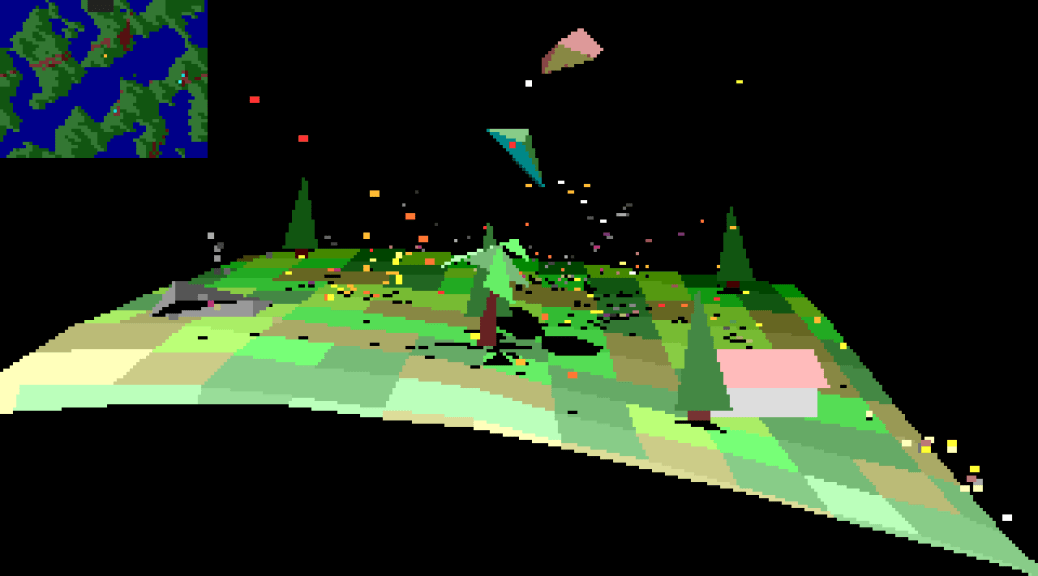
David Braben‘s 1987 shoot ’em up, Zarch, is probably the most well-known Archimedes game around. It was an early release for the Acorn computer and it really made the gaming world sit up and take notice.
The Acorn Archimedes conversion of Bell and Braben‘s classic Elite was written by Warren Burch and Clive Gringras and published by Hybrid Technology in 1991.
It is considered by many to be the definitive version of Elite available, although that is both a matter of taste, and also a matter of actually getting the game to run in a RISC OS environment.
Developed by Imagineer, the Nintendo Entertainment System version of Elite is pretty good – considering that the NES isn’t particularly suited to generating wireframe 3D graphics. Yes, the wireframe 3D is slow (like in all the 8-bit versions of Elite), but not to the point where it makes the game unplayable.




 The King of Grabs